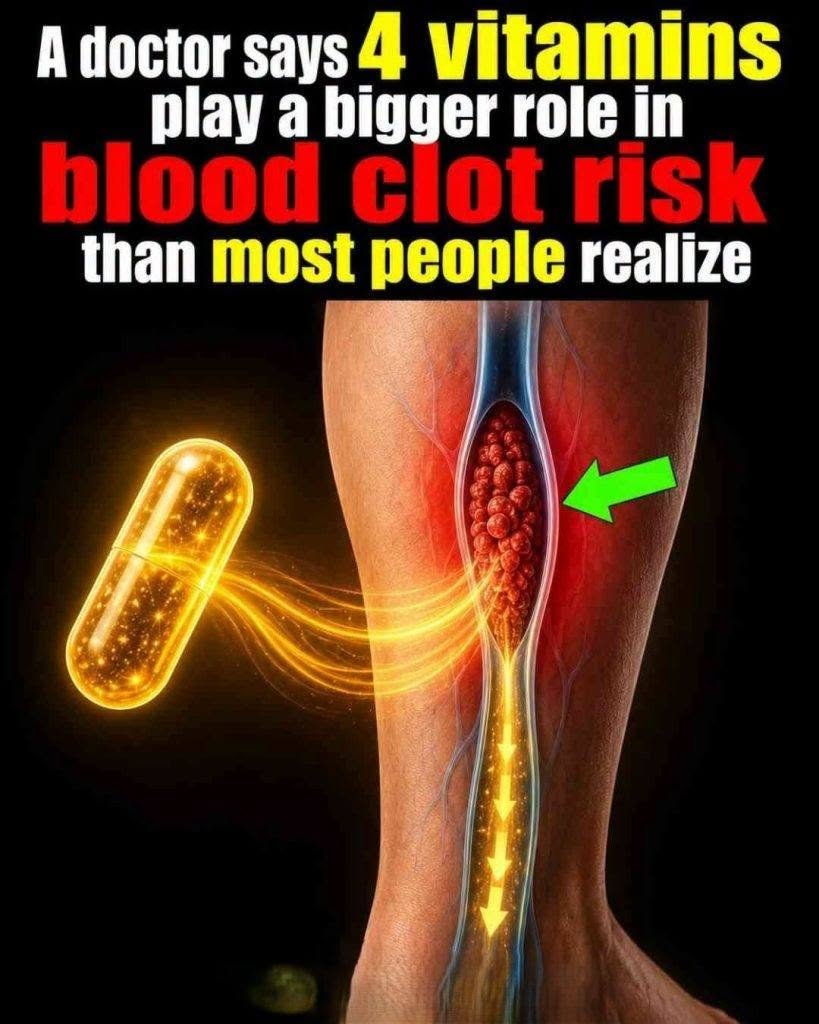
Here are 4 important vitamins/nutrients linked with circulation and vascular health:
1. Vitamin K — Supports Healthy Blood Clot Regulation
What it does:
Vitamin K is essential for making proteins involved in blood clotting. It helps your body maintain a balanced clotting system—preventing excessive bleeding while allowing normal clot formation when needed.
How it relates to blood clots:
- Too little vitamin K can cause abnormal bleeding.
- Vitamin K does not simply “thin” blood; it helps regulate the clotting process.
- People taking blood-thinning medicines like warfarin must keep vitamin K intake consistent because sudden changes can affect medication effectiveness.
Food sources:
- Kale
- Spinach
- Broccoli
- Lettuce
- Brussels sprouts
- Green vegetables
Important note:
Do not take high-dose vitamin K supplements if you use anticoagulants unless your doctor approves.
2. Vitamin C — Protects and Strengthens Blood Vessels
What it does:
Vitamin C helps produce collagen, a protein that keeps artery and vein walls strong and flexible.
Possible circulation benefits:
- Supports healthy blood vessel structure
- Helps protect cells from oxidative stress
- May support better endothelial function (the inner lining of blood vessels)
- Helps the body absorb iron, which supports oxygen transport
Food sources:
- Oranges
- Lemons
- Strawberries
- Bell peppers
- Kiwi
- Guava
Deficiency signs:
Low vitamin C can contribute to:
- Weak connective tissue
- Easy bruising
- Poor wound healing
3. Vitamin E — Helps Protect Blood Cells and Blood Vessel Function
What it does:
Vitamin E is an antioxidant that protects cells from damage caused by free radicals.
Possible circulation effects:
- Helps protect the lining of blood vessels
- Supports normal blood cell function
- May reduce oxidative damage associated with cardiovascular problems
Food sources:
- Almonds
- Sunflower seeds
- Hazelnuts
- Avocado
- Vegetable oils
Caution:
High-dose vitamin E supplements may increase bleeding risk, especially when combined with:
- Aspirin
- Warfarin
- Other anticoagulants
Food sources are generally safer than high-dose supplements.
4. Vitamin B Complex (Especially B6, B12, and Folate) — Supports Healthy Blood Flow
What they do:
B vitamins help control homocysteine, an amino acid that, when elevated, is associated with increased cardiovascular risk.
Benefits:
- Supports healthy arteries
- Helps red blood cell production
- Supports oxygen delivery throughout the body
- Helps maintain normal nerve and blood vessel function
Food sources:
Vitamin B6:
- Chicken
- Fish
- Potatoes
- Bananas
Vitamin B12:
- Meat
- Eggs
- Milk
- Fish
- Fortified foods
Folate:
- Beans
- Spinach
- Lentils
- Asparagus
People with B12 deficiency (especially older adults, vegans, or those with absorption problems) may need medical advice about supplementation.
Other nutrients important for circulation
Omega-3 fatty acids
Found in:
- Fatty fish (salmon, sardines)
- Flaxseed
- Chia seeds
They support heart health and may influence platelet activity.
Magnesium
Supports:
- Blood vessel relaxation
- Normal muscle function
- Blood pressure regulation
Sources:
- Nuts
- Seeds
- Whole grains
- Dark chocolate
- Leafy greens
Lifestyle habits that help prevent leg blood clots
Vitamins alone are not enough. Strong evidence supports:
✅ Move regularly
- Avoid sitting for many hours
- Walk and stretch during long trips
✅ Maintain a healthy weight
✅ Stay hydrated
✅ Exercise regularly
- Walking
- Swimming
- Cycling
✅ Avoid smoking
✅ Manage blood pressure, cholesterol, and diabetes
Warning signs of a possible leg blood clot (DVT)
Seek urgent medical care if you develop:
- Swelling in one leg (especially sudden)
- Leg pain or tenderness
- Warmth or redness of the skin
- One calf becoming larger than the other
Emergency symptoms:
- Sudden shortness of breath
- Chest pain
- Coughing blood
- Rapid heartbeat
These may indicate a clot has traveled to the lungs (pulmonary embolism).
Bottom line
The most important vitamins for supporting circulation are:
- Vitamin K – regulates normal clotting
- Vitamin C – strengthens blood vessels
- Vitamin E – protects vascular cells
- B vitamins (B6, B12, folate) – support healthy blood and vessels
A balanced diet, movement, hydration, and managing medical risk factors are much more powerful for preventing dangerous blood clots than taking vitamin supplements alone.