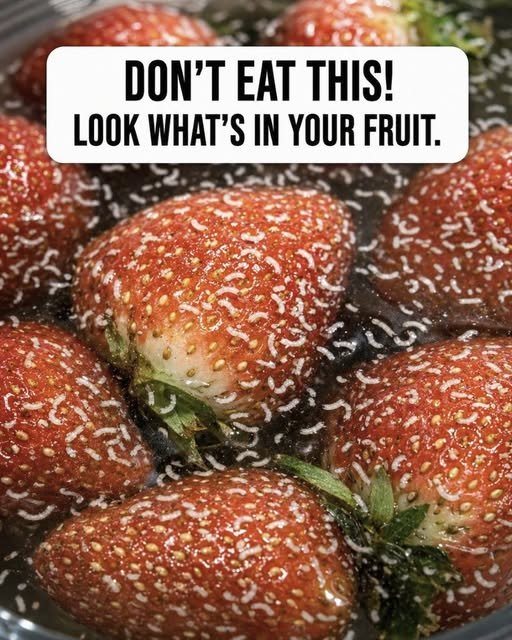
If you’ve seen videos online of tiny white worms crawling out of strawberries after soaking them in salt water, it’s understandable to wonder whether strawberries are safe to eat. Here’s a detailed explanation of what’s happening.
What are the tiny white worms?
The tiny white worms are usually the larvae (maggots) of small fruit flies, most commonly the spotted wing drosophila.
Unlike many fruit flies that lay eggs only on overripe fruit, spotted wing drosophila females have a specialized egg-laying organ that allows them to deposit eggs inside healthy, ripening fruit while it is still growing.
The eggs hatch into tiny white larvae that feed on the fruit’s soft interior.
Why do they come out in salt water?
When strawberries are soaked in a solution of salt water, vinegar, or sugar water:
- The change in the environment can irritate the larvae.
- They often crawl out of the fruit seeking a more suitable environment.
- This makes them visible, even though they may have been hidden inside tiny cavities.
The salt does not create worms—it simply makes existing larvae easier to see.
Are they dangerous?
For most healthy people, no.
Eating an occasional fruit fly larva is generally considered low risk because:
- They are not known to transmit diseases to humans in the way some other insects can.
- Stomach acid destroys them.
- Many food safety authorities recognize that small amounts of insect material are practically unavoidable in fresh produce.
However, fruit containing larvae may:
- Taste softer or mushier.
- Spoil more quickly.
- Be less appealing to eat.
Can they make you sick?
In most cases:
- No serious illness is expected.
- Some people may experience mild stomach discomfort if they consume heavily infested fruit, but this is uncommon.
- People with severe insect allergies could theoretically react, although such reactions are rare.
If you experience persistent vomiting, severe abdominal pain, fever, or allergic symptoms after eating contaminated fruit, you should seek medical advice.
How common is this?
The presence of larvae depends on:
- Growing conditions
- Local fruit fly populations
- Time of year
- Pest management on the farm
Most strawberries sold in supermarkets are inspected and handled to reduce infestations, but no fresh produce can be guaranteed completely insect-free.
How to reduce the chance of finding larvae
You can lower the risk by:
- Inspecting berries before buying.
- Choosing firm strawberries without soft spots.
- Refrigerating them soon after purchase.
- Washing them thoroughly under running water before eating.
- Removing damaged or overripe berries.
A brief soak in clean water can help remove dirt and some surface insects, but it won’t reliably eliminate larvae that are already inside the fruit.
Does vinegar or salt kill the worms?
Not always.
- Salt water may cause larvae to emerge.
- Vinegar can reduce some surface microbes but is not a guaranteed way to kill or remove internal larvae.
- Neither method can ensure fruit is completely free of insects.
Should you stop eating strawberries?
For most people, no.
Strawberries remain a nutritious food rich in:
- Vitamin C
- Fiber
- Antioxidants
- Folate
- Potassium
The nutritional benefits generally outweigh the very small risk posed by occasional insect larvae.
Bottom line
The tiny white worms seen in strawberries are usually fruit fly larvae that occasionally develop inside ripening fruit before harvest. While finding them is unpleasant, they are generally not considered a significant health risk for healthy individuals. Washing strawberries, storing them properly, and discarding damaged berries can reduce the likelihood of encountering them, but it is not possible to guarantee that fresh fruit is completely free of tiny insects.