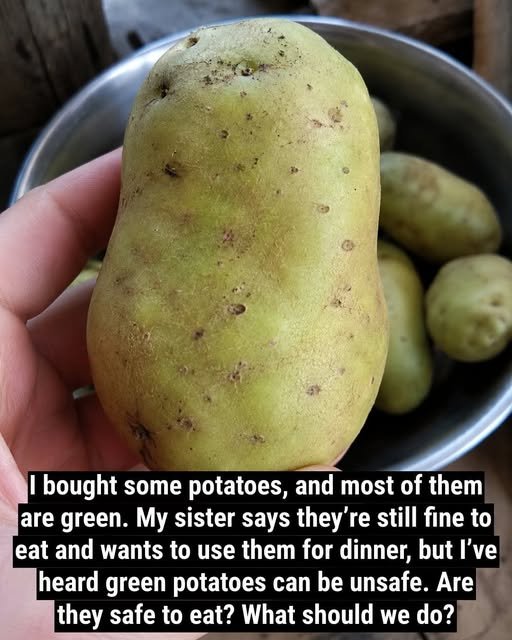
The Green Potato Predicament: What Those Mysterious Green Spots Really Mean
If you’ve ever reached for a potato and noticed patches of green on its skin, you may have wondered whether it’s still safe to eat. Green potatoes are a common sight in kitchens and grocery stores, but those unusual spots can signal changes inside the potato that deserve attention.
Why Do Potatoes Turn Green?
Potatoes naturally grow underground, protected from sunlight. When they’re exposed to light—whether in a garden, grocery store, or your kitchen—they begin producing chlorophyll, the same green pigment found in leaves.
Chlorophyll itself is completely harmless. In fact, it doesn’t affect the taste or safety of the potato. However, the appearance of chlorophyll is often a warning sign that something else is happening.
The Real Concern: Solanine
Light exposure also encourages potatoes to produce solanine and chaconine, natural chemicals known as glycoalkaloids. These compounds act as the plant’s natural defense against insects, fungi, and animals.
Unlike chlorophyll, high levels of solanine can be toxic to humans.
Solanine can cause:
- Bitter taste
- Burning sensation in the mouth
- Nausea
- Vomiting
- Stomach cramps
- Diarrhea
- Headache
- Dizziness
In rare cases, consuming large amounts can lead to:
- Confusion
- Fever
- Low blood pressure
- Difficulty breathing
- Severe neurological symptoms
Such severe poisoning is uncommon because potatoes with high solanine levels usually taste extremely bitter, discouraging people from eating them.
How Green Is Too Green?
The amount of green doesn’t always perfectly match the amount of solanine, but generally:
Slight green tint
- Usually only the skin is affected.
- Peel away the green areas generously.
- The remaining potato is often safe if it tastes normal.
Large green patches
- More solanine may be present.
- Remove all green tissue and any sprouts.
- If much of the potato is green, it’s best to discard it.
Entire potato is green
- Throw it away.
- The toxin may extend deeper into the flesh.
What About Potato Sprouts?
Sprouting potatoes often contain higher levels of glycoalkaloids.
If a potato has:
- Small sprouts: Remove the sprouts and surrounding tissue if the potato is still firm.
- Long sprouts, wrinkled skin, or extensive greening: Discard the potato.
Can Cooking Remove Solanine?
Unfortunately, no.
- Boiling reduces only small amounts.
- Baking does not destroy much of it.
- Microwaving has little effect.
- Frying at very high temperatures may reduce some, but not enough to make a highly green potato safe.
The safest approach is removing green areas or discarding heavily green potatoes.
How to Prevent Potatoes from Turning Green
Store potatoes:
- In a cool place (about 7–10°C (45–50°F))
- In complete darkness
- In a well-ventilated container
- Away from direct sunlight and bright indoor lighting
Avoid storing potatoes:
- On sunny countertops
- Near windows
- In clear plastic bags exposed to light
Are Green Potatoes Dangerous for Everyone?
Some groups are more sensitive to solanine:
- Young children
- Older adults
- Pregnant people
- Individuals with digestive illnesses
These groups should be especially cautious about eating green or sprouted potatoes.
Common Myths
Myth: Green potatoes are green because they’re unripe.
Fact: The green color results from light exposure, not immaturity.
Myth: The green color itself is poisonous.
Fact: Chlorophyll is harmless; the concern is the accompanying increase in glycoalkaloids.
Myth: Cooking makes green potatoes safe.
Fact: Cooking does not reliably eliminate harmful levels of solanine.
Quick Safety Guide
| Potato Condition | Safe to Eat? |
|---|---|
| Normal color | ✅ Yes |
| Small green patch | ✅ Peel deeply and remove green tissue |
| Few small sprouts | ✅ Remove sprouts and affected areas |
| Large green areas | ⚠️ Better to discard |
| Entire potato green | ❌ Do not eat |
| Bitter taste | ❌ Discard immediately |
| Soft, shriveled, heavily sprouted | ❌ Do not eat |
Bottom Line
A green potato isn’t automatically dangerous, but it’s a warning sign. The green color indicates exposure to light, which often coincides with increased levels of solanine, a natural toxin. Small green patches can usually be cut away, but potatoes that are extensively green, heavily sprouted, or bitter should be discarded. Proper storage in a cool, dark, and well-ventilated place is the best way to prevent potatoes from turning green and to keep them fresh and safe to eat.