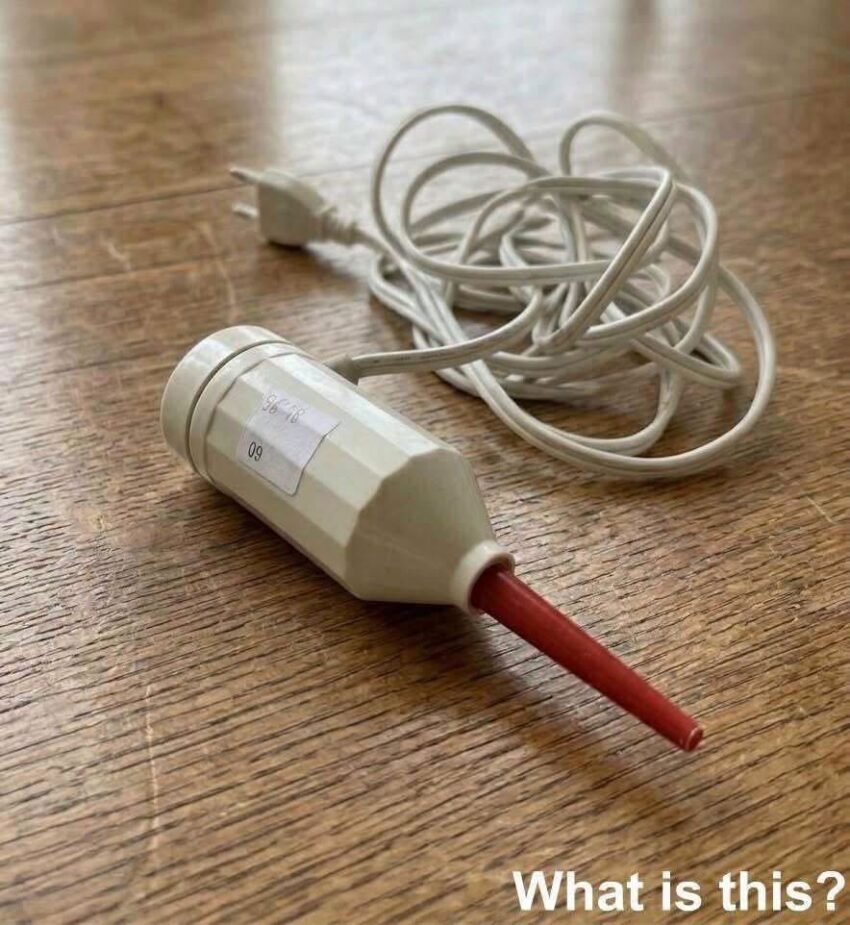
A Vintage Tape Head Demagnetizer (Single Probe) is a maintenance tool used for analog audio equipment such as cassette decks, reel-to-reel tape recorders, and some multitrack tape machines.
What it is used for
Over time, the metal parts that contact magnetic tape—especially the record/playback heads, capstan, and metal tape guides—can become slightly magnetized. This can cause:
- Loss of high-frequency audio
- Increased tape hiss or noise
- Reduced recording quality
- Gradual erasure or degradation of recordings in severe cases
A tape head demagnetizer creates a controlled alternating magnetic field that removes this residual magnetism.
How to use it
- Turn off the tape recorder.
- Keep the demagnetizer several feet (about 1 meter) away from the machine before switching it on.
- Turn the demagnetizer on.
- Slowly bring the probe toward the tape heads and other metal tape path components without touching them.
- Move the probe gently around each metal part for a few seconds.
- Slowly withdraw the probe several feet away.
- Turn the demagnetizer off only after it is well away from the tape deck.
Important precautions
- Never switch the demagnetizer on or off while it is close to the tape heads, as this can magnetize them instead of demagnetizing them.
- Avoid touching delicate tape heads with the probe.
- Keep magnetic tapes away from the energized demagnetizer.
- Follow any instructions specific to the model if available.
When to use it
- After every 20–50 hours of tape use (a common guideline).
- If you notice reduced treble response or degraded recording/playback quality.
- After extensive recording sessions.
Does every tape deck need it?
For vintage analog equipment, periodic demagnetization was a standard maintenance practice. Modern digital audio equipment does not require tape head demagnetization because it has no magnetic tape heads.
If you have the brand or model number of your vintage single-probe demagnetizer, I can provide model-specific instructions and any available manual information.