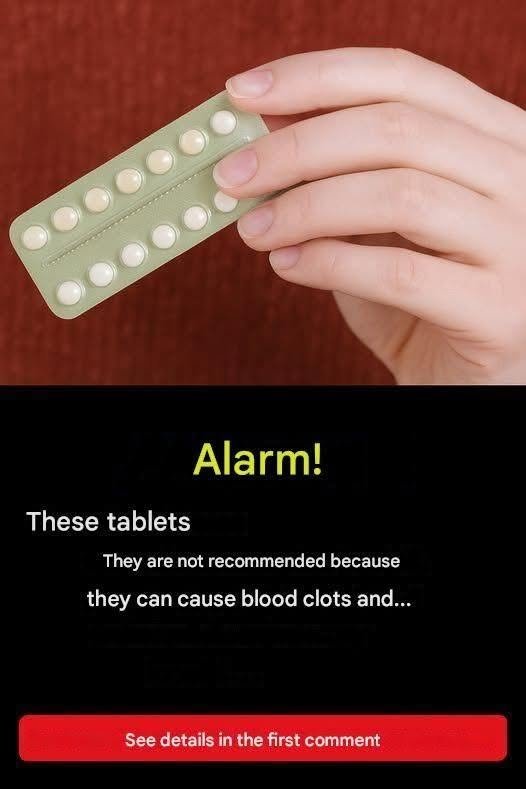
If a medication or supplement carries a warning that it “can cause blood clots,” it means there is evidence that it may increase the risk of forming clots in the blood vessels. Blood clots can be serious because they may block blood flow to important organs.
What are blood clots?
A blood clot is a mass of blood that changes from a liquid to a gel-like or solid state. Clotting is a normal process that helps stop bleeding after an injury. However, clots that form inside blood vessels without a good reason can be dangerous.
Why can some pills increase the risk?
Certain medications, especially those containing estrogen (such as some birth control pills or hormone replacement therapy), can:
- Increase the production of clotting factors in the liver.
- Reduce the body’s natural ability to break down clots.
- Make blood more likely to clot under certain conditions.
Types of dangerous blood clots
- Deep vein thrombosis (DVT): A clot that usually forms in a deep vein of the leg.
- Pulmonary embolism (PE): A clot that travels to the lungs and blocks blood flow. This is a medical emergency.
- Stroke: A clot blocks blood flow to part of the brain.
- Heart attack: A clot blocks blood flow to the heart muscle.
Symptoms to watch for
Seek emergency medical care if you experience:
- Swelling, pain, warmth, or redness in one leg.
- Sudden shortness of breath.
- Chest pain, especially if it worsens when breathing deeply.
- Coughing up blood.
- Sudden weakness or numbness on one side of the body.
- Difficulty speaking or sudden vision changes.
Who is at higher risk?
The risk of blood clots is higher in people who:
- Smoke, especially if over age 35.
- Have obesity.
- Have had a previous blood clot.
- Have a family history of blood clots.
- Have certain inherited clotting disorders.
- Are pregnant or have recently given birth.
- Have cancer.
- Have prolonged immobility (such as after surgery or during long flights).
How common is the risk?
For most healthy people taking medications like combined hormonal birth control, blood clots are uncommon, but the risk is higher than in people who do not take these medications. The absolute risk depends on:
- The specific medication.
- Your age.
- Your medical history.
- Other risk factors such as smoking or obesity.
How to reduce the risk
- Take the medication exactly as prescribed.
- Avoid smoking if using estrogen-containing medications.
- Stay physically active and avoid sitting still for long periods.
- Tell your healthcare provider about any personal or family history of blood clots.
- Discuss alternative medications if you have significant risk factors.
Should everyone avoid these pills?
No. Many people take medications that carry a blood clot warning safely. Healthcare providers weigh the benefits against the risks for each individual. If you have risk factors for blood clots, your clinician may recommend a different medication.
If you tell me the name of the pill or medication, I can explain why it carries this warning, how great the risk is, and who should avoid it.