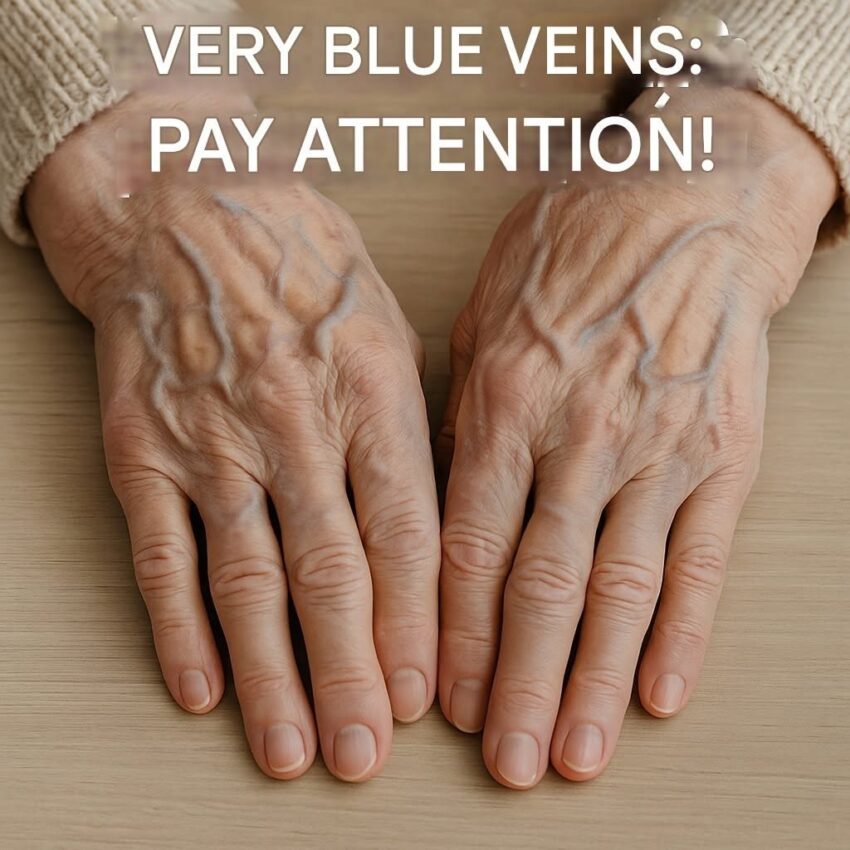
Here’s a detailed explanation of the common reasons:
🟦 1. Normal visible veins (most common)
Blue veins often appear simply because of how light and skin work—not because the blood is actually blue.
- Blood in veins is dark red, but skin filters light so veins look blue/green.
- More visible in:
- Fair or thin skin
- Low body fat
- Lean people or athletes
- Warm weather (veins expand)
- After exercise (increased blood flow)
👉 This is usually harmless.
🟦 2. Thin skin or aging
As skin becomes thinner (with age or genetics):
- Fat layer under skin reduces
- Veins become more visible
- Skin loses collagen and elasticity
This is very common in older adults.
🟦 3. Exercise and muscle activity
Regular exercise can make veins more visible:
- Muscles push veins closer to the surface
- Blood flow increases
- Veins may look “bulging” or prominent
Common in athletes and gym-goers.
🟦 4. Genetics
Some people naturally have more visible veins due to:
- Skin tone
- Vein structure
- Body fat distribution
If family members have visible veins, it’s often inherited.
🟦 5. Varicose veins (important cause)
If veins are:
- Bulging
- Twisted or rope-like
- Aching or heavy feeling in legs
It may be varicose veins, caused by weak vein valves.
Symptoms:
- Leg pain or heaviness
- Swelling
- Itching around veins
This may need medical treatment if severe.
🟦 6. Venous insufficiency (circulation problem)
When veins don’t return blood properly:
- Blood pools in legs
- Veins become enlarged and visible
- Swelling around ankles
More common in older age, pregnancy, or standing long hours.
🟦 7. Heat or temperature changes
Heat causes veins to expand (dilate):
- Makes them more visible temporarily
- Common in hot weather or after hot showers
🟦 8. Pregnancy
During pregnancy:
- Blood volume increases
- Pressure on leg veins increases
- Hormones relax vein walls
So veins often become more visible, especially in legs.
🟥 When blue veins may be a concern
You should get checked if you notice:
- Sudden appearance of large veins
- Pain, swelling, or warmth
- Skin discoloration around veins
- One leg more swollen than the other
- Shortness of breath (urgent—could indicate clot)
🟢 Simple summary
- Most blue veins = normal and harmless
- Often related to skin type, body fat, temperature, or exercise
- Sometimes linked to varicose veins or circulation issues
If you want, tell me:
- where the veins are (hands, legs, chest, etc.)
- whether there is pain or swelling
I can explain what it likely means in your specific case.