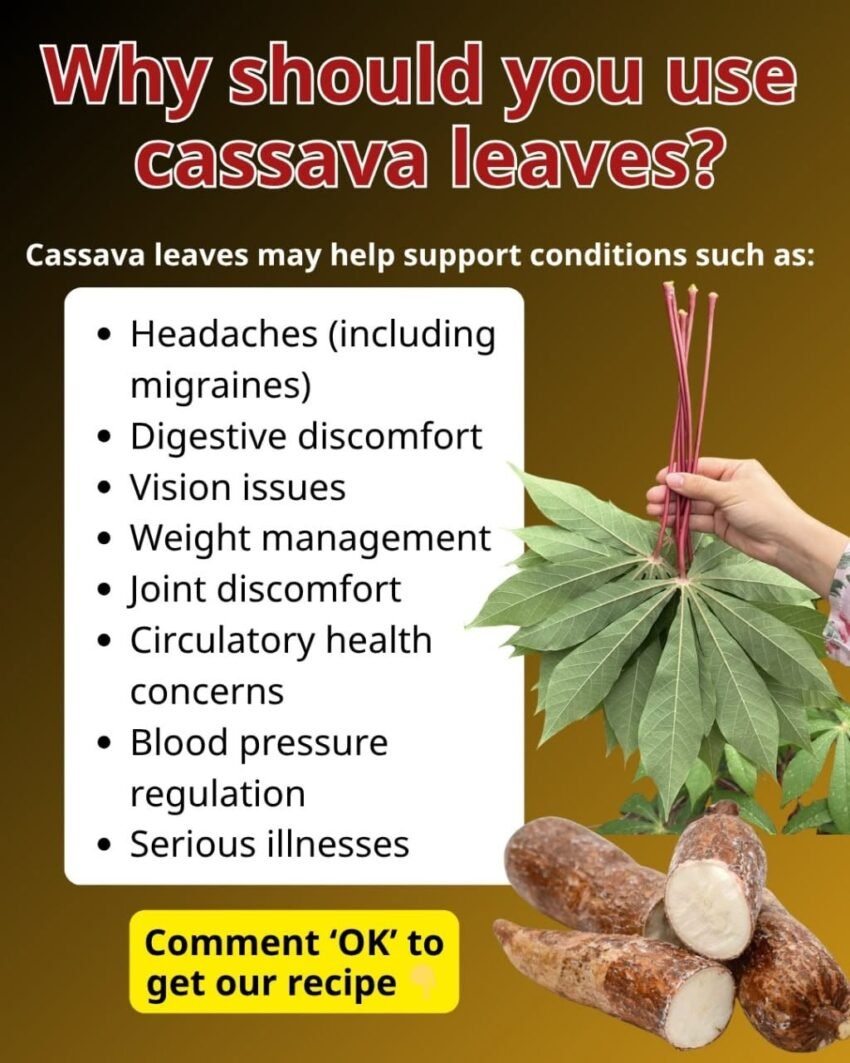
Cassava leaves are edible and nutritious, but they must be prepared properly because raw cassava leaves contain naturally occurring compounds that can release cyanide. Correct cooking makes them safe to eat.
Nutritional benefits
Cassava leaves are rich in:
- Protein: Higher in protein than the cassava root, making them a valuable leafy vegetable.
- Vitamin A (beta-carotene): Supports vision, skin health, and the immune system.
- Vitamin C: Helps with immunity, wound healing, and iron absorption.
- B vitamins: Important for energy production and nervous system function.
- Iron: Helps prevent iron-deficiency anemia.
- Calcium: Supports healthy bones and teeth.
- Potassium: Helps regulate blood pressure and muscle function.
- Magnesium: Important for muscles, nerves, and many enzyme reactions.
- Dietary fiber: Supports digestion and may help with blood sugar control.
Health benefits
When eaten as part of a balanced diet, properly cooked cassava leaves may:
- Support immune function due to their vitamins A and C.
- Help maintain healthy bones because of calcium and magnesium.
- Support healthy blood by providing iron and folate.
- Aid digestion thanks to their fiber content.
- Help protect cells from damage because they contain antioxidants.
- Contribute to muscle maintenance because they contain plant protein.
How to prepare them safely
- Pick fresh, healthy leaves.
- Wash them thoroughly.
- Remove tough stems if desired.
- Chop or pound the leaves into small pieces.
- Boil them in plenty of water for at least 15–30 minutes (some traditional recipes boil longer and discard the first cooking water).
- Drain the water before using in recipes.
Do not eat raw or lightly cooked cassava leaves.
Ways to use cassava leaves
After boiling, they can be:
- Cooked with onions, tomatoes, garlic, and spices.
- Simmered in coconut milk.
- Added to soups and stews.
- Mixed with beans, peanuts, fish, or meat.
- Served alongside rice, maize, or cassava.
Are there any risks?
- Raw or undercooked leaves can cause cyanide poisoning.
- People with iodine deficiency who eat large amounts of poorly processed cassava products over long periods may have an increased risk of thyroid problems.
- Eat them as part of a varied diet rather than relying on them as your only vegetable.
Overall, properly cooked cassava leaves are a nutritious leafy vegetable that provide protein, vitamins, minerals, and fiber, and they can be a healthy addition to many meals.