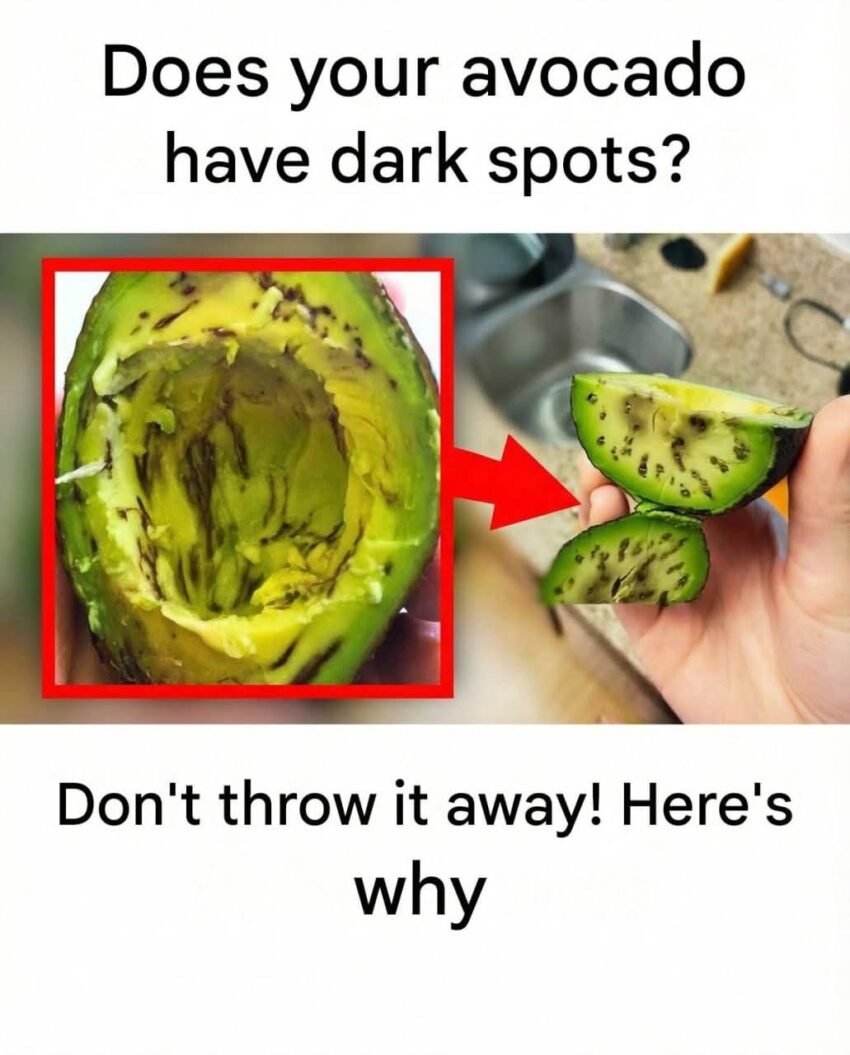
If your avocado has dark spots, the cause depends on what the spots look like and where they are located. Some dark spots are harmless, while others indicate spoilage.
1. Bruising (Usually Safe to Eat)
Dark brown or black spots inside an avocado are often caused by bruising during harvesting, shipping, or handling.
Signs
Isolated dark patches in the flesh
The rest of the avocado looks green and fresh
No bad smell
What to Do
Cut away the dark areas.
Eat the remaining green flesh if it tastes and smells normal.
2. Overripe Avocado
As an avocado ages, parts of the flesh may begin to darken.
Signs
Widespread brown streaks or spots
Very soft texture
Slightly mushy flesh
What to Do
If only a few areas are affected, remove them and use the rest promptly.
If most of the flesh is brown and mushy, quality will be poor.
3. Oxidation After Cutting
Once an avocado is cut, exposure to air causes browning.
Signs
Brown surface layer
Green flesh underneath
No unpleasant odor
What to Do
Scrape off the top browned layer if desired.
The avocado is usually still safe to eat.
4. Spoilage (Do Not Eat)
Sometimes dark spots indicate that the avocado has gone bad.
Signs
Large black areas throughout the fruit
Mold growth
Sour, rancid, or unpleasant smell
Slimy texture
What to Do
Discard the avocado.
How to Check if an Avocado Is Good
Good Avocado
Light green to yellow-green flesh
Mild, fresh smell
Creamy texture
Bad Avocado
Extensive black or brown flesh
Stringy, slimy, or watery texture
Strong unpleasant odor
Preventing Browning
After cutting:
1. Sprinkle with lemon or lime juice.
2. Cover tightly with plastic wrap, pressing it against the surface.
3. Store in the refrigerator.
4. Use within 1–2 days.
Quick Rule
A few dark spots from bruising are usually harmless. If the avocado smells bad, is slimy, moldy, or has extensive black discoloration, it is best to throw it away.