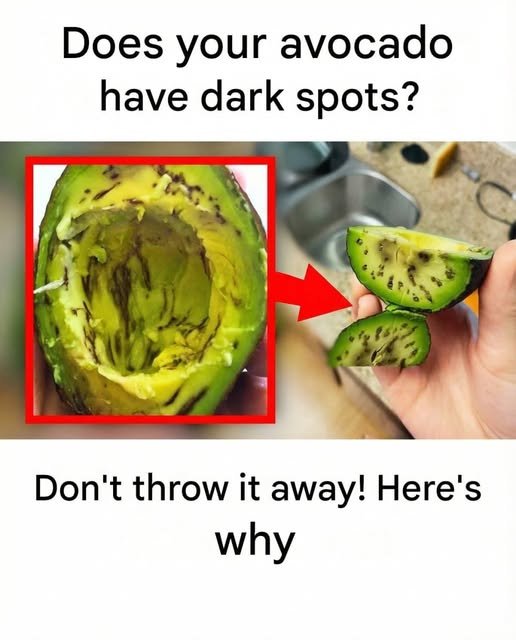
Dark spots in an Avocado don’t automatically mean it’s bad. In many cases, it’s still perfectly edible—they’re usually caused by natural processes or minor damage rather than spoilage.
Here’s what those dark spots actually mean:
1. Bruising (most common)
Avocados bruise easily during transport or squeezing. The flesh under the skin gets damaged, and enzymes react with oxygen, turning it brown or black.
- Texture: soft, but not rotten
- Safety: fine to eat, just cut away the dark parts if you prefer
2. Oxidation (like apples turning brown)
Once the avocado is cut, exposure to air causes enzymatic browning.
- Usually affects surface areas
- Doesn’t mean it’s spoiled
- Still safe unless smell or texture is off
3. Overripening
As an avocado becomes too ripe:
- Flesh may develop dark streaks or patches
- Texture becomes very soft or mushy
- Taste can become slightly bitter or “fermented”
If it still smells normal, it’s usually safe, but quality is lower.
4. Cold damage (chilling injury)
If stored too cold (like near freezing in a fridge or cold transport), the flesh can develop:
- Gray or dark spots inside
- Watery or stringy texture
- Slight flavor changes
5. Actual spoilage (when to throw it away)
Not all dark spots are harmless. Discard the avocado if you notice:
- Strong sour or rotten smell
- Mold (fuzzy growth)
- Very slimy texture
- Off taste (sour, fermented, or rancid)
Bottom line
Dark spots alone don’t mean you should throw it away. In most cases, you can simply scoop out the affected areas and use the rest.
If you want, I can also show you how to tell in 10 seconds whether an avocado is still good or not.