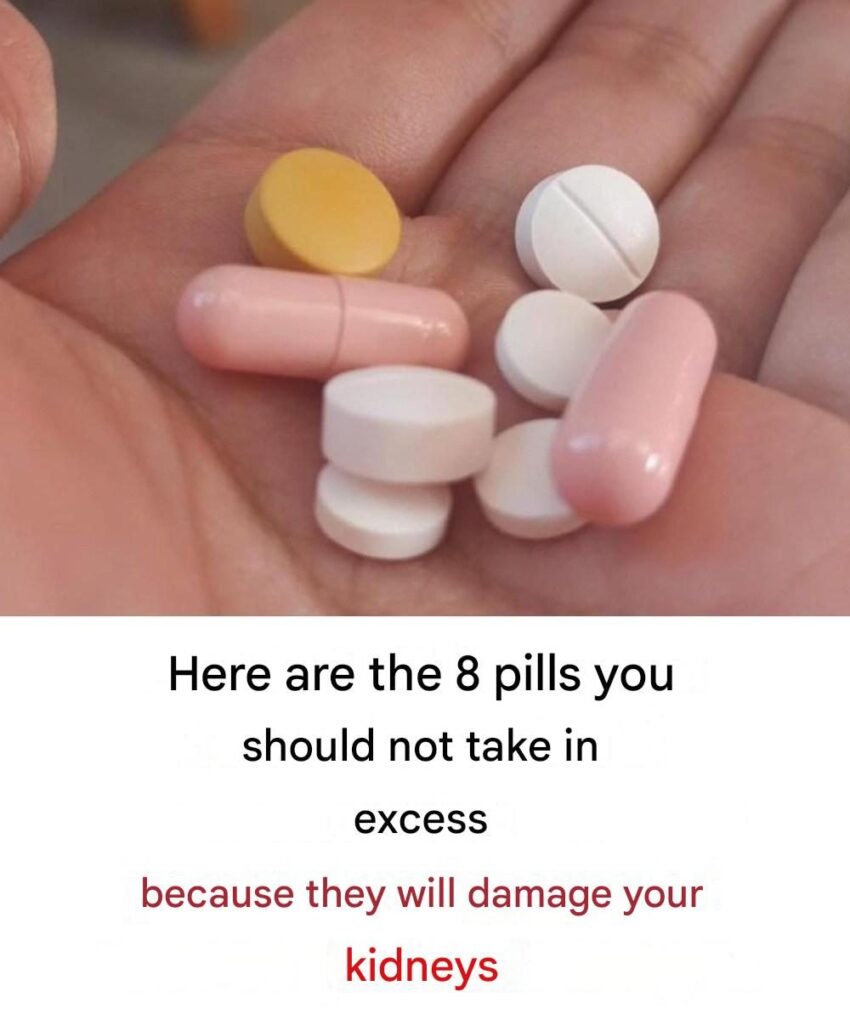
Here are 8 common types of medicines linked to kidney damage risk:
1. Ibuprofen (NSAIDs)
Examples: Advil, Nurofen
Ibuprofen belongs to a group called NSAIDs (non-steroidal anti-inflammatory drugs).
- They reduce blood flow to the kidneys by blocking protective prostaglandins
- Risk increases with dehydration, fever, or long-term use
- Can cause acute kidney injury (AKI) in sensitive people
👉 Risk is higher if combined with other NSAIDs or diuretics.
2. Naproxen (NSAIDs)
Examples: Aleve, Naprosyn
- Works like ibuprofen but lasts longer in the body
- Long-term use can stress kidney filtration
- Especially risky in older adults or people with hypertension
3. Diclofenac (NSAID)
Examples: Voltaren, Cataflam
- Strong NSAID often used for joint pain
- Associated with higher kidney and cardiovascular risk compared to some other NSAIDs
- Chronic use can reduce kidney function over time
4. Proton Pump Inhibitors (PPIs)
Examples: Omeprazole (Prilosec), Esomeprazole (Nexium)
- Used for acidity and GERD
- Long-term use has been linked to:
- Acute interstitial nephritis (kidney inflammation)
- Chronic kidney disease in some studies
👉 Risk increases with months/years of continuous use.
5. Certain Antibiotics (Aminoglycosides)
Examples: Gentamicin, Amikacin
- Very effective for serious infections
- Can directly damage kidney tubules
- Usually given in hospitals with monitoring
👉 Risk increases with high doses or prolonged therapy.
6. Lithium (Mood stabilizer)
Used for: Bipolar disorder
- Can cause chronic kidney disease with long-term use
- Requires regular blood and kidney monitoring
- Toxic levels can quickly damage kidneys
7. ACE inhibitors / ARBs (Blood pressure meds)
Examples: Lisinopril, Enalapril, Losartan
- Usually kidney-protective long term, but:
- Can reduce kidney filtration initially
- Risky in dehydration or kidney artery narrowing
👉 Not “dangerous” in most people, but needs monitoring.
8. Contrast dye (used in CT scans)
Not a pill, but commonly missed medication exposure.
- Iodinated contrast can cause contrast-induced nephropathy
- Risk higher in:
- Diabetes
- Existing kidney disease
- Dehydration
Important reality check
Most of these medicines are safe when used correctly. Kidney damage usually happens when:
- Taken for too long without supervision
- Combined with dehydration (diarrhea, heat, low water intake)
- Used in high doses
- Used by people with existing kidney disease, diabetes, or older age
Warning signs of kidney stress
If someone has been using these medicines, watch for:
- Reduced urination
- Swelling in feet/face
- Fatigue
- Nausea
- Foamy urine
- Back/flank pain
If you want, I can also tell you:
- safer alternatives for pain relief
- how to protect kidneys if you must take NSAIDs
- early kidney damage symptoms and tests (creatinine, eGFR)