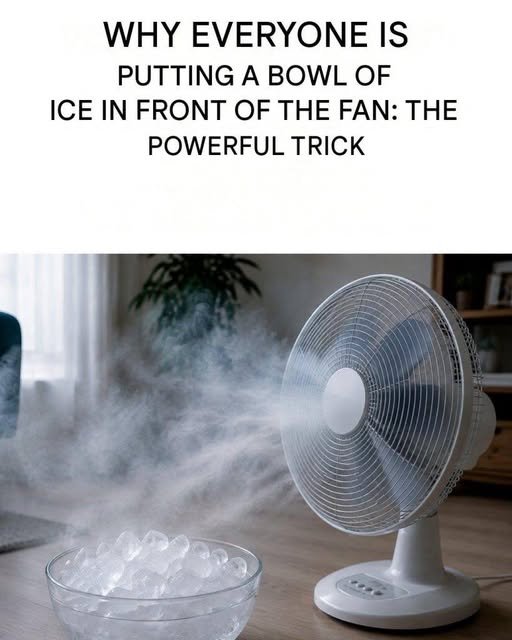
here’s a detailed, ready-to-publish article on using a fan and ice to cool a home without air conditioning.
Fan and Ice to Cool Your Home: The Economical Trick to Beat the Heat Without Air Conditioning
When summer temperatures rise, keeping a home comfortable can become expensive, especially when an air conditioner runs for hours every day. But there is a simple, low-cost method that can provide temporary relief from the heat: using a fan with ice.
This technique does not replace an air conditioner, and it will not cool an entire home as effectively as a properly sized AC system. However, when used correctly, a fan blowing air across ice can make the air immediately in front of the fan feel noticeably cooler. It can be particularly useful for a bedroom, desk, sofa, or other small area.
Here is how the method works, how to set it up safely, and how to get the most cooling possible from it.
How Does the Fan-and-Ice Trick Work?
A fan by itself does not actually lower the temperature of a room. Instead, it moves air across your skin, helping sweat evaporate and making you feel cooler.
Ice can add another cooling effect.
When air passes over or near ice, some heat from the surrounding air is absorbed as the ice melts. The fan then moves this cooler air toward you.
A simple setup therefore combines two effects:
- The fan circulates air.
- The ice absorbs heat as it melts.
- The moving air increases evaporation from your skin.
The result is a localized cooling effect that can make sitting or sleeping near the fan more comfortable.
What You Need
You do not need expensive equipment. A basic setup can include:
- A household electric fan
- A large bowl, tray, or container
- Several large ice cubes or frozen water bottles
- A stable table, chair, or other elevated surface
- A towel to protect the surface from condensation or spills
Why Frozen Water Bottles Can Be Better Than Loose Ice
Instead of putting loose ice into a bowl, consider freezing several plastic bottles filled with water.
Place the frozen bottles in front of or behind the fan, depending on the fan design, and allow air to circulate around them.
Frozen bottles have several advantages:
- They are less messy than loose ice.
- Meltwater remains inside the bottle.
- They can be refrozen and reused.
- They provide a longer-lasting cooling source.
- There is less risk of water getting near electrical equipment.
Never place water or ice where melting water can reach the fan’s electrical components, outlets, extension cords, or other electrical equipment.
How to Set Up a Fan and Ice
Step 1: Choose the Right Location
Place the fan where you will actually benefit from the airflow.
For example, if you are working at a desk, position the fan so the airflow reaches you directly. If you are relaxing on a sofa, aim the fan toward the seating area.
You do not necessarily need to cool the entire room.
Step 2: Prepare the Ice
Fill a large container with ice or use several frozen water bottles.
If using loose ice, put it in a container that can safely hold the resulting meltwater.
A shallow container can provide a larger exposed surface area, while frozen bottles are usually easier and safer to manage.
Step 3: Position the Ice Near the Airflow
Place the ice container where air from the fan can pass over it without creating a safety hazard.
Do not block the fan’s ventilation openings, and keep water well away from electrical connections.
The objective is to allow moving air to interact with the cold surface and then reach you.
Step 4: Turn the Fan On
Start with a moderate fan speed.
If you are sitting nearby, direct the airflow toward yourself. You can experiment with the fan’s position until you find the most comfortable combination of airflow and cooling.
Step 5: Replace or Refreeze the Ice
As the ice melts, its cooling effect decreases.
If you are using frozen bottles, rotate them with another set from the freezer. This allows you to maintain cooling for longer periods.
An Even Better Method: Use Frozen Water Bottles
For many people, frozen water bottles are one of the easiest versions of this trick.
Fill several reusable, freezer-safe bottles with water, leaving some empty space for expansion. Freeze them, then place the frozen bottles near the airflow from a fan.
As the frozen water absorbs heat, it gradually melts.
Once the bottles have thawed, put them back in the freezer and replace them with another frozen set.
This creates a simple rotation system.
Frozen → Use near fan → Thaw → Refreeze → Reuse
It is inexpensive because the same water can be frozen repeatedly.
Where Should You Put the Fan?
The best fan position depends on the weather and your goal.
During the Day
If the outside temperature is hotter than the indoor temperature, keep hot outdoor air from entering unnecessarily.
Close blinds or curtains on windows receiving direct sunlight. Use the fan to circulate air within the room and direct it toward the people who need cooling.
At Night
If outdoor temperatures fall below indoor temperatures, opening suitable windows can help release accumulated heat.
A fan can then help move cooler outdoor air into the home or push warm indoor air outside.
For example, one fan positioned near a window can exhaust warm air while another opening allows cooler air to enter.
This approach can be more effective than simply blowing air around the room.
Use Curtains and Blinds to Make the Trick More Effective
The fan-and-ice method works best when you first reduce the amount of heat entering your home.
Sunlight coming through windows can significantly warm a room.
During the hottest part of the day:
- Close blinds.
- Draw curtains.
- Keep sun-facing windows shaded.
- Consider reflective window coverings where appropriate.
- Keep unnecessary lights switched off.
- Avoid using heat-producing appliances unnecessarily.
Think of cooling as a two-part strategy:
Stop heat from coming in + remove or redistribute heat already inside.
This can make a much bigger difference than relying on ice alone.
Don’t Expect Ice to Cool an Entire House
One important limitation is that ice is not a replacement for an air conditioner.
A small bowl of ice contains a limited amount of cooling capacity. Once the ice melts, that cooling source is gone.
Furthermore, the heat removed from the room ultimately has to go somewhere. If you continually melt large amounts of ice indoors, you are effectively using energy from your freezer to provide cooling.
The method is therefore best thought of as personal or localized cooling, rather than whole-house air conditioning.
It can work particularly well when:
- You are sitting close to the fan.
- You are sleeping in a small room.
- You need temporary relief.
- You want to reduce your dependence on AC for short periods.
- You are trying to cool a specific area rather than the whole house.
Does Putting Ice in Front of a Fan Really Work?
Yes, but the effect needs to be understood correctly.
The fan itself does not become an air conditioner. Instead, the ice provides a cold surface that can absorb heat, while the fan moves air across the area.
You may feel significantly cooler because of the combination of cooler air and increased air movement across your skin.
However, the actual temperature reduction throughout the entire room may be relatively small.
This distinction is important:
Feeling cooler does not necessarily mean the entire room has become much colder.
For personal comfort, however, that difference can still be valuable.
A Simple DIY Cooling Station
You can create a basic cooling station using:
Fan + frozen water bottles + bowl/tray + towel
Place the towel underneath the container to catch condensation or accidental drips.
Position the frozen bottles so air can circulate around them.
Aim the fan toward the area where you are sitting.
Keep the arrangement stable and check it regularly for water.
This setup costs very little if you already own a fan and freezer.
Safety Precautions
Although the idea is simple, water and electricity require caution.
Keep Water Away From Electricity
This is the most important rule.
Never allow melting ice or spilled water to reach:
- The fan’s motor
- Power strips
- Electrical outlets
- Extension cords
- Plugs
- Chargers
- Other electrical appliances
Place containers securely and use a tray or towel to control condensation.
Don’t Put Ice Directly on the Fan
Do not put loose ice inside a fan unless the fan is specifically designed for that purpose.
A normal household fan is an electrical appliance, not an evaporative cooler.
Don’t Overfill Bottles
Water expands when it freezes. If freezing water bottles, leave adequate space for expansion and use containers suitable for freezing.
Keep the Setup Stable
Make sure the fan and ice container cannot easily fall over.
This is especially important in homes with children or pets.
Clean Containers Regularly
If you use a bowl repeatedly, wash and dry it regularly to prevent unpleasant odors or buildup.
Other Cheap Ways to Stay Cool Without AC
The fan-and-ice method works better when combined with other low-cost cooling strategies.
1. Close Windows During the Hottest Hours
If the outdoor air is hotter than the indoor air, opening windows can sometimes make the room warmer.
Keep windows closed during the hottest period when appropriate, especially on the sunny side of the home.
2. Ventilate at Night
When outdoor temperatures drop below indoor temperatures, open appropriate windows to release accumulated heat.
3. Use Fans Strategically
Instead of running several fans randomly, think about where the air needs to go.
A fan can:
- Blow directly toward you for personal cooling.
- Exhaust hot air through a window.
- Circulate air between rooms.
- Help move cooler nighttime air indoors.
4. Reduce Indoor Heat Sources
Turn off unnecessary lights and electronics.
Avoid using ovens and other heat-producing appliances during the hottest part of the day when possible.
5. Keep Sunlight Out
Shade windows that receive strong direct sunlight.
Exterior shading can be especially effective because it stops some solar heat before it enters through the glass.
6. Stay Hydrated
Your body needs water to regulate temperature, particularly in hot conditions.
Drink fluids regularly and avoid relying solely on fans or ice to manage extreme heat.
What About a Wet Towel Behind the Fan?
Another popular DIY cooling method involves placing a damp towel near a fan.
This can provide evaporative cooling in dry climates, because evaporation removes heat from the surrounding air.
However, the effectiveness decreases when humidity is already high.
In humid conditions, adding more moisture to the air may provide little benefit and can make the environment feel uncomfortable.
For this reason, the fan-and-ice approach and evaporative cooling should not be treated as identical methods.
Fan and Ice vs. Air Conditioning
| Feature | Fan + Ice | Air Conditioner |
|---|---|---|
| Initial cost | Very low if you own a fan | Higher |
| Electricity use | Fan uses relatively little electricity, but ice requires freezer energy | Generally higher |
| Whole-room cooling | Limited | Effective when properly sized |
| Personal cooling | Good | Good |
| Humidity reduction | Little to none | Yes, typically |
| Setup | Simple | More involved |
| Maintenance | Minimal | Requires maintenance |
| Long-term solution | No | Yes |
The fan-and-ice method is best viewed as a supplementary cooling strategy, not a direct substitute for air conditioning.
How to Get the Most Benefit
For the best results, combine several strategies:
During the day:
- Close curtains and blinds.
- Keep unnecessary heat-producing appliances off.
- Keep the hottest outdoor air out when appropriate.
- Use a fan for direct personal cooling.
- Use frozen bottles near the airflow if desired.
At night:
- Check whether outdoor air is cooler than indoor air.
- Open appropriate windows if conditions allow.
- Use fans to exhaust hot indoor air.
- Allow cooler air to circulate through the home.
This approach can reduce how much cooling you need while keeping you more comfortable.
Is It Really Cheaper Than Air Conditioning?
It depends on how you use it.
A fan generally consumes much less electricity than a typical room air conditioner. However, the ice itself is not “free cooling.” A freezer must use electricity to freeze the water, so repeatedly freezing large quantities of ice adds an energy cost.
The biggest advantage is therefore not that ice magically provides extremely cheap whole-house cooling. The advantage is that localized cooling can reduce the need to cool the entire room or house.
If you only need to cool one person sitting at a desk, for example, cooling that person directly can require far less energy than trying to lower the temperature of an entire building.
The Bottom Line
Using a fan with ice or frozen water bottles is a simple and inexpensive way to get temporary, localized relief from hot weather without running an air conditioner.
The trick works because the ice absorbs heat while the fan moves air, and the moving air also helps sweat evaporate from your skin.
For the best results, don’t rely on ice alone. Shade sunny windows, reduce indoor heat sources, use fans strategically, and take advantage of cooler nighttime temperatures when possible.
Most importantly, remember that a fan-and-ice setup is a comfort technique, not a substitute for air conditioning during dangerously hot weather. During extreme heat, prioritize a safe, genuinely cool environment, particularly for older adults, young children, pets, and anyone vulnerable to heat illness.
When used sensibly and safely, however, this simple trick can be a useful part of a low-cost summer cooling strategy.
If you want, I can also turn this into a 2,000–3,000 word SEO article with an engaging introduction, FAQs, meta title, meta description, and keyword-rich headings.