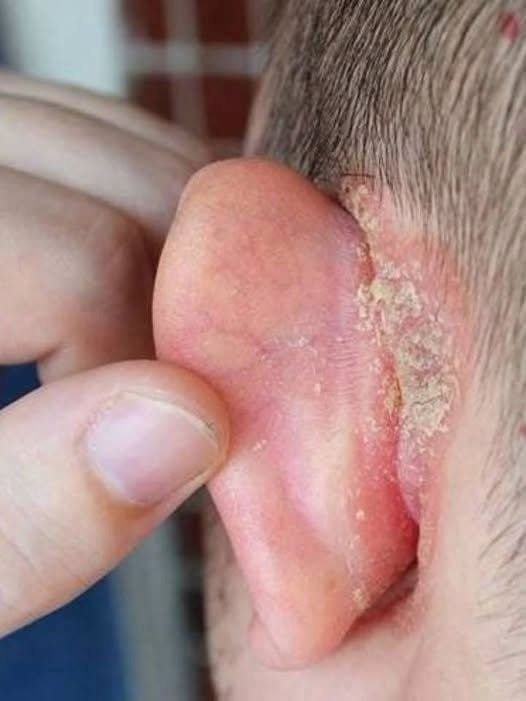
A strange patch of skin on your son’s ear can have many causes, ranging from minor irritation to something that needs medical attention. Since his appointment is a week away, the main goal is to observe carefully, avoid making it worse, and know when to seek earlier care.
Because I can’t see the patch, I’ll give you a detailed approach. If you can, upload a clear photo (good lighting, close-up and one from a little farther away for context) and tell me his age, how long it has been there, and any symptoms.
1. First, check and document what you’re seeing
Look at the patch and note:
- Location
- Outer ear (the visible cartilage)?
- Behind the ear?
- Earlobe?
- Inside the ear opening?
- Appearance
- Red, pink, brown, white, purple, or skin-colored?
- Flat or raised?
- Dry, scaly, flaky, cracked, crusty, shiny, or moist?
- A ring-shaped patch?
- A blister, bump, sore, or open wound?
- Symptoms
- Is it itchy?
- Painful or tender?
- Warm or swollen?
- Bleeding or leaking fluid?
- Does your son keep touching or scratching it?
Take a photo today and another every 1–2 days in similar lighting. This helps you notice whether it is changing.
2. What you can do safely while waiting
Keep the area clean
- Wash gently with lukewarm water.
- If needed, use a mild, fragrance-free cleanser.
- Pat dry — don’t rub.
Avoid irritation
Until a doctor sees it, avoid:
- Scratching or picking at it.
- Alcohol, hydrogen peroxide, or strong antiseptics (they can irritate skin and delay healing).
- Perfumed creams, lotions, or new skincare products.
- Ear jewelry if the patch is near a piercing.
- Tight hats, headphones, or anything rubbing that area.
Moisturize if it looks dry
If the skin is simply dry, cracked, or irritated:
- A thin layer of plain petroleum jelly (such as a fragrance-free barrier ointment) can help protect it.
- Stop if it causes burning, redness, or worsening.
3. Common possibilities (not a diagnosis)
A patch on the ear can sometimes be from:
Dry skin or eczema
Often:
- Dry, flaky, itchy
- Comes and goes
- May worsen with soaps, weather changes, or allergies
Contact irritation or allergy
Possible triggers:
- New shampoo, soap, sunscreen, detergent
- Headphones, helmets, hats
- Metal from earrings
Fungal skin infection (ringworm/tinea)
May look like:
- A circular patch
- Scaly border
- Slowly enlarging
- Itchy
Minor injury or irritation
Examples:
- Scratching
- Insect bite
- Friction from clothing or devices
Infection
More concerning signs include:
- Increasing redness
- Warmth
- Swelling
- Pain
- Pus or crusting
4. Seek medical advice sooner than the scheduled appointment if you notice:
Contact his doctor sooner, urgent care, or a medical service if:
- The patch is rapidly spreading.
- The ear becomes swollen, very red, hot, or painful.
- There is pus, yellow crusting, drainage, or a bad smell.
- Your son develops a fever.
- The ear cartilage becomes painful or swollen.
- The skin turns black, blue, or unusually purple.
- There are blisters, a spreading rash, or facial swelling.
- Your child seems unusually ill, tired, or distressed.
- The patch is near the ear canal and he has ear pain, hearing changes, or discharge.
5. Things to avoid before the appointment
Avoid starting:
- Prescription steroid creams you have at home.
- Antibiotic creams unless a clinician recommends them.
- Antifungal treatments unless you have a reasonable reason to suspect fungus and can confirm with a healthcare professional.
Some treatments can change the appearance and make diagnosis harder.
6. Helpful information to bring to the doctor
Write down:
- When you first noticed it.
- Whether it is getting bigger or changing.
- Any itching, pain, or discharge.
- New products used recently.
- Any allergies or eczema history.
- Photos showing progression.
If you reply with:
- Your son’s age
- Where exactly on the ear the patch is
- Color and texture (dry/scaly? smooth? raised?)
- Size (for example, pea-sized, coin-sized)
- Any itching, pain, fever, or drainage
…I can help you narrow down what it might be and how urgent it sounds.