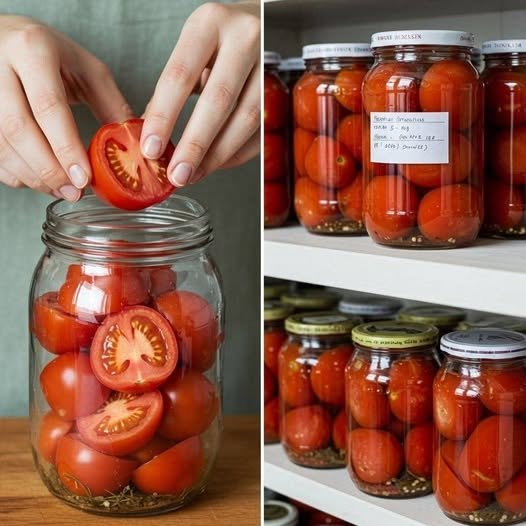
If you’re referring to a claim like “Fresh tomatoes for 2 years without vinegar: a reliable preservation method”, it’s worth being cautious. Preserving tomatoes for long-term storage without vinegar or another approved acidification method can be unsafe.
Why it’s risky
Tomatoes are borderline acidic. Some varieties are not acidic enough to safely prevent the growth of Clostridium botulinum, the bacterium that causes botulism. For this reason, food safety authorities recommend adding acid (such as bottled lemon juice or citric acid) when canning tomatoes unless you’re using a tested pressure-canning recipe.
Safe ways to preserve tomatoes for up to 2 years
- Water-bath canning (acidified)
- Use ripe, healthy tomatoes.
- Add bottled lemon juice or citric acid to each jar as directed in tested recipes.
- Process jars for the recommended time.
- Shelf life: Best quality for 12–18 months; often safe longer if seals remain intact.
- Pressure canning
- Follow a tested pressure-canning recipe.
- Suitable for tomatoes and tomato mixtures when prepared according to guidelines.
- Freezing
- Wash, core, and freeze whole or chopped tomatoes.
- Best quality for 8–12 months.
- Drying
- Dehydrate tomato slices until leathery.
- Store in airtight containers in a cool, dark place.
About the “2 years without vinegar” claim
Many online articles and social media posts describe homemade preservation methods that have not been scientifically tested for safety. Even if they appear to work, they may not reliably prevent dangerous bacterial growth.
If you have the full article or recipe from October 25, 2025, paste it here, and I can review it step by step to determine whether it follows safe food preservation practices.