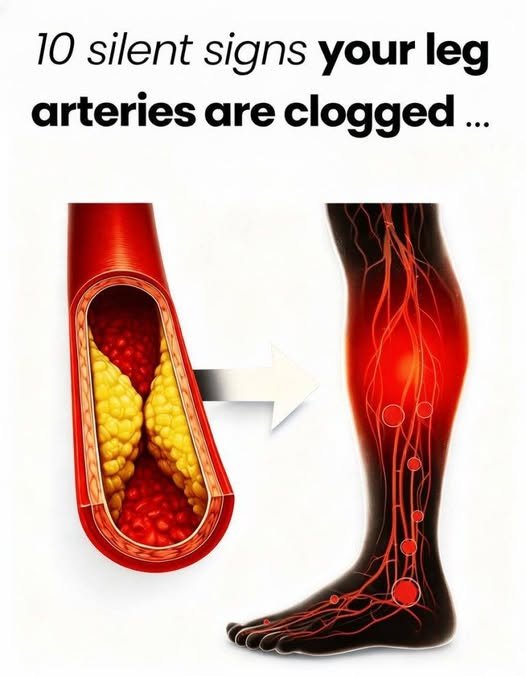
You Can’t Ignore
“Clogged arteries” in the legs usually refers to peripheral artery disease (PAD) — a condition where fatty deposits called plaques build up inside the arteries that carry blood to your legs and feet. Over time, this narrowing reduces blood flow, meaning your muscles and tissues may not receive enough oxygen.
Many people think PAD always causes obvious pain, but it can develop quietly. The early warning signs are often subtle and easy to dismiss.
Below are 10 sneaky signs of clogged leg arteries that deserve attention.
1. Leg Pain or Cramping While Walking (That Improves With Rest)
One of the classic signs of PAD is called intermittent claudication.
What it feels like:
- Cramping, aching, burning, or tightness in the:
- Calves
- Thighs
- Hips
- Buttocks
- Pain appears during walking, climbing stairs, or exercise.
- The discomfort improves after a few minutes of rest.
Why it happens:
When you walk, your leg muscles need more oxygen. Narrowed arteries cannot deliver enough blood, causing the muscles to “complain.” When you stop moving, oxygen demand falls and the pain eases.
Important: Many people assume this is just aging, arthritis, or being out of shape, but repeated exercise-related leg pain should be checked.
2. Cold Feet or Lower Legs
If one or both feet frequently feel colder than the rest of your body, reduced circulation may be involved.
Possible clues:
- One foot feels colder than the other.
- Toes feel unusually chilly.
- Feet stay cold even in warm rooms.
- Warm socks provide little relief.
Why it happens:
Healthy arteries deliver warm, oxygen-rich blood to the feet. Reduced blood flow can make your extremities feel cold.
3. Numbness, Tingling, or “Pins and Needles”
Poor circulation can affect the nerves in your legs and feet.
You may notice:
- Tingling sensations
- Reduced feeling in toes
- Numb patches
- A “dead” feeling in parts of your foot
Because nerve problems (such as diabetes-related neuropathy) can cause similar symptoms, a medical evaluation is important.
4. Slow-Healing Cuts or Sores on Your Feet
A small blister, cut, or wound that takes weeks to heal can be a warning sign.
Watch for:
- Open sores on toes or feet
- Skin breakdown around pressure points
- Repeated infections
- Wounds that do not improve
Why it happens:
Healing requires oxygen and nutrients delivered through blood. Poor circulation slows repair and increases infection risk.
People with diabetes are especially vulnerable because diabetes can damage both blood vessels and nerves.
5. Changes in Skin Color
Reduced blood supply can change the appearance of your legs and feet.
Possible changes include:
- Pale or bluish skin
- Redness when the leg hangs down
- Darkened areas around wounds
- Shiny, thin-looking skin
These changes happen because tissues are not receiving normal circulation.
6. Weak or Missing Foot Pulses
Doctors often check pulses in the feet to assess blood flow.
A weakened pulse may mean:
- Blood flow is reduced
- An artery is narrowed or blocked
You may not notice this yourself, but a healthcare professional can check pulses and perform circulation tests.
7. Hair Loss on Legs and Feet
A sudden reduction in leg hair growth may be linked to poor circulation.
You might notice:
- Less hair on your lower legs
- Smooth, shiny skin
- Changes around the toes
Hair follicles need adequate blood supply to grow normally.
8. Leg Fatigue or Heaviness
Not all circulation problems cause sharp pain.
Some people experience:
- Heavy legs
- Muscle tiredness
- Weakness while walking
- Needing frequent breaks
This may happen because muscles are not getting enough oxygen during activity.
9. Erectile Dysfunction in Men
The arteries supplying the penis are smaller than many other arteries, so circulation problems may appear there earlier.
Erectile dysfunction can sometimes be an early warning sign of broader blood vessel disease, including PAD and heart-related artery problems.
10. Severe Pain at Rest (A More Advanced Warning Sign)
In more serious cases, reduced blood flow can cause pain even when you are not walking.
Typical features:
- Burning pain in the feet or toes
- Pain that worsens when lying down
- Relief when hanging the legs over the edge of a bed or chair
This may indicate critical limb ischemia, a severe form of reduced circulation that requires urgent medical attention.
Risk Factors That Increase the Chance of Leg Artery Blockages
You are more likely to develop PAD if you have:
- Smoking or past smoking history
- Diabetes
- High blood pressure
- High cholesterol
- Obesity
- Increasing age
- Family history of artery disease
- Kidney disease
- A history of heart disease or stroke
When to Seek Medical Help Quickly
Contact a healthcare professional if you notice:
✅ Leg pain while walking that repeatedly returns
✅ Foot wounds that do not heal
✅ Sudden coldness, numbness, or color changes in a leg
✅ Severe foot pain at rest
✅ A blackened toe or signs of tissue damage
A sudden loss of blood flow to a leg can be an emergency.
How Doctors Check for Clogged Leg Arteries
Common tests include:
1. Ankle-Brachial Index (ABI)
A simple test comparing blood pressure in your ankle and arm.
2. Doppler Ultrasound
Uses sound waves to examine blood flow through arteries.
3. CT or MR Angiography
Creates detailed images of blood vessels.
4. Physical Examination
Doctors check pulses, skin changes, wounds, and circulation.
Ways to Protect Your Leg Arteries
You can reduce risk by:
Quit smoking
Smoking strongly damages blood vessels and accelerates plaque buildup.
Exercise regularly
Walking programs can improve circulation and walking ability in many people with PAD.
Control blood sugar
Good diabetes management protects blood vessels.
Manage cholesterol and blood pressure
These reduce plaque formation and progression.
Eat a heart-healthy diet
Focus on:
- Vegetables and fruits
- Whole grains
- Lean proteins
- Healthy fats
- Less processed food and excess saturated fat
Bottom Line
Your legs can sometimes reveal problems happening throughout your blood vessels. Recurring walking pain, cold feet, numbness, slow-healing wounds, and skin changes should not be ignored. Early detection of peripheral artery disease can help prevent serious complications and protect both your mobility and overall cardiovascular health.
If you have several of these symptoms, especially with diabetes, smoking history, or heart disease risk factors, it is worth discussing them with a healthcare professional.