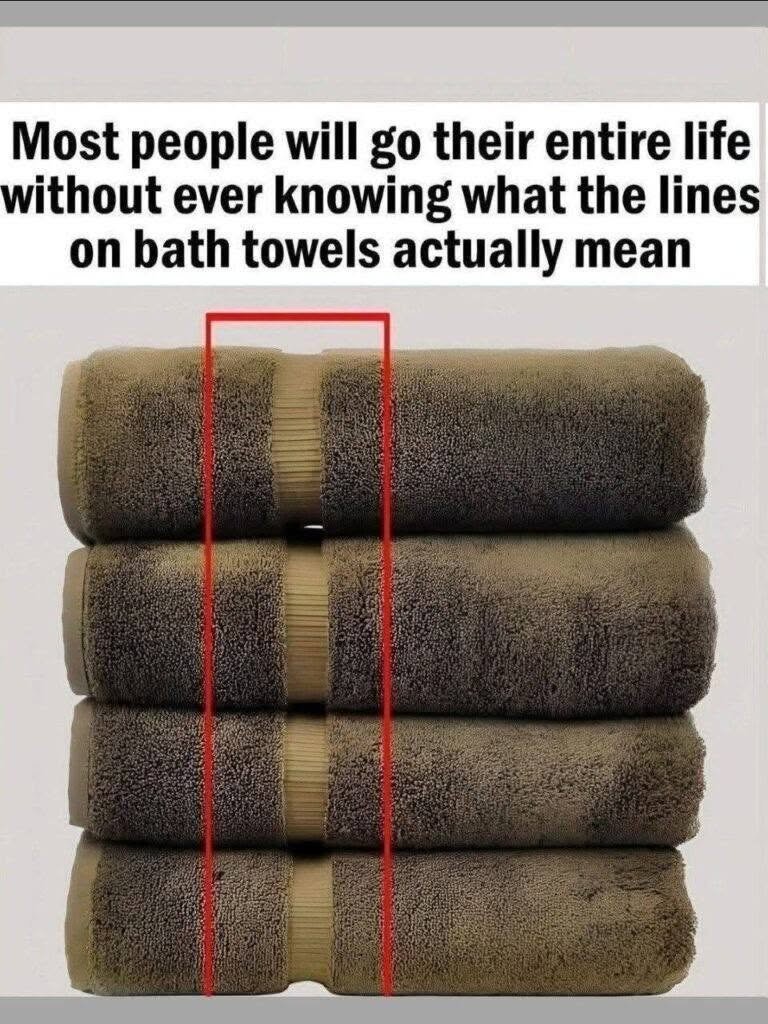
The lines or bands woven into many bath towels are not just decorative. They are usually created for practical, structural, and manufacturing reasons. Depending on the towel brand and design, these bands may be called dobby borders, cam borders, or decorative hems. Here’s what they actually mean in detail.
1. Dobby Border (The Most Common Reason)
The flat woven strip near each end of a bath towel is called a dobby border.
Purpose:
- Strengthens the towel and helps prevent fraying.
- Keeps the towel’s shape after repeated washing and drying.
- Reduces stretching along the edges.
- Gives the towel a neat, finished appearance.
Because the border is woven differently from the fluffy loops, it is flatter and more durable.
2. Prevents Curling
Without the woven band, the towel’s edges can curl or become misshapen over time.
The border:
- Adds stability.
- Keeps the towel lying flat.
- Helps maintain its original rectangular shape.
3. Makes Manufacturing Easier
During production, the woven bands help:
- Keep the fabric under even tension on weaving machines.
- Make cutting and sewing more accurate.
- Improve overall quality control.
This results in more consistent towels.
4. Improves Drying Performance
Although the border itself absorbs less water than the looped fabric, it can help the towel dry more evenly by:
- Reducing excess bulk at the ends.
- Allowing better airflow.
- Helping the towel retain its structure after washing.
The difference is small but can contribute to the towel lasting longer.
5. Decorative Design
Many manufacturers use these bands as a design feature.
They can:
- Add elegant patterns or textures.
- Distinguish premium towel collections.
- Match bathroom décor.
- Give the towel a more luxurious appearance.
Some luxury hotels and spas choose towels with decorative borders for this reason.
6. Indicates Folding Lines
In hotels and retail stores, the woven bands can serve as visual guides for folding towels neatly and consistently. While this is not their original purpose, it is a practical benefit.
7. Separates Functional Areas
The fluffy part of the towel contains thousands of cotton loops known as terry loops, which provide:
- High absorbency.
- Softness.
- Quick moisture pickup.
The woven border has very few or no loops, making it stronger but less absorbent. This separation helps protect the towel’s edges from wear.
Why Isn’t the Whole Towel Fluffy?
If the entire towel were covered in absorbent loops:
- The edges would wear out more quickly.
- The towel would stretch more easily.
- It would be harder to sew securely.
- Fraying would occur sooner.
The woven border helps solve these problems.
Common Misconceptions
Many people believe the lines:
- Improve absorbency directly.
- Indicate towel quality.
- Show where to hang the towel.
- Are purely decorative.
In reality, while they can enhance appearance, their primary role is to reinforce the towel, maintain its shape, and increase durability.
Final Takeaway
The lines on bath towels are mainly dobby borders—flat woven sections designed to:
- Reinforce the towel’s ends.
- Prevent stretching and fraying.
- Help the towel keep its shape.
- Improve durability through repeated washing.
- Add an attractive decorative element.
So, those seemingly simple lines are an intentional part of the towel’s engineering, helping it last longer while maintaining both function and appearance.