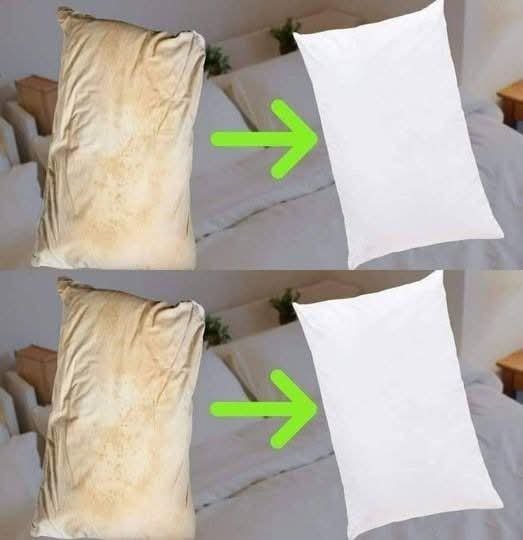
Cleaning a dirty pillow depends on its material, but here are detailed methods that work for most common pillows.
Step 1: Check the Care Label
Look for the washing instructions on the pillow tag. Some pillows can be machine-washed, while others require spot cleaning only.
Method 1: Machine-Washable Pillows (Most Polyester and Many Down Pillows)
What You’ll Need
Mild liquid detergent
Warm water
Washing machine
Tennis balls or dryer balls (optional)
Instructions
1. Remove pillowcases and pillow protectors.
2. Place two pillows in the washer if possible to balance the load.
3. Use a small amount of mild detergent.
4. Select a gentle cycle with warm water.
5. Run an extra rinse cycle to remove detergent residue.
6. Dry thoroughly on low heat.
7. Add dryer balls or clean tennis balls to help keep the filling fluffy.
Method 2: Hand Washing
Instructions
1. Fill a tub or basin with warm water.
2. Add a small amount of mild detergent.
3. Submerge the pillow and gently squeeze it to work the soap through.
4. Let it soak for 15–30 minutes.
5. Rinse repeatedly with clean water until no soap remains.
6. Press out excess water without twisting.
7. Air-dry in a well-ventilated area or in sunlight.
Removing Yellow Stains
A common home remedy:
Ingredients
½ cup baking soda
½ cup white vinegar
Mild detergent
Steps
1. Apply baking soda to stained areas.
2. Let it sit for 30 minutes.
3. Wash the pillow according to its care instructions.
4. During washing, add white vinegar to help break down stains and odors.
5. Dry completely.
Removing Odors
Baking Soda Treatment
1. Sprinkle baking soda over the pillow.
2. Leave it for several hours (or overnight).
3. Vacuum or shake off the baking soda.
4. Air the pillow outdoors if possible.
For Memory Foam Pillows
Do not machine wash unless the manufacturer specifically allows it.
Cleaning Steps
1. Vacuum the surface.
2. Mix a small amount of mild detergent with water.
3. Spot-clean stains using a clean cloth.
4. Wipe with a damp cloth.
5. Allow to air-dry completely.
Natural Sunlight Method
Sunlight can help:
Reduce moisture
Remove mild odors
Freshen the pillow
Place the pillow outside in direct sunlight for a few hours on a dry day. Avoid excessive exposure for foam pillows.
Prevention Tips
Use a pillow protector.
Wash pillowcases weekly.
Air pillows regularly.
Replace pillows every 1–2 years if they remain stained, flattened, or develop persistent odors.
When to Replace Instead of Clean
Consider replacing the pillow if:
It has mold growth.
It smells bad even after cleaning.
The filling is clumped or damaged.
It causes neck discomfort due to loss of support.
If you tell me whether the pillow is polyester, cotton-filled, down/feather, or memory foam, I can give a more specific cleaning method.