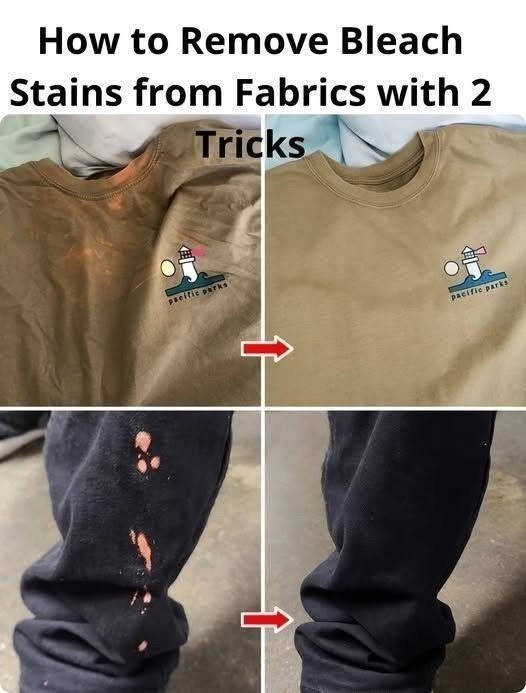
Bleach stains are tricky because bleach usually does not create a normal stain—it removes or changes the fabric’s dye. That means you often cannot “wash out” a bleach mark; you need to restore the color or hide the damaged area. However, two useful tricks can help depending on the fabric and the size of the mark.
Trick 1: Neutralize the Bleach and Restore the Color (For Small Bleach Spots)
What you need:
- Cold water
- Mild detergent
- White vinegar or hydrogen peroxide (choose one, do not mix chemicals)
- Fabric dye marker or matching fabric dye (optional)
Step-by-step method:
- Rinse the fabric immediately
- Hold the bleach-marked area under cold running water for several minutes.
- This removes leftover bleach and prevents further damage.
-
Neutralize remaining bleach
- Mix:
- 1 cup of cold water
- 1 tablespoon of white vinegar
- Dab the solution onto the affected area using a clean cloth.
- Rinse again with cold water.
Important: Never mix bleach with vinegar directly. Mixing them can release dangerous chlorine gas. Only use vinegar after thoroughly rinsing away bleach.
- Mix:
- Wash gently
- Wash the fabric with mild detergent according to the care label.
- Avoid hot water because heat can worsen some fabric damage.
- Restore the color
- If the spot is lighter but the fabric is still strong:
- Use a fabric dye pen for tiny marks.
- Use fabric dye for larger areas.
- Test the color on an inside seam first.
- If the spot is lighter but the fabric is still strong:
Best for:
✅ Cotton shirts
✅ Jeans
✅ Towels
✅ Dark-colored fabrics with small bleach marks
Trick 2: Turn the Bleach Mark Into a Design (Best for Large or Permanent Marks)
If the bleach has removed the color completely, repairing it invisibly may not be possible. A creative solution is to transform the mark.
Method A: Bleach-effect pattern
Instead of hiding the spot:
- Place cardboard inside the fabric to stop chemicals from spreading.
- Use a fabric marker or dye to create:
- Shapes
- Patterns
- Small artwork
- Tie-dye effects
- Wash gently after the design dries.
Method B: Cover the area
You can hide larger bleach damage with:
- Fabric patches
- Embroidery
- Iron-on designs
- Appliqué pieces
- Decorative stitching
This works especially well for:
- Jeans
- Jackets
- Hoodies
- Bags
Extra Tips to Prevent More Damage
- Do not rub bleach spots aggressively—it weakens fibers.
- Do not use ammonia with bleach; it can create toxic fumes.
- Always check the fabric label before using dyes.
- For expensive fabrics like silk, wool, or designer clothing, professional repair is safer.
Quick Reality Check:
- If the bleach mark is yellow/orange/brown, there may be leftover chemical damage that needs neutralizing.
- If it is white or pale, the original dye has likely been removed, so recoloring or covering is the best option.
These two tricks work best when used quickly after the bleach accident.