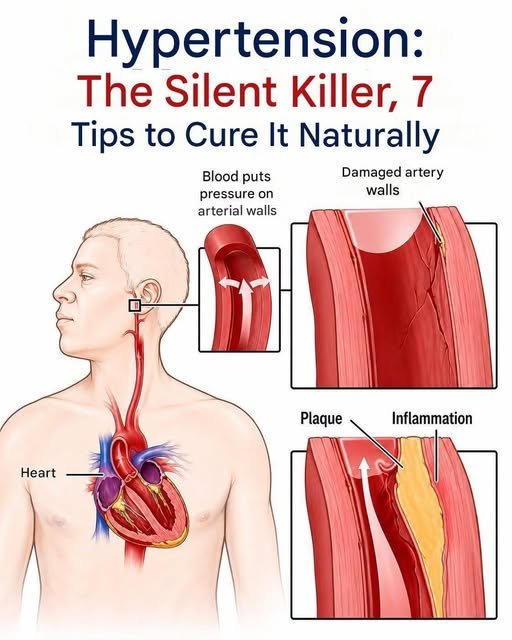
Hypertension: The Silent Killer — 7 Natural Ways to Help Control It
Hypertension (high blood pressure) is often called the “silent killer” because it usually has no obvious symptoms, yet over time it can damage vital organs such as the heart, brain, kidneys, and eyes. Many people discover they have high blood pressure only during a routine check-up or after a complication occurs.
Blood pressure is the force of blood pushing against the walls of your arteries. It is measured in millimetres of mercury (mmHg) with two numbers:
- Systolic pressure (top number): pressure when the heart beats
- Diastolic pressure (bottom number): pressure when the heart relaxes
A reading consistently around 140/90 mmHg or higher is generally considered hypertension in many clinical guidelines, although targets can vary depending on age and health conditions.
Important: Natural methods can significantly support blood pressure control, but they do not always replace prescribed medicines. If you take blood pressure medication, do not stop it without medical advice.
7 Natural Tips to Help Control Hypertension
1. Reduce Salt (Sodium) Intake
Excess salt causes the body to retain water, increasing the amount of fluid in the bloodstream and raising blood pressure.
Practical steps:
- Avoid adding extra salt at the table.
- Limit processed foods such as chips, instant noodles, canned foods, and salty snacks.
- Use herbs, lemon, garlic, ginger, and spices for flavour instead of extra salt.
- Read food labels and look for sodium content.
Goal: Many adults benefit from keeping sodium intake below about 1,500–2,300 mg per day, depending on individual health needs.
2. Eat a Heart-Healthy Diet
A balanced diet can naturally improve blood pressure and overall cardiovascular health.
Focus on:
✅ Fruits and vegetables
- Bananas, oranges, berries, spinach, tomatoes, carrots
✅ High-fibre foods
- Oats, beans, lentils, whole grains
✅ Healthy proteins
- Fish, skinless poultry, beans, nuts
✅ Healthy fats
- Olive oil, seeds, nuts, avocado
Limit:
- Sugary drinks
- Deep-fried foods
- Excess red meat
- Trans fats and highly processed foods
A dietary pattern similar to the DASH (Dietary Approaches to Stop Hypertension) diet has strong evidence for lowering blood pressure.
3. Exercise Regularly
Physical activity strengthens the heart, improves blood vessel flexibility, and helps maintain a healthy weight.
Recommended activities:
- Brisk walking: 30 minutes most days
- Cycling
- Swimming
- Light strength training
- Yoga and stretching
Start gradually if you are inactive. Consistency matters more than intensity.
4. Maintain a Healthy Weight
Extra body weight increases the workload on the heart and can raise blood pressure.
Healthy weight management includes:
- Eating appropriate portions
- Increasing daily movement
- Reducing sugary and processed foods
- Getting enough sleep
Even a modest weight reduction can help improve blood pressure in many people.
5. Manage Stress Effectively
Long-term stress may contribute to high blood pressure through increased stress hormones and unhealthy coping habits.
Helpful techniques:
- Deep breathing exercises
- Meditation or mindfulness
- Spending time outdoors
- Prayer or relaxation practices (according to personal beliefs)
- Hobbies and social connection
- Taking regular breaks from screens
Stress management also helps reduce habits that can worsen blood pressure, such as overeating or smoking.
6. Sleep Well
Poor sleep can increase the risk of hypertension because it affects hormones, stress levels, and heart health.
Aim for:
- 7–9 hours of quality sleep for most adults
- A consistent sleep schedule
- A dark, quiet sleeping environment
- Avoiding heavy meals and excessive screen use before bedtime
If you snore loudly, stop breathing during sleep, or feel extremely tired during the day, discuss it with a healthcare professional because sleep disorders can affect blood pressure.
7. Avoid Smoking, Limit Alcohol, and Monitor Blood Pressure
Stop smoking
Smoking damages blood vessels and increases the risk of heart attack and stroke.
Limit alcohol
Excess alcohol can raise blood pressure. Keeping intake within recommended limits can help.
Check blood pressure regularly
Monitoring helps you understand whether lifestyle changes are working.
Useful habits:
- Measure at the same time each day if monitoring at home.
- Sit quietly for a few minutes before checking.
- Keep a record to discuss with your healthcare provider.
Natural Foods That May Support Blood Pressure Control
Some foods associated with better blood pressure health include:
- Garlic: may have a modest blood-pressure-lowering effect in some people.
- Beetroot: contains nitrates that may improve blood vessel function.
- Leafy greens: rich in potassium and minerals.
- Beans and lentils: provide fibre and plant protein.
- Nuts and seeds: contain healthy fats and minerals.
These foods support a healthy diet but should not be considered a replacement for medical treatment when treatment is needed.
Warning Signs and When to Seek Medical Help
Hypertension often has no symptoms, but very high blood pressure may cause:
- Severe headache
- Chest pain
- Shortness of breath
- Confusion
- Weakness or numbness
- Vision problems
Seek urgent medical care if these occur, especially with very high blood pressure readings.
Summary: The 7 Key Lifestyle Steps
- Eat less salt
- Follow a balanced heart-friendly diet
- Exercise regularly
- Maintain a healthy weight
- Reduce stress
- Sleep properly
- Avoid smoking, limit alcohol, and monitor blood pressure
A healthy lifestyle can make a major difference in controlling hypertension and reducing the risk of heart disease, stroke, and kidney problems. For anyone diagnosed with high blood pressure, lifestyle changes work best when combined with regular medical check-ups and appropriate treatment.