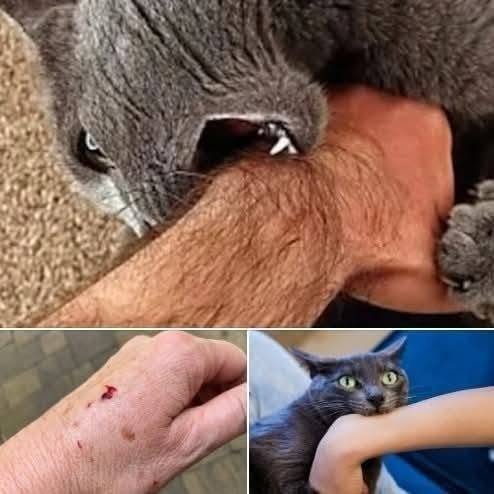
A cat bite can mean different things depending on the situation. The meaning is usually related to the cat’s emotions, instincts, or health rather than the cat “trying to send a message.” Here’s a detailed explanation:
1. The Cat Is Scared or Defending Itself
This is the most common reason for a cat bite.
Signs:
- Flattened ears
- Dilated pupils
- Hissing or growling
- Arched back
- Puffing up its fur
Meaning:
The cat feels threatened and is trying to protect itself. Even friendly cats may bite if they feel trapped or frightened.
2. The Cat Is Overstimulated
Some cats enjoy petting only for a short time.
Signs:
- Tail starts twitching
- Skin ripples along the back
- Ears rotate backward
- Suddenly turns and bites while being petted
Meaning:
The cat has had enough physical contact and is asking for space.
3. Play Aggression
Kittens and young cats often bite during play.
Signs:
- Chasing hands or feet
- Pouncing
- Gentle to moderate biting without hissing
Meaning:
The cat is treating your hand like prey. This is natural hunting behaviour but should be redirected to toys rather than hands.
4. Pain or Illness
A cat that is injured or sick may bite when touched.
Signs:
- Limping
- Hiding more than usual
- Loss of appetite
- Growling when handled
Meaning:
The bite may be a reaction to pain rather than aggression. A veterinary examination may be needed.
5. Fear of Unfamiliar People or Animals
Cats may bite strangers or during stressful situations.
Examples:
- Visiting the veterinarian
- Meeting a new pet
- Loud noises or fireworks
- Moving to a new home
The bite is a defensive response caused by fear.
6. Maternal Protection
A mother cat may bite if someone approaches her kittens.
Meaning:
She is protecting her young, which is a normal instinct.
7. Love Bites
Some cats give gentle nibbles.
Signs:
- Very light pressure
- No hissing or aggressive body language
- Often occurs during grooming or cuddling
Meaning:
This can be a sign of affection or social bonding. These bites usually do not break the skin.
8. Redirected Aggression
Sometimes a cat becomes excited by something it cannot reach.
Example:
A cat sees another cat outside the window. If you touch it at that moment, it may bite you instead.
Meaning:
The aggression is redirected to the nearest person or animal.
What Should You Do If a Cat Bites You?
If the bite breaks the skin:
- Wash the wound immediately with soap and running water for at least 5 minutes.
- Apply an antiseptic.
- Cover it with a clean bandage.
- Watch for signs of infection such as redness, swelling, warmth, pus, increasing pain, or fever.
- Seek medical attention promptly, especially if:
- The bite is deep.
- The bite is on the hand, face, or near a joint.
- You have diabetes or a weakened immune system.
- The cat is unknown, acting unusually, or its rabies vaccination status is unknown.
Cat bites have a relatively high risk of infection because their sharp teeth can inject bacteria deep into the skin.
Does a Cat Bite Mean It Hates You?
Not necessarily. Most cat bites are caused by fear, pain, overstimulation, or play rather than dislike. Looking at the cat’s body language and what happened just before the bite usually provides the best clues about why it occurred.
Understanding your cat’s signals and respecting its boundaries can help reduce the chances of future bites.