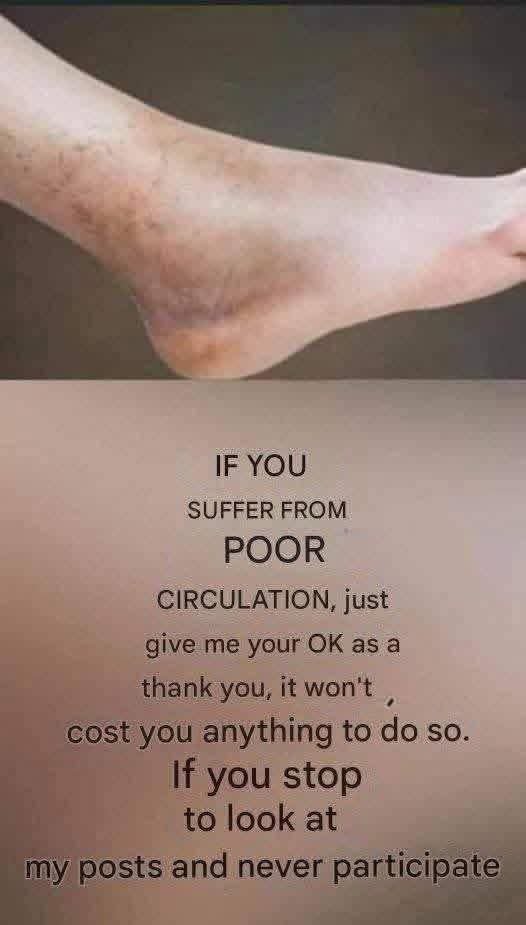
If you have poor blood circulation in your legs, the symptoms can vary depending on the cause. Poor circulation itself is often a sign of an underlying condition rather than a disease on its own.
Common Symptoms in the Legs
1. Cold Feet or Legs
Feet feel colder than the rest of your body.
One leg may feel colder than the other.
2. Numbness or Tingling
“Pins and needles” sensation.
Reduced feeling in the feet or toes.
3. Pain When Walking
This is called Peripheral Artery Disease-related claudication.
Cramping or aching in the calves, thighs, or buttocks while walking.
Pain often improves with rest.
4. Swelling
Ankles, feet, or lower legs become swollen.
Shoes or socks may feel tighter than usual.
5. Skin Changes
Skin may appear pale, bluish, or shiny.
Hair growth on the legs may decrease.
Toenails may grow slowly or become thickened.
6. Weakness or Heaviness
Legs may feel tired, heavy, or weak.
Walking long distances becomes difficult.
7. Slow-Healing Wounds
Cuts, blisters, or sores on the feet heal slowly.
Ulcers may develop in severe cases.
Possible Causes
Peripheral Artery Disease (PAD)
Peripheral Artery Disease occurs when arteries narrow due to plaque buildup, reducing blood flow to the legs.
Varicose Veins
Varicose Veins can cause:
Swelling
Aching
Heavy legs
Visible enlarged veins
Diabetes
Type 2 Diabetes can damage blood vessels and nerves, leading to circulation problems and numbness.
Blood Clot
A clot in a leg vein can cause:
Sudden swelling
Pain
Warmth
Redness
This can be serious and requires prompt medical evaluation.
Heart Conditions
Some heart problems can reduce blood flow and contribute to leg swelling and fatigue.
What Can Help?
Physical Activity
Walking regularly is one of the best ways to improve circulation.
Start slowly and increase gradually.
Healthy Diet
Eat vegetables, fruits, whole grains, legumes, and healthy fats such as olive oil.
Limit smoking and excessive alcohol.
Weight Management
Maintaining a healthy weight reduces strain on blood vessels.
Elevate Your Legs
If swelling is a problem:
Raise your legs above heart level for short periods.
Avoid sitting for long periods without moving.
Stay Hydrated
Proper hydration supports overall circulation.
Seek Medical Care Urgently If You Have:
Sudden severe leg pain
One leg becoming swollen, red, and warm
A foot that becomes very cold or pale
Chest pain or shortness of breath along with leg symptoms
These symptoms can indicate a serious condition requiring immediate medical attention.
If you describe exactly what your leg feels like (for example: numbness, burning, cramping, swelling, coldness, pain when walking, discoloration, etc.), I can explain the most likely causes in more detail.