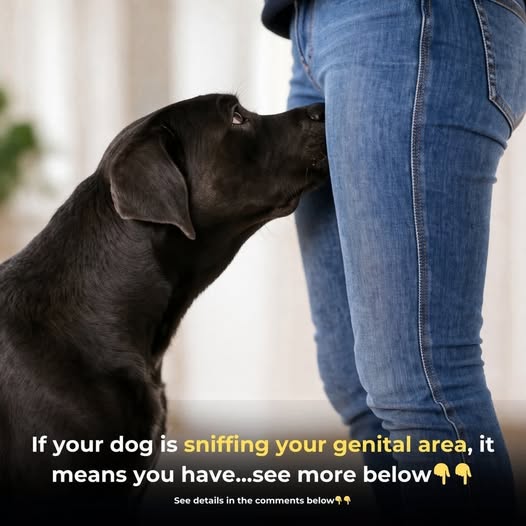
If your dog is sniffing your genital area, it’s usually normal dog behavior and not something sexual in the human sense. Dogs explore the world mainly through their nose, and that area gives off strong chemical scents (pheromones, sweat, hormones), so it can be very interesting to them.
Here are the main reasons in detail:
1. Scent and identification
Dogs can detect tiny chemical changes in your body. Your genital area naturally produces strong scents due to sweat glands and bacteria. To a dog, this is like reading a very detailed “information label” about you.
They may learn things like:
- Who you are (they can identify familiar people by scent)
- Whether you’ve been somewhere new
- Emotional state (stress, fear, excitement changes body odor)
2. Hormonal changes
If there are changes in hormones, dogs may notice more strongly than usual. For example:
- Menstrual cycle in females
- Pregnancy
- Ovulation or other hormonal shifts
They are not “understanding” these conditions like humans, but they can detect the scent changes linked to them.
3. Curiosity or habit
Some dogs just develop a habit of sniffing certain body areas, especially if:
- They were not trained early to avoid it
- They got attention or reaction from doing it before (even laughing or pushing them away can reinforce it)
4. Social behavior (dog perspective)
Dogs sniff each other’s rear and genital areas as a normal greeting. So sometimes they try to do the same with humans because they treat it as part of social “checking.”
Is it normal?
Yes, it is common dog behavior. It does not mean anything sexual or inappropriate intent from the dog.
What you should do if you don’t like it
You can gently train your dog to stop:
- Say a calm “No” or “Off”
- Redirect them to sit or lie down
- Reward them when they stop
- Avoid strong reactions (shouting can confuse or excite them)
Consistency is key.
When to be slightly cautious
If your dog suddenly starts sniffing you much more than usual, it can sometimes indicate:
- Strong hormonal changes in your body
- Pregnancy (in some cases dogs notice early)
- Strong scent changes due to infection or hygiene issues
It’s not a diagnosis tool, but noticeable changes in behavior can sometimes be interesting to observe.
If you want, tell me your situation (male/female dog, age, when it happens), and I can explain more specifically why your dog is doing it.