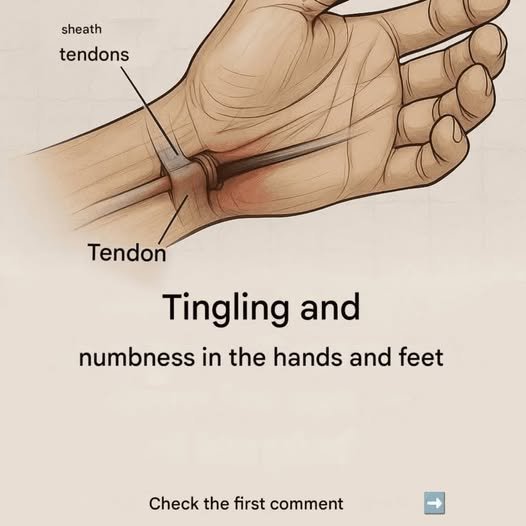
Numbness in your hands means you are experiencing a loss or reduction of sensation (feeling) in part or all of your hand. It can feel like tingling (“pins and needles”), burning, weakness, a heavy feeling, or your fingers falling asleep. The causes range from temporary pressure on a nerve to medical conditions that need evaluation.
Common causes of hand numbness
1. Nerve compression (very common)
A nerve can become irritated or squeezed, causing numbness in specific fingers.
- Carpal tunnel syndrome
- The median nerve is compressed at the wrist.
- Usually affects the thumb, index finger, middle finger, and part of the ring finger.
- Often worse at night, after typing, using tools, or holding a phone.
- May cause hand weakness or dropping objects.
- Cervical radiculopathy (pinched nerve in the neck)
- A nerve coming from the neck is irritated.
- Can cause numbness, tingling, or pain traveling from the neck/shoulder down the arm into the hand.
- Ulnar nerve compression
- Often affects the ring finger and little finger.
- Can happen from leaning on your elbow for long periods.
2. Temporary pressure on nerves
Sometimes numbness happens because you:
- Slept on your arm or hand
- Kept your wrist bent for a long time
- Sat in a position that reduced nerve or blood flow
This usually improves after changing position and moving the hand.
3. Blood circulation problems
Reduced blood flow can cause:
- Numbness
- Cold hands
- Color changes (pale, blue, or purple fingers)
- Pain or cramping
4. Vitamin deficiencies
Low levels of certain nutrients can affect nerves, especially:
- Vitamin B12 deficiency
- Vitamin B6 imbalance
- Folate deficiency
B12 deficiency may also cause fatigue, balance problems, or numbness in the feet.
5. Diabetes and nerve damage
High blood sugar over time can damage nerves (diabetic neuropathy). Symptoms may include:
- Tingling or burning
- Reduced ability to feel temperature or pain
- Numbness in hands and feet
6. Autoimmune and inflammatory conditions
Some conditions can affect nerves, such as:
- Rheumatoid arthritis (which can contribute to nerve compression)
- Multiple sclerosis
- Certain inflammatory nerve disorders
7. Medication or toxin effects
Some medicines or exposures can affect nerves, including certain:
- Chemotherapy drugs
- Some antibiotics
- Heavy metals (such as excessive exposure to lead or mercury)
8. Stroke or emergency causes
Sudden numbness can sometimes be a sign of a serious problem.
Seek emergency medical help immediately if hand numbness happens suddenly with:
- Weakness or paralysis on one side of the body
- Drooping face
- Trouble speaking or understanding speech
- Severe headache
- Loss of coordination
- Chest pain, shortness of breath, or sweating
What the pattern of numbness can suggest
| Where you feel numbness | Possible causes |
|---|---|
| Thumb, index, middle fingers | Carpal tunnel/median nerve issues |
| Ring and little fingers | Ulnar nerve problems |
| Entire hand with neck pain | Neck nerve irritation |
| Both hands and feet | Diabetes, vitamin deficiency, nerve disorders |
| One hand suddenly | Possible emergency (especially with other symptoms) |
When to see a doctor
Make an appointment if:
- Numbness keeps coming back
- It lasts days or weeks
- It is getting worse
- You have hand weakness or trouble gripping
- You have diabetes or a known nerve condition
- It affects your daily activities
A healthcare professional may check your nerves, strength, circulation, and possibly order tests such as blood work, nerve studies, or imaging depending on the suspected cause.
If you tell me:
- Which fingers are numb?
- One hand or both hands?
- Is it worse at night or during certain activities?
- Any pain, weakness, neck pain, or dizziness?
I can help narrow down the likely causes.