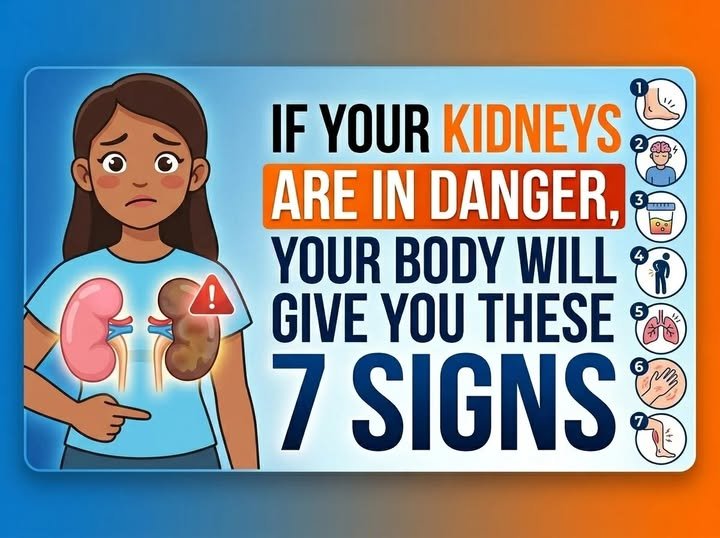
Here are 7 important signs that your kidneys may be in danger:
1. Swelling (Edema)
One of the most common signs of kidney problems is swelling in different parts of the body.
Why it happens:
Healthy kidneys remove excess salt and water. Damaged kidneys may allow fluid to build up.
Common areas affected:
- Feet and ankles
- Legs
- Hands
- Face, especially around the eyes
When to seek care:
If swelling is new, worsening, or accompanied by shortness of breath, contact a healthcare provider promptly.
2. Changes in Urination
Changes in urination are often among the earliest signs of kidney disease.
You may notice:
- Urinating more often, especially at night
- Urinating less than usual
- Dark, cloudy, or tea-colored urine
- Blood in the urine
- Foamy or bubbly urine (which can indicate protein in the urine)
- Pain or difficulty while urinating (more commonly due to infection or other urinary tract conditions)
3. Constant Fatigue and Weakness
Feeling unusually tired can occur when the kidneys are not functioning well.
Why it happens:
- Waste products build up in the blood.
- Diseased kidneys may produce less of a hormone called erythropoietin, which helps make red blood cells. This can lead to anemia, causing fatigue, weakness, and reduced stamina.
Other symptoms may include:
- Difficulty concentrating
- Feeling sleepy during the day
- Reduced exercise tolerance
4. Persistent Itchy Skin
Severe or ongoing itching can sometimes be related to advanced kidney disease.
Why it happens:
Kidney dysfunction can lead to:
- A buildup of waste products in the blood
- Imbalances in minerals such as phosphorus and calcium
- Dry skin
The itching may:
- Affect large areas of the body
- Be worse at night
- Continue despite using moisturizers
5. Shortness of Breath
Kidney disease can contribute to breathing difficulties.
Possible reasons include:
- Fluid buildup in the lungs
- Anemia reducing oxygen delivery
- Heart problems that may occur alongside kidney disease
Seek urgent medical attention if shortness of breath is sudden, severe, or associated with chest pain.
6. Nausea, Vomiting, or Loss of Appetite
As kidney function declines, waste products can accumulate in the bloodstream.
Symptoms may include:
- Nausea
- Vomiting
- Poor appetite
- Weight loss
- A metallic taste in the mouth
- Bad breath that has an ammonia-like odor
These symptoms are more common in advanced kidney disease.
7. High Blood Pressure
High blood pressure is both a cause and a consequence of kidney disease.
Why it matters:
- High blood pressure can damage the kidneys over time.
- Damaged kidneys may have difficulty regulating blood pressure, making it harder to control.
Regular blood pressure monitoring is important, especially if you have diabetes, obesity, or a family history of kidney disease.
Who Is at Higher Risk?
You may have a higher risk of kidney disease if you have:
- Diabetes
- High blood pressure
- Heart disease
- Obesity
- A family history of kidney disease
- Age over 60
- A history of smoking
- Frequent use of certain pain relievers (NSAIDs such as ibuprofen or naproxen)
When Should You See a Doctor?
Arrange a medical evaluation if you notice:
- Blood in your urine
- Persistent swelling
- Foamy urine
- Ongoing fatigue without a clear cause
- Changes in urination lasting more than a few days
- High blood pressure that is difficult to control
A healthcare provider may recommend:
- Blood tests (including kidney function tests such as creatinine and estimated glomerular filtration rate, or eGFR)
- Urine tests (to check for protein or blood)
- Blood pressure measurement
- Kidney imaging, if needed
When Is It an Emergency?
Seek emergency medical care immediately if you have:
- Little or no urine output
- Severe shortness of breath
- Chest pain
- Confusion or difficulty staying awake
- Swelling with trouble breathing
- Severe pain with blood in the urine
Protecting Your Kidneys
To help maintain kidney health:
- Keep your blood pressure and blood sugar under control.
- Stay well hydrated unless your healthcare provider has advised fluid restriction.
- Eat a balanced diet with moderate salt intake.
- Exercise regularly.
- Avoid smoking.
- Limit unnecessary use of NSAID pain relievers (such as ibuprofen or naproxen), especially if you have kidney disease or other risk factors.
- Have regular kidney function checks if you have diabetes, high blood pressure, or a family history of kidney disease.
Many kidney diseases develop gradually and may not cause noticeable symptoms until they are advanced. Regular checkups are especially important if you have risk factors, as early detection can help slow or prevent further kidney damage.