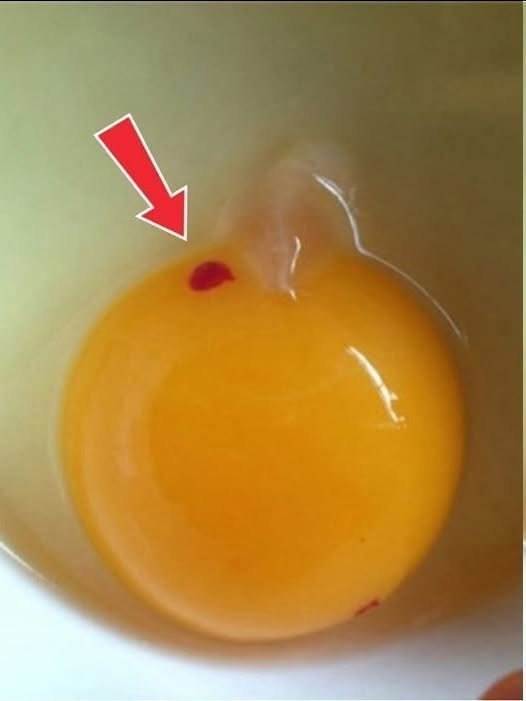
Yes, eggs with small red spots can usually be safe to eat, but it depends on what the red spots are and whether the egg shows other signs of spoilage.
What are the red spots in eggs?
The red or reddish-brown spots are usually called blood spots. They happen when a tiny blood vessel in the hen’s reproductive tract breaks while the egg is forming. They are not a sign that the egg is fertilized, and they are generally harmless.
Sometimes you may also see meat spots, which are small pieces of tissue from the hen’s reproductive system. These are also usually harmless.
Are eggs with red spots safe?
Yes, if:
- The egg is fresh and properly stored.
- The shell is not cracked or leaking.
- The egg smells normal after cracking.
- The egg white and yolk look normal.
- The spots are small and limited.
You can simply remove the spot with the tip of a clean knife or spoon if you dislike the appearance, then cook the egg normally.
When should you throw the egg away?
Do not eat the egg if:
- It has a bad, sulfur-like, rotten smell after cracking.
- The egg white is unusually discolored (green, pink, black, or cloudy in a strange way).
- The shell is slimy, moldy, or cracked with leakage.
- The egg has been left unrefrigerated for a long time.
- The red area looks like spreading contamination rather than a small spot.
Cooking safety
Even eggs with harmless blood spots should be cooked properly, especially for:
- Pregnant people
- Young children
- Older adults
- People with weakened immune systems
Cook until:
- The egg white is firm.
- The yolk reaches your preferred safe level (fully cooked is safest for higher-risk groups).
How to check if an egg is fresh
- Crack it into a separate bowl before adding it to food.
- Check the smell and appearance.
- Use the float test only as a rough freshness guide (it tells age, not whether bacteria are present).
Bottom line
A small red spot inside an egg is usually natural and safe. It is not a sign of disease or a bad egg. If the egg smells bad, looks unusual, or was stored improperly, discard it.