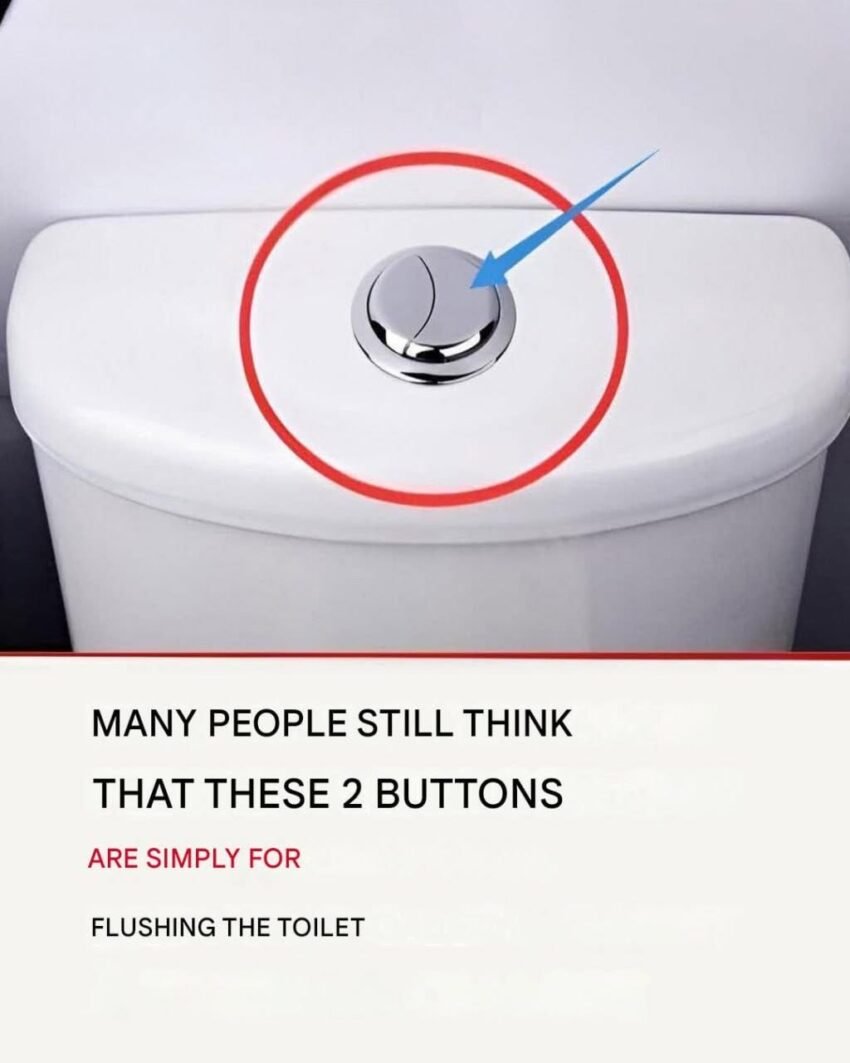
Many people think the two buttons on a dual-flush toilet are simply two ways to flush, but they actually serve different purposes to save water.
How the Two Buttons Work
A dual-flush toilet has two flush options:
- Small Button (Half Flush)
- Uses less water (typically 3–4 liters or 0.8–1.1 gallons).
- Designed for liquid waste (urine).
- Helps conserve water by using only the amount needed.
- Large Button (Full Flush)
- Uses more water (typically 6–9 liters or 1.6–2.4 gallons, depending on the model).
- Intended for solid waste.
- Provides a stronger flush to clear the bowl effectively.
Why Two Buttons?
The main purpose is water conservation. Traditional toilets use the same amount of water every time you flush, regardless of what needs to be cleared. Dual-flush toilets let you choose the appropriate amount, reducing unnecessary water use.
Water Savings
Using the correct button can:
- Reduce household water consumption by 20–50% compared with older single-flush toilets.
- Save thousands of liters (or hundreds of gallons) of water each year.
- Lower water bills in areas where water is metered.
Common Misconceptions
Some people believe:
- The buttons control the speed of the flush. (They don’t.)
- Pressing both buttons together creates a “super flush.” Most toilets are not designed for this, and it usually doesn’t improve performance.
- The buttons are interchangeable. They are not—the smaller button is specifically engineered to release less water.
Which Button Should You Use?
| Button | Water Used | Best For |
|---|---|---|
| Small (Half Flush) | Less water | Liquid waste |
| Large (Full Flush) | More water | Solid waste |
Environmental Benefits
Because toilets account for a significant portion of household water use, dual-flush systems help:
- Conserve freshwater resources.
- Reduce the energy needed to treat and pump water.
- Lower the environmental impact of daily household activities.
In short, the two buttons are not just different ways to flush—they are a simple water-saving feature that allows you to choose the appropriate amount of water for different types of waste.