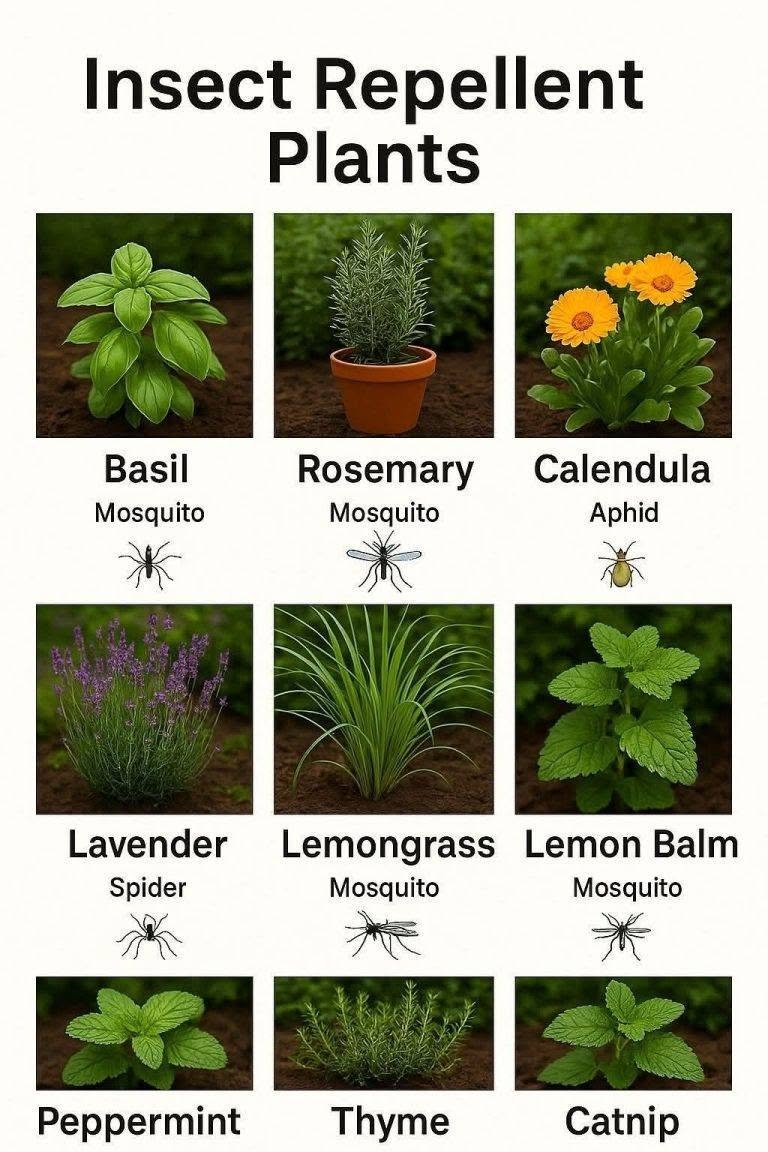
Here are the 10 best mosquito-repellent plants with details on appearance, growing requirements, benefits, and uses.
1. Citronella Grass (Cymbopogon nardus / Cymbopogon winterianus)
Overview
Citronella grass is one of the most famous mosquito-repelling plants. Its oil contains citronellal and citronellol, compounds commonly used in mosquito candles and sprays.
Appearance
- Tall grass with narrow green leaves
- Can grow 3–6 feet tall
- Forms large clumps
Growing Conditions
- Sunlight: Full sun (6+ hours daily)
- Soil: Well-drained, fertile soil
- Water: Regular watering
- Climate: Warm tropical and subtropical regions
Mosquito Protection
- The strong lemon-like fragrance masks human odors that attract mosquitoes.
- Leaves can be crushed to release oils.
Garden Uses
- Plant around patios, walkways, and outdoor sitting areas.
- Works well in containers.
Care Tips
- Trim regularly to encourage new growth.
- Protect from frost.
2. Lavender (Lavandula species)
Overview
Lavender is valued for its beautiful purple flowers and calming fragrance. Its essential oils contain linalool and camphor, which mosquitoes tend to avoid.
Appearance
- Purple flower spikes
- Silver-green foliage
- Bushy growth habit
Growing Conditions
- Sunlight: Full sun
- Soil: Dry, sandy, well-drained soil
- Water: Low to moderate
- Climate: Prefers dry climates
Mosquito Protection
- The scent from lavender flowers and leaves can discourage mosquitoes.
- Crushing flowers releases stronger aroma.
Additional Benefits
- Attracts bees and butterflies.
- Provides a pleasant garden fragrance.
- Used in aromatherapy.
Care Tips
- Avoid overwatering.
- Prune after flowering.
3. Marigold (Tagetes species)
Overview
Marigolds are colorful flowering plants that contain pyrethrum, a compound used in some insect-control products.
Appearance
- Bright yellow, orange, or red flowers
- Bushy plants
- Height varies from 6 inches to 4 feet
Growing Conditions
- Sunlight: Full sun
- Soil: Average garden soil
- Water: Moderate watering
Mosquito Protection
- Their strong smell may repel mosquitoes and other insects.
- Often planted near vegetables because they may help reduce certain garden pests.
Garden Uses
- Borders
- Vegetable gardens
- Flower beds
- Pots
Care Tips
- Remove old flowers to encourage continuous blooming.
4. Basil (Ocimum basilicum)
Overview
Basil is a popular culinary herb that also produces aromatic oils mosquitoes dislike.
Appearance
- Green leafy herb
- Small white or purple flowers
- Compact growth
Growing Conditions
- Sunlight: Full sun
- Soil: Rich, moist soil
- Water: Regular watering
Mosquito Protection
Basil leaves contain compounds such as:
- Eugenol
- Citronellol
- Linalool
These contribute to its insect-repelling aroma.
Garden Uses
- Grow near kitchen windows.
- Plant in pots around outdoor seating.
Care Tips
- Pinch flower buds to keep leaves productive.
- Harvest leaves regularly.
5. Rosemary (Salvia rosmarinus)
Overview
Rosemary is an aromatic herb with needle-like leaves and a woody fragrance. Its oils contain compounds that insects often avoid.
Appearance
- Evergreen shrub
- Needle-like leaves
- Blue or purple flowers
Growing Conditions
- Sunlight: Full sun
- Soil: Dry, well-drained soil
- Water: Low once established
Mosquito Protection
- Burning rosemary branches outdoors can release aromatic smoke.
- Crushing leaves releases oils.
Additional Benefits
- Culinary herb
- Attracts pollinators
- Drought tolerant
Care Tips
- Do not overwater.
- Trim regularly for bushier growth.
6. Mint (Mentha species)
Overview
Mint has a powerful cooling fragrance due to menthol, which many insects dislike.
Appearance
- Bright green leaves
- Spreading growth habit
- Small flowers
Growing Conditions
- Sunlight: Partial shade to full sun
- Soil: Moist, fertile soil
- Water: Regular watering
Mosquito Protection
- Strong mint aroma may help deter mosquitoes.
- Crushed leaves release more fragrance.
Garden Uses
- Containers
- Herb gardens
- Around outdoor areas
Care Tips
- Grow in pots because mint spreads aggressively.
7. Lemongrass (Cymbopogon citratus)
Overview
Lemongrass is a tropical grass with a citrus scent. It contains citral, a compound associated with insect-repelling properties.
Appearance
- Long, narrow leaves
- Forms large grassy clumps
Growing Conditions
- Sunlight: Full sun
- Soil: Moist, fertile soil
- Water: Regular watering
Mosquito Protection
- Strong lemon fragrance helps discourage mosquitoes.
- Leaves can be used to make aromatic oils and teas.
Garden Uses
- Decorative grass
- Borders
- Containers
Care Tips
- Requires warmth.
- Divide plants every few years.
8. Catnip (Nepeta cataria)
Overview
Catnip contains nepetalactone, a compound that has shown mosquito-repelling properties.
Appearance
- Soft green leaves
- Small white or purple flowers
- Herbaceous perennial
Growing Conditions
- Sunlight: Full sun to partial shade
- Soil: Well-drained soil
- Water: Moderate
Mosquito Protection
- The plant’s natural oils can repel mosquitoes.
- Extracts may be more concentrated than the plant itself.
Additional Benefits
- Attracts cats.
- Produces attractive flowers for pollinators.
Care Tips
- Cut back after flowering.
- Prevent unwanted spreading.
9. Sage (Salvia officinalis)
Overview
Sage is a fragrant herb with gray-green leaves and a strong earthy aroma.
Appearance
- Low-growing shrub
- Soft gray leaves
- Purple-blue flowers
Growing Conditions
- Sunlight: Full sun
- Soil: Dry, well-drained soil
- Water: Low to moderate
Mosquito Protection
- Burning dried sage leaves outdoors creates aromatic smoke that mosquitoes avoid.
- Fresh leaves release natural oils.
Garden Uses
- Herb gardens
- Rock gardens
- Containers
Care Tips
- Avoid excessive moisture.
- Prune after flowering.
10. Lemon Balm (Melissa officinalis)
Overview
Lemon balm is a member of the mint family with a pleasant lemon fragrance.
Appearance
- Soft green leaves
- Small white flowers
- Bushy growth
Growing Conditions
- Sunlight: Partial shade to full sun
- Soil: Moist, fertile soil
- Water: Regular watering
Mosquito Protection
- Contains citronellal, which contributes to insect-repelling properties.
Additional Benefits
- Attracts bees.
- Used in herbal teas.
- Pleasant garden scent.
Care Tips
- Grow in containers to control spreading.
Best Mosquito-Repellent Plant Combinations
For a stronger mosquito-deterring garden, combine plants with different fragrances:
Around a Patio
- Citronella grass
- Lavender
- Rosemary
- Marigold
Kitchen Garden
- Basil
- Mint
- Lemon balm
- Sage
Balcony or Small Space
- Lavender in pots
- Basil containers
- Mint containers
- Lemongrass pots
How to Make These Plants More Effective
1. Crush the Leaves
Rubbing leaves releases essential oils and increases fragrance.
2. Plant Near Activity Areas
Place plants near:
- Outdoor chairs
- Doors
- Windows
- Pathways
3. Use Containers
Potted plants can be moved closer when sitting outdoors.
4. Maintain Healthy Plants
Healthy plants produce stronger aromas.
5. Remove Standing Water
Plants alone cannot control mosquitoes if breeding areas remain. Remove:
- Water in buckets
- Plant saucers
- Old containers
- Blocked drains
Top 5 Most Useful Choices for Most Gardens
| Plant | Best Feature |
|---|---|
| Citronella Grass | Strong mosquito-repelling fragrance |
| Lavender | Beautiful flowers + pleasant scent |
| Basil | Easy to grow + useful herb |
| Rosemary | Low maintenance + drought tolerant |
| Lemongrass | Attractive tropical plant |
Final Recommendation
For a practical mosquito-repellent garden, plant a mixture of citronella grass, lavender, rosemary, basil, lemongrass, and marigolds around outdoor living areas. These plants add beauty, fragrance, and some insect-deterring benefits while also providing herbs, flowers, and habitat for pollinators. For stronger mosquito control, combine them with proven methods such as removing standing water and using approved repellents when needed.