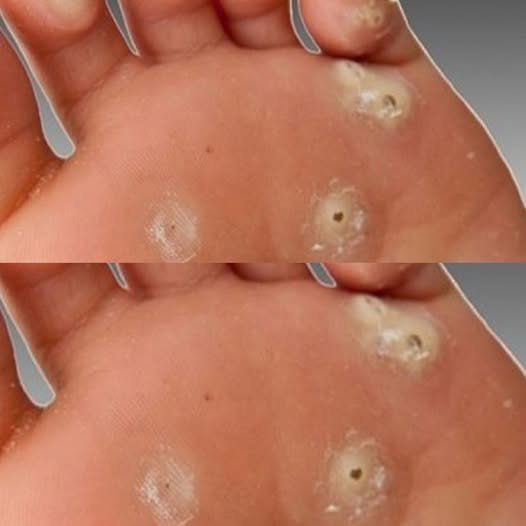
Natural remedies for corns (detailed information)
A corn is a small, thickened area of skin that forms because of repeated pressure or friction, usually on the toes, sides of the feet, or soles. The skin becomes hard and painful as it protects itself from irritation.
Natural remedies can help soften the thick skin and reduce discomfort, but they usually do not remove the underlying cause (such as tight shoes or pressure points).
1. Warm water soak
How it helps: Softens the hardened skin so it can gradually shed.
Method:
- Soak your foot in warm water for 10–15 minutes.
- Dry your foot well.
- Gently rub the corn with a pumice stone or foot file.
- Apply moisturizer afterward.
Important: Do not cut the corn with a blade or sharp object, as this can cause infection.
2. Moisturizing with natural oils
Dry skin makes corns harder and more painful.
Options:
- Coconut oil
- Olive oil
- Shea butter
How to use:
- Apply a small amount to the corn daily, especially before bedtime.
- Wear cotton socks afterward to keep the area moisturized.
3. Castor oil
Castor oil is traditionally used to soften thick skin.
Method:
- Apply a few drops of castor oil to the corn.
- Cover with a clean bandage or cotton pad.
- Leave overnight.
- Repeat daily.
Evidence for castor oil specifically removing corns is limited, but it may help moisturize and soften the skin.
4. Apple cider vinegar (use caution)
Some people use diluted vinegar because its acidity may help soften thick skin.
Method:
- Mix 1 part apple cider vinegar with 3–4 parts water.
- Apply briefly with cotton.
- Rinse and moisturize afterward.
Avoid this if:
- You have diabetes
- Poor circulation
- Open cuts or cracked skin
Undiluted vinegar can irritate or burn skin.
5. Epsom salt foot soak
How it may help: Relaxes feet and softens hardened skin.
Method:
- Add a handful of Epsom salt to warm water.
- Soak for 15–20 minutes.
- Gently file softened skin.
- Moisturize.
6. Aloe vera
Aloe vera can soothe irritated skin.
Method:
- Apply fresh aloe vera gel to the area.
- Leave it on for 20–30 minutes or overnight.
- Repeat regularly.
Preventing corns from coming back
Choose better footwear
- Wear shoes with enough room for toes.
- Avoid tight, pointed shoes.
- Use soft socks to reduce friction.
Reduce pressure
- Use cushioned insoles or protective pads.
- Keep feet moisturized.
- Trim toenails properly.
Keep feet clean and dry
Moisture and friction can worsen irritation.
When to see a doctor or foot specialist
Seek medical advice if:
- The corn is very painful or growing.
- There is redness, swelling, warmth, pus, or bleeding.
- You have diabetes, nerve problems, or poor circulation.
- It does not improve after several weeks of care.
Also, sometimes a plantar wart can look like a corn but needs different treatment. A healthcare professional can help distinguish them.
If you tell me where the corn is (toe, side of foot, sole), how long you have had it, and your age, I can suggest a more specific approach.