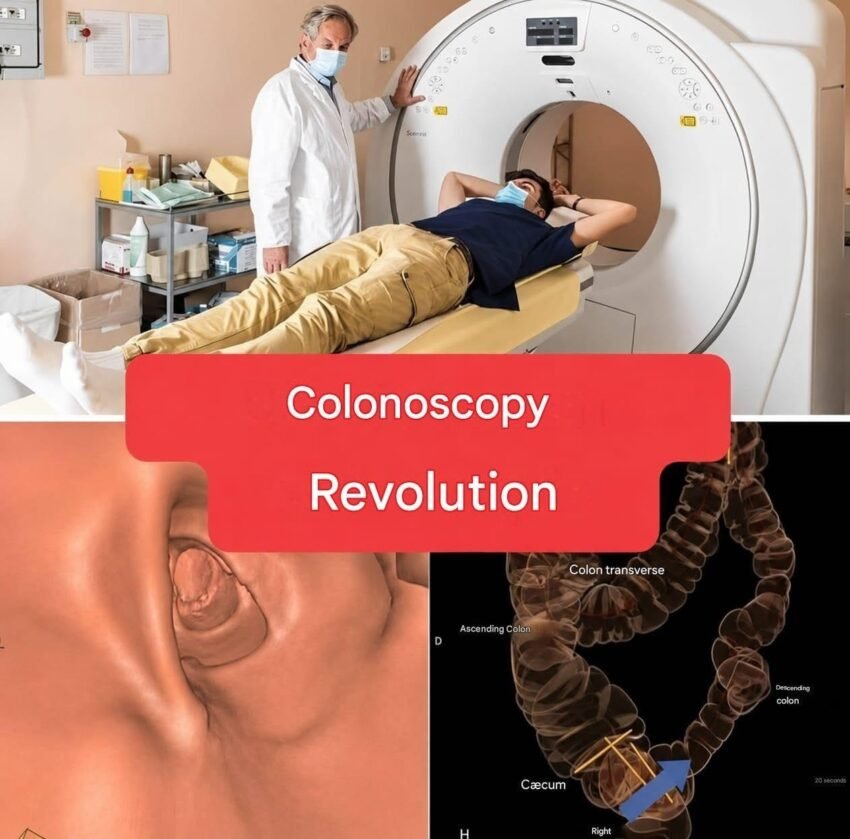
There has been a lot of news about new, less invasive alternatives to traditional colonoscopy, but it’s important to know that a standard colonoscopy is still the most accurate test for detecting and removing colorectal polyps and diagnosing colorectal cancer. Researchers are developing technologies that may reduce or replace invasive procedures for some people in the future.
Here’s a detailed overview of the new methods.
1. Colon Capsule Endoscopy (“Pill Camera”)
Colon capsule endoscopy
This is one of the most promising alternatives.
How it works:
- You swallow a capsule about the size of a large vitamin.
- The capsule contains tiny cameras at both ends.
- As it travels through your digestive tract, it captures thousands of images.
- The images are transmitted wirelessly to a recorder worn on your waist.
- The capsule leaves your body naturally during a bowel movement.
Advantages
- No insertion of a colonoscope.
- No sedation required.
- Usually painless.
- Can be performed outside a hospital.
Limitations
- You still need bowel preparation (laxatives).
- If a polyp or abnormality is found, you usually still need a conventional colonoscopy for biopsy or removal.
- It is not suitable for everyone.
2. CT Colonography (Virtual Colonoscopy)
CT colonography
This uses a CT scanner instead of a flexible scope.
Procedure
- The colon is gently inflated with air or carbon dioxide.
- CT images are taken.
- A computer creates a 3D image of the colon.
Benefits
- Takes only about 10–15 minutes.
- No sedation.
- Less invasive than a traditional colonoscopy.
- You can usually return to normal activities immediately.
Disadvantages
- Still requires bowel preparation.
- Cannot remove polyps.
- If abnormalities are detected, a regular colonoscopy is needed.
3. AI-Assisted Colonoscopy
Artificial intelligence-assisted colonoscopy
This is not a replacement but an improvement.
Artificial intelligence helps doctors:
- Detect tiny polyps.
- Reduce the chance of missing abnormal tissue.
- Improve early cancer detection.
Studies have shown AI can increase the detection rate of precancerous polyps.
4. Blood Tests for Colon Cancer Screening
Researchers have developed blood-based screening tests.
These tests look for:
- Tumor DNA
- Cancer-related proteins
- Genetic changes associated with colorectal cancer
Advantages
- Simple blood draw.
- No bowel preparation.
- No scope.
- Convenient for people reluctant to undergo colonoscopy.
Limitations
- Less accurate than colonoscopy for detecting precancerous polyps.
- A positive result still requires colonoscopy.
5. Stool DNA Tests
Stool DNA test
These combine:
- DNA markers from abnormal cells
- Blood detection in stool
The sample is collected at home and mailed to a laboratory.
Pros
- Non-invasive.
- No sedation.
- No hospital visit.
Cons
- Cannot remove polyps.
- Positive results require colonoscopy.
6. Liquid Biopsy (Future Technology)
Liquid biopsy
Scientists are developing tests that detect:
- Circulating tumor DNA (ctDNA)
- Cancer cells
- Cancer-related biomarkers
This technology may eventually help detect colorectal cancer earlier, but it is still evolving and is not yet a replacement for colonoscopy in routine screening.
Why Traditional Colonoscopy Is Still the Gold Standard
Colonoscopy remains the preferred test because it can:
- Directly visualize the entire colon.
- Detect very small polyps.
- Remove polyps during the same procedure.
- Take tissue biopsies immediately.
- Prevent cancer by removing precancerous growths before they become malignant.
Who Might Benefit from Less Invasive Tests?
These options may be appropriate for:
- People at average risk of colorectal cancer.
- Individuals who cannot undergo sedation.
- Those who are unable or unwilling to have a traditional colonoscopy.
- Patients needing screening but without symptoms suggestive of colon disease.
However, people with symptoms such as rectal bleeding, unexplained weight loss, persistent changes in bowel habits, iron-deficiency anemia, or a strong family history of colorectal cancer are often advised to undergo a conventional colonoscopy because it allows diagnosis and treatment in a single procedure.
If you’re referring to a specific news story that says “colonoscopy will no longer be invasive (1/2),” I can also explain the exact new technology being discussed.