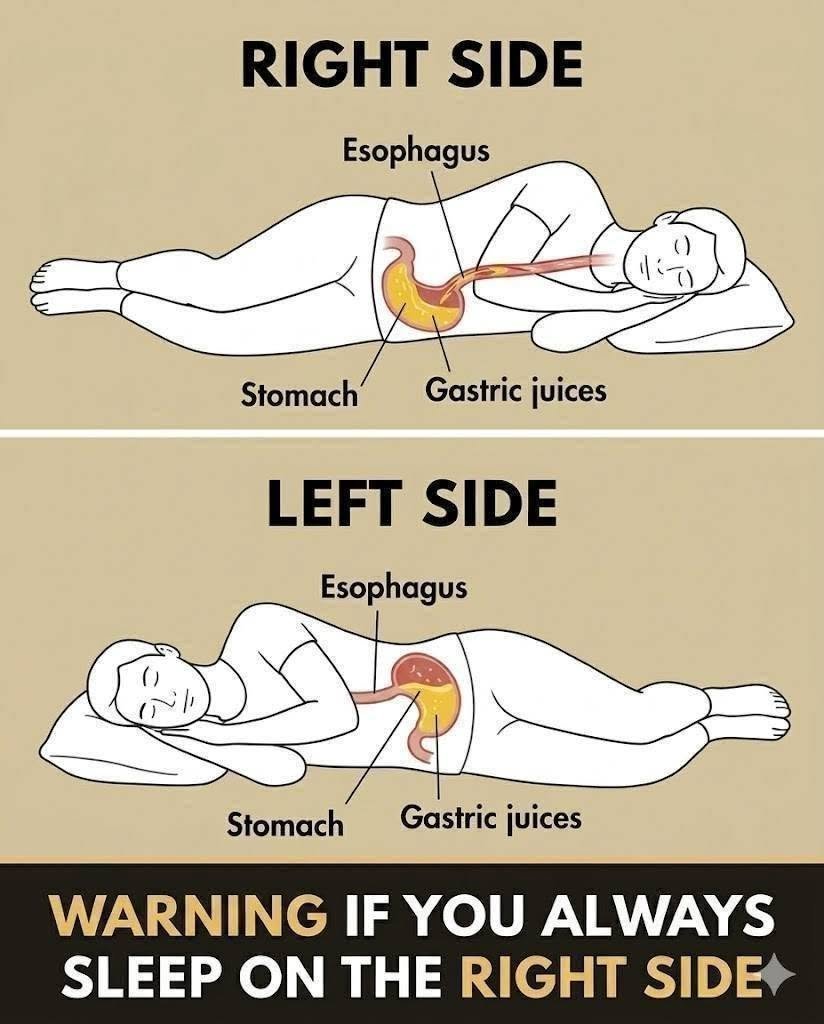
If you always sleep on your right side, there can be several effects on your body. The impact varies from person to person, and for most healthy people, side sleeping is generally safe. Here is a detailed overview:
1. Heart and circulation
- Sleeping on the right side may slightly affect the position of the heart because the heart is located more toward the left side of the chest.
- Some research suggests that left-side sleeping may be more comfortable for certain people with heart conditions, because it can change how the heart fills and pumps blood. However, many healthy people sleep on their right side without any problems.
- If you have a specific heart condition, your doctor may recommend a preferred sleeping position.
2. Digestion and acid reflux
- Right-side sleeping can sometimes worsen acid reflux (heartburn) because the stomach’s position may allow acid to move more easily into the esophagus.
- People with frequent nighttime reflux often find left-side sleeping reduces symptoms, because it helps keep stomach acid lower.
- If you wake with burning in your chest, sour taste, or throat irritation, your sleeping side may be worth changing.
3. Breathing and snoring
- Side sleeping (either right or left) is usually better than sleeping on your back for many people who snore or have mild sleep-disordered breathing.
- Sleeping on the right side may help keep the airway more open compared with back sleeping, but the effect differs between individuals.
- If you have loud snoring, choking during sleep, or daytime tiredness, it may be worth checking for sleep apnea.
4. Shoulder, neck, and spine effects
Sleeping on the same side every night can cause:
- Pressure on the right shoulder
- Neck stiffness if your pillow does not keep your head aligned
- Hip or lower back discomfort
- Muscle imbalance or soreness from repeated pressure
Helpful tips:
- Use a pillow that keeps your neck straight (not tilted upward or downward).
- Place a pillow between your knees to keep your hips aligned.
- Use a mattress that supports your body without creating excessive pressure points.
5. Skin and facial effects
Sleeping on one side for years may contribute to:
- More pressure-related wrinkles on that side of the face
- Uneven skin pressure
- More contact with pillow oils, sweat, or skincare products
Using a clean pillowcase and occasionally changing sleeping positions may help.
6. Pregnancy considerations
During pregnancy, especially later stages:
- Many healthcare providers recommend left-side sleeping because it may improve blood flow to the uterus and reduce pressure on major blood vessels.
- Right-side sleeping is often still acceptable for many pregnant people, but individual medical advice matters.
7. Is right-side sleeping harmful?
For most people:
✅ It is not dangerous.
✅ It does not automatically cause disease.
✅ It can be a comfortable and healthy position.
Possible reasons to consider changing sides:
- Frequent heartburn
- Shoulder or neck pain
- Breathing problems during sleep
- A doctor has advised another position because of a medical condition
If you want to improve right-side sleeping:
- Keep your spine straight.
- Avoid curling tightly into a fetal position.
- Use a supportive pillow.
- Alternate sides occasionally if comfortable.
- Avoid sleeping with your arm trapped under your body.
If you tell me your age, whether you have heartburn/snoring/back pain, and how many years you have slept on your right side, I can explain the likely effects more specifically.