Here are some ways the ears can reflect health:
1. Ear color and skin changes
- Pale or bluish ears: May sometimes suggest circulation problems, low oxygen levels, or exposure to cold.
- Red, swollen, or hot ears: Can occur with infections, inflammation, allergies, skin conditions, or temperature changes.
- Yellowish skin around the ears: May be related to jaundice (a liver or blood-related issue), especially if other body areas are also yellow.
2. Ear infections and inflammation
Symptoms such as:
- Ear pain
- Fluid discharge
- Swelling
- Fever
- Reduced hearing
may indicate:
- Middle ear infection
- Outer ear infection
- Eardrum problems
3. Hearing changes
Gradual hearing loss may be associated with:
- Aging
- Long-term noise exposure
- Earwax blockage
- Certain medications
- Some neurological or vascular conditions
Sudden hearing loss should be treated as urgent and evaluated by a healthcare professional.
4. Ear shape and health claims
Some claims suggest that ear shape, folds, or size can predict diseases (for example, a diagonal crease in the earlobe being linked with heart disease). Research has found some associations in certain studies, but these signs are not reliable diagnostic tools and should not replace medical tests.
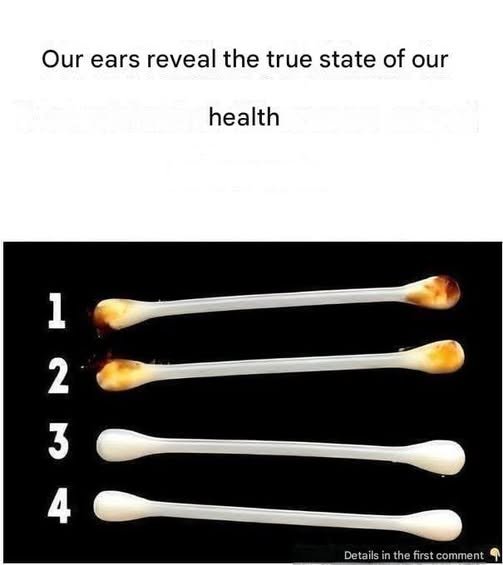
5. Earwax clues
Earwax varies naturally:
- Dry or flaky wax can be normal.
- Excessive wax can block hearing.
- Bad-smelling discharge may suggest infection.
6. Balance problems
The inner ear helps control balance. Problems can cause:
- Dizziness
- Vertigo (spinning sensation)
- Loss of balance
- Nausea
These may come from inner ear disorders or other medical causes.
7. Ear-related signs that need medical attention
Seek medical advice if you have:
- Sudden hearing loss
- Persistent ear pain
- Blood or pus from the ear
- Severe dizziness
- A new lump or growth on the ear
- Hearing changes lasting more than a few days
In summary: The ears can offer useful health clues, especially about hearing, infections, circulation, and balance, but they are not a complete “health map.” A proper health assessment requires symptoms, medical history, examination, and sometimes tests.