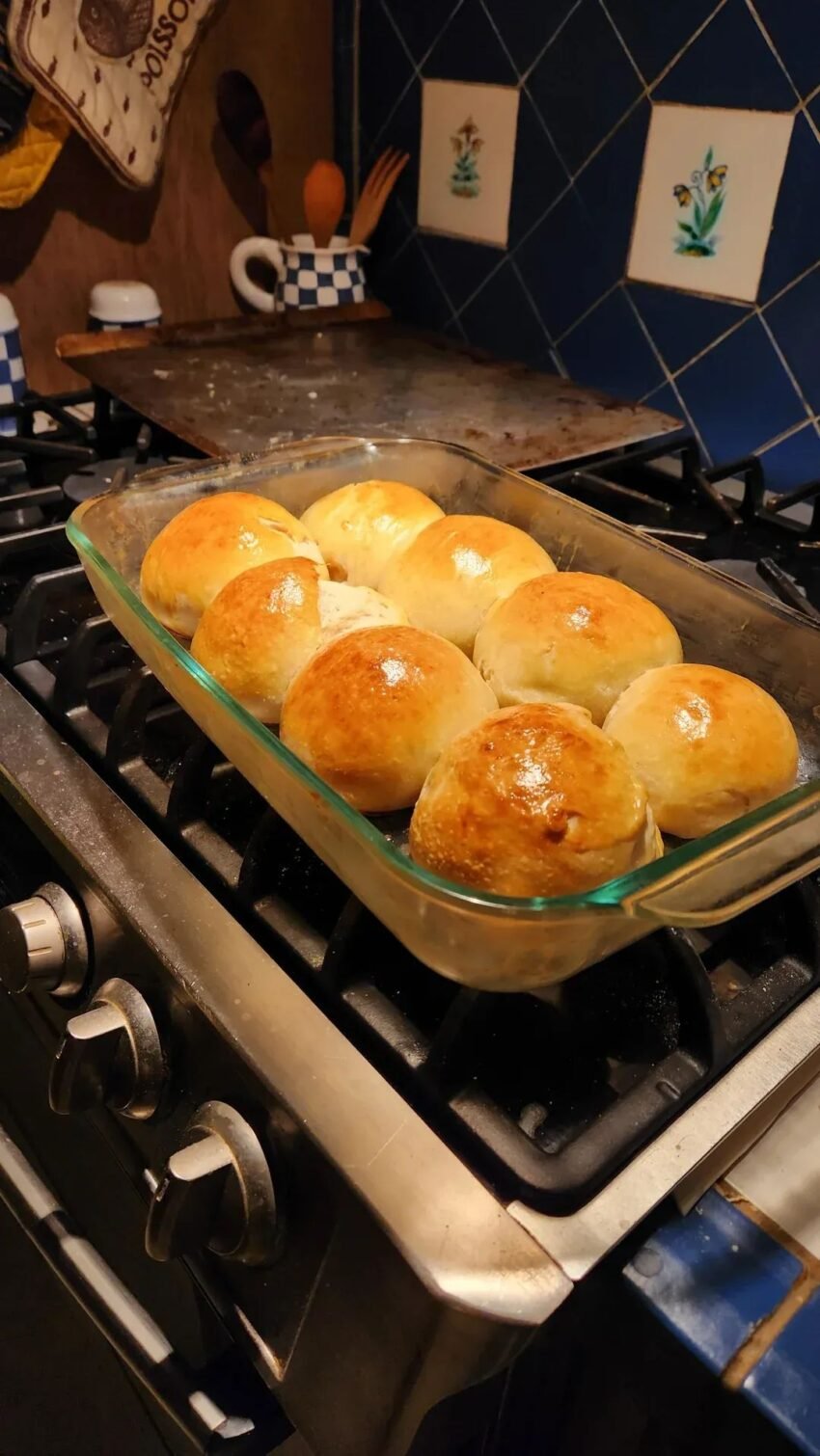
Perfected Sourdough Dinner Rolls
These sourdough dinner rolls are soft, fluffy, flavorful, and reliable. The combination of milk, butter, and a moderate amount of sugar produces a tender crumb while still showcasing the sourdough flavor.
Yield
12 dinner rolls (about 75–80 g each)
Ingredients
Levain
30 g active sourdough starter (100% hydration)
60 g bread flour
60 g water
Main Dough
All of the levain (150 g)
500 g bread flour (or strong all-purpose flour)
250 g whole milk, lukewarm
1 large egg (50 g)
60 g unsalted butter, softened
40 g sugar
10 g salt
For Finishing
1 tbsp melted butter
Flaky salt (optional)
—
Baker’s Percentages
Based on total flour (590 g including levain flour):
Ingredient Percentage
Flour 100%
Water (including milk water) ~62%
Egg 8.5%
Butter 10%
Sugar 6.8%
Salt 1.7%
—
Day 1: Build the Levain
Mix:
30 g starter
60 g flour
60 g water
Cover and ferment for 4–8 hours at 24–27°C (75–80°F) until doubled or tripled and domed on top.
The levain should smell mildly sweet and fruity, not overly acidic.
—
Mix the Dough
In a large bowl combine:
Levain
Milk
Egg
Sugar
Whisk until mostly dissolved.
Add:
Flour
Mix until a shaggy dough forms.
Rest for 20–30 minutes.
This rest allows the flour to hydrate and improves gluten development.
—
Add Salt and Butter
Add:
Salt
Softened butter
Knead until smooth.
Methods:
Stand mixer: 8–10 minutes on medium-low
By hand: 12–15 minutes
The dough should become:
Smooth
Elastic
Slightly tacky
A thin windowpane should form when stretched.
—
Bulk Fermentation
Place dough in a lightly greased bowl.
Ferment at 24–26°C (75–79°F).
Total bulk time:
4–6 hours
Perform 2 stretch-and-fold sessions:
After 45 minutes
After 90 minutes
The dough should increase roughly 50–75% in volume.
Because enriched dough rises more slowly than lean dough, don’t wait for a full doubling.
—
Cold Fermentation (Recommended)
Cover tightly.
Refrigerate:
8–16 hours
This develops flavor and makes shaping easier.
If short on time, you may skip this step and continue directly to shaping.
—
Day 2: Divide and Shape
Turn dough onto a lightly floured surface.
Divide into:
12 pieces of approximately 75–80 g each
Shape each piece:
1. Flatten gently.
2. Pull edges toward the center.
3. Flip seam-side down.
4. Cup your hand around the dough and rotate against the counter to create surface tension.
The rolls should be smooth and round.
—
Pan Arrangement
Grease a 9 × 13-inch (23 × 33 cm) baking pan.
Arrange rolls:
3 rows of 4 rolls
Leave a little space between each.
—
Final Proof
Cover lightly.
Proof at room temperature:
3–5 hours if dough is cold
2–4 hours if dough was not refrigerated
The rolls are ready when:
Puffy and expanded
Nearly touching
A finger poke springs back slowly
—
Oven Preparation
Preheat oven to:
190°C (375°F)
Allow at least 30 minutes of preheating.
—
Optional Egg Wash
For shiny golden tops, whisk:
1 egg
1 tbsp milk
Brush gently over the rolls.
—
Bake
Bake for:
22–28 minutes
Rotate halfway through baking.
The tops should be:
Deep golden brown
Internal temperature 93–96°C (200–205°F)
—
Butter Finish
Immediately after baking:
Brush generously with melted butter.
For extra flavor:
Add a pinch of flaky salt.
Mix herbs into the butter.
—
Cooling
Cool in the pan for:
10–15 minutes
Then transfer to a rack.
Serve warm.
—
Make-Ahead Schedule
Friday Evening
Build levain
Friday Night
Mix dough
Bulk ferment
Refrigerate
Saturday Morning
Shape rolls
Proof
Bake
—
Tips for Exceptionally Soft Rolls
1. Use whole milk rather than water.
2. Use bread flour with 11–13% protein.
3. Don’t overproof; overproofed rolls lose oven spring.
4. Brush with butter immediately after baking.
5. Store in an airtight container once cooled.
These rolls stay soft for 2–3 days and have a light, feathery crumb with a subtle sourdough tang, making them ideal for holiday meals, family dinners, or sandwich rolls.