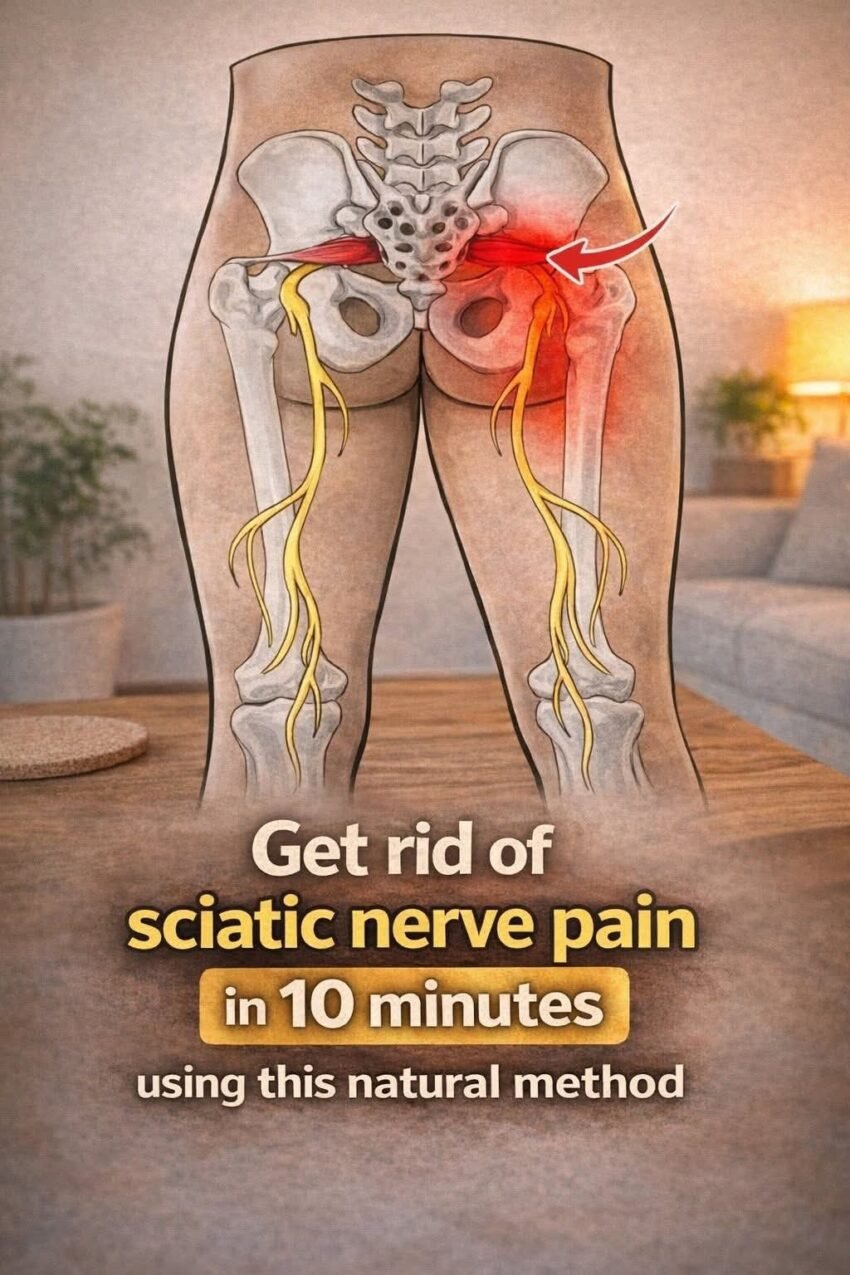
Quick Relief from Sciatica Discomfort: Simple At-Home Stretches and Tips You Can Try Today
Sciatica is pain caused by irritation or compression of the sciatic nerve, the largest nerve in the body. It typically starts in the lower back or buttock and radiates down one leg. Depending on the cause, the pain may feel sharp, burning, shooting, or accompanied by numbness or tingling.
Many people with mild to moderate sciatica find relief through gentle movement, stretching, and self-care. However, these methods are not a substitute for medical evaluation, especially if symptoms are severe or persistent.
—
What Causes Sciatica?
Sciatica is a symptom rather than a disease. Common causes include:
A herniated (slipped) disc
Age-related changes in the spine
Narrowing of the spinal canal (spinal stenosis)
Tight muscles, particularly the piriformis muscle
Bone spurs
Pregnancy
Less commonly, injuries or tumors
—
Common Symptoms
Symptoms usually affect one side of the body and may include:
Pain that travels from the lower back through the buttock and down the leg
Burning or shooting pain
Tingling or “pins and needles”
Numbness in the leg or foot
Muscle weakness
Pain that worsens with prolonged sitting, coughing, or sneezing
—
Gentle At-Home Stretches
Move slowly and stop if a stretch significantly increases your pain. You should feel a gentle stretch, not sharp pain.
1. Knee-to-Chest Stretch
This stretch helps relax the lower back and hips.
How to do it
1. Lie on your back with your knees bent and feet flat on the floor.
2. Bring one knee toward your chest.
3. Hold behind the thigh or over the shin.
4. Hold for 20–30 seconds.
5. Lower the leg and repeat with the other side.
Repeat: 3–5 times per leg.
—
2. Piriformis Stretch
A tight piriformis muscle can irritate the sciatic nerve in some people.
Steps
1. Lie on your back.
2. Cross your affected leg over the opposite knee, making a figure-four shape.
3. Pull the uncrossed thigh toward your chest.
4. Hold for 20–30 seconds.
Repeat: 3 times.
—
3. Seated Hamstring Stretch
Tight hamstrings can increase stress on the lower back.
Instructions
1. Sit on the edge of a sturdy chair.
2. Straighten one leg with the heel on the floor.
3. Keep your back straight.
4. Lean forward from your hips until you feel a stretch in the back of your thigh.
5. Hold for 20–30 seconds.
Repeat on both sides.
—
4. Cat-Cow Stretch
This gentle movement improves flexibility in the spine.
How to perform
1. Begin on your hands and knees.
2. Slowly arch your back while lifting your head (Cow position).
3. Then round your back while lowering your head (Cat position).
4. Move slowly with your breathing.
Repeat for 8–10 cycles.
—
5. Child’s Pose
This yoga pose gently stretches the lower back.
Steps
1. Kneel on the floor.
2. Sit back toward your heels.
3. Reach your arms forward and lower your chest.
4. Hold for 20–60 seconds while breathing comfortably.
Avoid this stretch if it causes increased leg pain.
—
6. Standing Calf Stretch
Stretching the calf can improve flexibility throughout the back of the leg.
Instructions
1. Stand facing a wall.
2. Place one foot behind the other.
3. Keep the back heel on the floor.
4. Lean toward the wall until you feel a stretch in the calf.
5. Hold for 20–30 seconds.
Repeat on both sides.
—
Helpful Home Care Tips
Stay Active
Although resting for a day or two after symptoms begin may help, prolonged bed rest is generally not recommended. Gentle activity such as walking can support recovery.
—
Apply Heat or Cold
Cold packs
May help during the first 24–48 hours
Apply for 15–20 minutes at a time
Wrap the ice pack in a towel to protect your skin
Heat
Can help relax tight muscles after the initial phase
Use a heating pad or warm compress for 15–20 minutes
Avoid sleeping with a heating pad on
—
Improve Your Sitting Posture
Long periods of sitting can aggravate sciatica.
Try to:
Sit with both feet flat on the floor
Keep your knees level with your hips
Use a small lumbar support if needed
Stand up and walk every 30–60 minutes
—
Sleep in a Comfortable Position
Some people find relief by:
Sleeping on their side with a pillow between their knees
Sleeping on their back with a pillow under their knees
These positions may reduce strain on the lower back.
—
Maintain a Healthy Weight
Excess body weight can place additional stress on the spine. A balanced diet and regular physical activity can support spinal health over time.
—
Can Over-the-Counter Pain Relievers Help?
For some adults, nonprescription pain relievers may help reduce pain and inflammation.
Examples include:
Acetaminophen
Ibuprofen
Naproxen
These medications are not suitable for everyone, especially people with kidney disease, stomach ulcers, certain heart conditions, or those taking blood thinners. Always follow the dosing instructions on the label and consult a healthcare professional if you are unsure.
—
When to See a Healthcare Professional
Arrange a medical evaluation if:
Pain lasts longer than a few weeks
Symptoms are getting worse
Walking becomes difficult
You develop significant leg weakness
Pain keeps returning
A healthcare professional can determine the underlying cause and recommend treatments such as physical therapy, prescription medications, injections, or, in some cases, surgery.
—
Seek Emergency Medical Care Immediately If You Have
Sciatica can occasionally signal a serious condition requiring urgent treatment. Seek immediate medical attention if you experience:
Loss of bladder or bowel control
Numbness in the groin or inner thighs (often called saddle anesthesia)
Severe or rapidly worsening weakness in one or both legs
Sciatica after a major fall, car accident, or other significant injury
Fever, unexplained weight loss, or a history of cancer along with severe back pain
—
Tips to Help Prevent Future Flare-Ups
Exercise regularly to strengthen your core and back muscles.
Stretch your hips and hamstrings several times a week.
Lift heavy objects by bending your knees, not your back.
Avoid sitting for long periods without movement.
Wear supportive footwear.
Maintain good posture while standing and sitting.
—
Bottom Line
Sciatica often improves with time and conservative care. Gentle stretches such as the knee-to-chest stretch, piriformis stretch, hamstring stretch, cat-cow stretch, child’s pose, and calf stretch may help relieve muscle tension and improve flexibility. Combining these with regular walking, good posture, and appropriate use of heat or cold can provide relief for many people.
If your symptoms are severe, persist beyond a few weeks, or are accompanied by leg weakness, loss of bladder or bowel control, or numbness in the groin area, seek medical care immediately, as these may indicate a condition requiring urgent treatment.