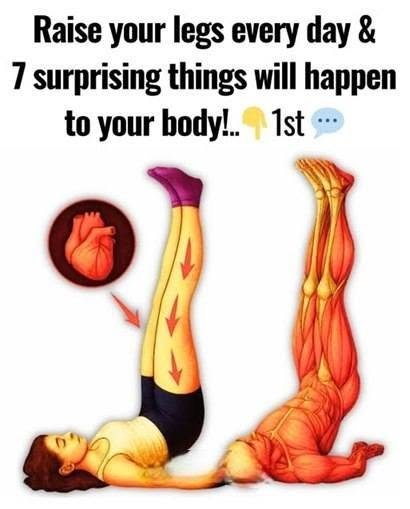
Raising your legs every day (often called the legs-up-the-wall position or simply elevating your legs above heart level) can provide several health benefits. While some claims online are exaggerated, there are evidence-based advantages.
1. Reduces Swelling in the Legs and Feet
When you stand or sit for long periods, gravity causes fluid to collect in your feet and lower legs.
How it helps:
- Encourages excess fluid to move back toward the heart.
- Reduces puffiness in the ankles and feet.
- Can make your legs feel lighter and less tight.
Who benefits most:
- People with desk jobs.
- Travelers after long flights.
- Pregnant women (after consulting their healthcare provider).
2. Improves Blood Circulation
Elevating your legs helps your veins return blood to your heart more efficiently.
Benefits include:
- Less blood pooling in the lower legs.
- Reduced pressure on leg veins.
- May ease mild symptoms of varicose veins.
Important: It does not cure circulation disorders, but it may temporarily relieve symptoms.
3. Relieves Tired, Aching Legs
After walking, exercising, or standing all day, muscles can become fatigued.
Leg elevation can:
- Reduce muscle fatigue.
- Ease soreness.
- Help legs recover after physical activity.
Many people notice relief after 15–20 minutes.
4. May Reduce Lower Back Tension
The legs-up-the-wall position can allow your lower back and hips to relax.
Some people experience:
- Less tightness in the lower back.
- Reduced tension in the hips.
- Gentle stretching of the hamstrings.
If you have significant back pain or spinal conditions, use caution and consult a healthcare professional if you’re unsure.
5. Promotes Relaxation and Stress Relief
Holding this position while breathing slowly can activate the body’s relaxation response.
Possible effects:
- Lower stress levels.
- Reduced muscle tension.
- A calmer mind after a busy day.
Many people combine it with meditation or deep breathing.
6. May Help Reduce Mild Leg Cramps
Improved circulation and relaxed muscles may help relieve some types of leg discomfort.
It may:
- Reduce feelings of heaviness.
- Ease mild muscle tightness.
- Help recovery after exercise.
However, frequent or severe leg cramps should be evaluated by a healthcare provider, as they can have many causes.
7. Gives Your Feet a Break
Your feet support your body all day.
Elevating them can:
- Relieve pressure on joints.
- Reduce foot fatigue.
- Help decrease mild swelling after long periods of standing.
This can be especially helpful for teachers, nurses, retail workers, and others who spend much of the day on their feet.
How to Do It Correctly
- Lie on your back.
- Raise your legs onto a wall or place them on pillows.
- Keep your legs comfortably straight (a slight bend is fine).
- Relax your shoulders and arms.
- Breathe slowly and deeply.
- Stay in the position for 10–20 minutes, once or twice a day.
Who Should Be Careful?
Avoid or check with a healthcare professional before doing this regularly if you have:
- Severe heart failure.
- Certain eye conditions where increased head pressure is a concern (such as some cases of glaucoma).
- Recent leg injuries or surgery.
- A history of blood clots (deep vein thrombosis), unless you’ve been advised it’s safe.
- Significant uncontrolled high blood pressure or other medical conditions where inversion or prolonged leg elevation may not be appropriate.
The Bottom Line
Raising your legs daily is a simple habit that can:
- Reduce swelling.
- Improve venous blood return.
- Relieve tired and aching legs.
- Ease some lower back tension.
- Promote relaxation.
- Help with mild leg discomfort.
- Give your feet a chance to recover.
For most healthy people, spending 10–20 minutes each day with the legs elevated is a safe, low-cost way to improve comfort and recovery. While it offers real benefits, it is not a cure for underlying medical conditions such as chronic venous disease, severe circulation problems, or persistent swelling, which should be evaluated by a healthcare professional.