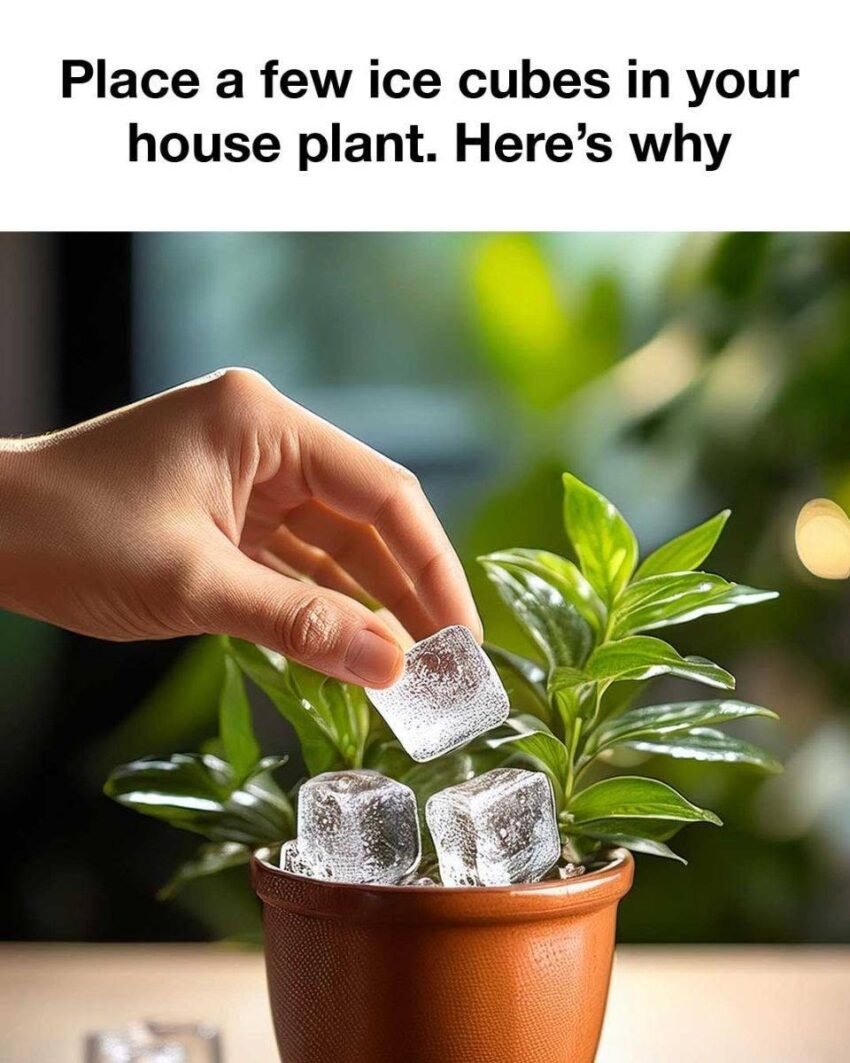
Using ice cubes to water houseplants can be a simple and convenient method for certain plants, but it should be used carefully. Here’s a detailed explanation of how it works, its benefits, and its limitations.
What Is the Ice Cube Watering Hack?
Instead of pouring water directly into a plant pot, you place 1–3 ice cubes on top of the soil. As the ice melts slowly, it releases water gradually into the soil.
This method is especially popular for plants like orchids and is sometimes used for small indoor plants.
How to Use the Ice Cube Hack
- Place 1–3 ice cubes on the surface of the potting soil.
- Keep the cubes away from the plant’s stem, leaves, and exposed roots.
- Allow the cubes to melt naturally.
- Wait until the soil becomes dry before watering again.
The number of ice cubes depends on the size of the pot:
- Small pot (4 inches): 1 ice cube
- Medium pot (5–6 inches): 2 ice cubes
- Large pot (7 inches or more): 3 ice cubes
Benefits of Using Ice Cubes
1. Prevents Overwatering
The slow melting process helps deliver water gradually, reducing the risk of adding too much water at once.
2. Easy to Measure
Using a set number of ice cubes makes watering simple and consistent.
3. Less Mess
The water is released slowly, making spills and overflowing pots less likely.
4. Convenient for Busy People
It’s a quick method if you don’t have time to measure water.
5. Helpful for Some Orchids
Many indoor orchid growers use this method because it provides a controlled amount of water.
Limitations
- Not suitable for all plants. Tropical plants often prefer room-temperature water.
- Very cold water may temporarily chill roots if ice touches them directly.
- Large plants usually need much more water than a few ice cubes can provide.
- It doesn’t replace checking the soil’s moisture level.
Plants That May Tolerate It
- Orchids
- African violets (with care)
- Small succulents (only occasionally)
- Small decorative indoor plants
Plants Better Watered Normally
- Ferns
- Peace lilies
- Calatheas
- Monstera
- Fiddle-leaf figs
- Most tropical houseplants
These plants generally do better with room-temperature water poured evenly into the soil.
Best Tips
- Check the soil with your finger before watering. If the top 1–2 inches are dry, it’s usually time to water.
- Make sure the pot has drainage holes.
- Empty any excess water from the saucer after watering.
- Adjust watering based on the season—most houseplants need less water in winter.
Conclusion
The ice cube watering hack is a simple and useful trick for some small indoor plants, especially orchids, because it provides water slowly and helps avoid overwatering. However, it is not the best method for every houseplant. For most indoor plants, watering thoroughly with room-temperature water when the soil becomes dry is healthier and more effective.