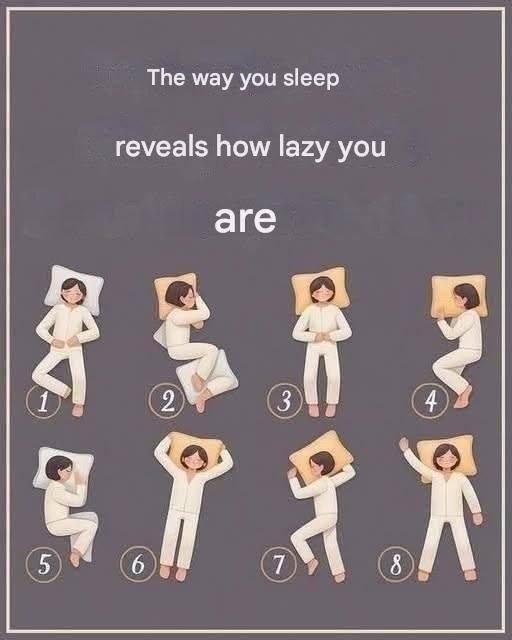
Here’s a detailed look at the most common sleeping positions and the interpretations often associated with them:
1. Fetal Position
Description: Sleeping on your side with knees drawn toward the chest.
Commonly claimed personality traits:
- Appears tough on the outside but sensitive inside
- Introverted at first but warms up to people
- Values security and comfort
Physical effects:
- Can reduce snoring and symptoms of mild sleep apnea
- Often recommended during pregnancy, especially on the left side
- May contribute to neck, shoulder, or hip stiffness if curled too tightly
Who tends to use it?
- One of the most common sleeping positions, particularly among women.
2. Side Sleeping (Straight or “Log” Position)
Description: Sleeping on one side with legs relatively straight.
Commonly claimed personality traits:
- Easygoing
- Social and trusting
- Adaptable
Physical effects:
- Often considered one of the healthiest positions
- May improve breathing and reduce snoring
- Can help reduce acid reflux, especially on the left side
- May create pressure on shoulders and hips
Variations:
Log Position
Arms down alongside the body.
- Often associated with relaxed, dependable personalities.
Yearner Position
Arms stretched forward.
- Often linked with openness but cautious decision-making.
3. Back Sleeping (Supine Position)
Description: Lying flat on the back.
Commonly claimed personality traits:
- Confident
- Organized
- Reserved
- Goal-oriented
Physical effects:
- Helps keep the spine in a neutral position
- May reduce facial pressure and wrinkles
- Can worsen snoring and obstructive sleep apnea
- May increase breathing problems in some people
Variations:
Soldier Position
Arms straight by the sides.
- Sometimes associated with discipline and high standards.
Starfish Position
Arms spread outward.
- Often linked with supportive and helpful personalities.
4. Stomach Sleeping (Prone Position)
Description: Sleeping face down.
Commonly claimed personality traits:
- Bold
- Adventurous
- Outgoing
- Strong-willed
Physical effects:
- May reduce snoring in some people
- Often places stress on the neck and lower back
- Can cause numbness or discomfort due to head rotation
Health considerations:
- Usually not recommended for people with chronic neck or back pain.
5. Freefall Position
Description: Stomach sleeping with arms around the pillow and head turned to one side.
Commonly claimed personality traits:
- Friendly and sociable
- Enjoys excitement
- May dislike criticism
Physical effects:
- Similar risks to other stomach-sleeping positions
- Increased neck strain due to head rotation
What Your Sleeping Position May Actually Reveal
While personality predictions are mostly speculative, sleep position can genuinely reveal:
Physical Comfort Needs
People often unconsciously choose positions that:
- Reduce pain
- Improve breathing
- Relieve pressure points
- Help regulate body temperature
Health Conditions
Certain positions can be associated with:
- Snoring or sleep apnea
- Acid reflux
- Pregnancy
- Back pain
- Shoulder injuries
Stress and Emotions
During periods of stress, some people naturally curl up more tightly in a fetal position, possibly seeking a sense of comfort and security.
Sleep Position and Health Quick Guide
| Position | Benefits | Potential Drawbacks |
|---|---|---|
| Side | Better breathing, less snoring | Shoulder and hip pressure |
| Left Side | May help reflux, pregnancy comfort | Possible shoulder discomfort |
| Back | Good spinal alignment | More snoring, sleep apnea risk |
| Stomach | May reduce snoring | Neck and back strain |
| Fetal | Comfortable, supports breathing | Can cause stiffness if too curled |
Bottom Line
Sleeping positions are much more useful for understanding comfort, sleep quality, and physical health than for accurately determining personality. The popular personality descriptions associated with fetal, log, soldier, starfish, and freefall positions are interesting, but they should be viewed as entertainment rather than scientifically established facts. If you’re interested in improving sleep quality, choosing a position that supports your breathing, spine, and comfort is generally more important than what it might say about your personality.