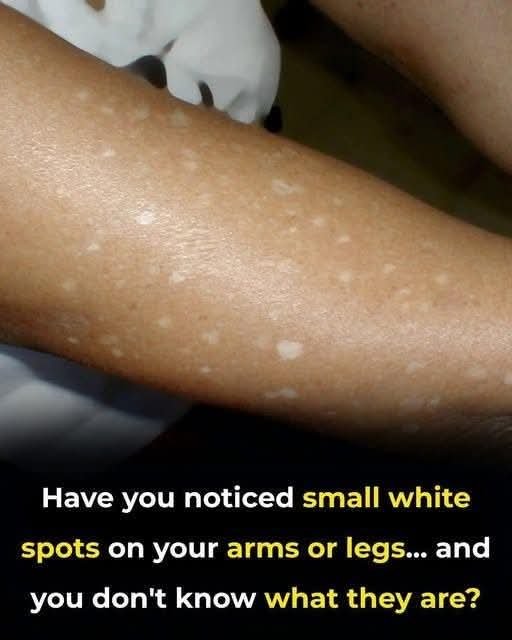
Small white spots on the arms and legs are quite common, and they can happen for several different reasons. Most of the time they are harmless, but the cause depends on how they look, whether they itch, and how fast they spread.
Here are the main causes in detail:
—
1. Idiopathic Guttate Hypomelanosis (Age/“Sun” Spots)
This is one of the most common causes in adults.
What it looks like:
Small white or pale flat spots (2–5 mm)
Usually on arms and legs
More noticeable in people with sun exposure
No pain or itching
Why it happens:
Long-term sun exposure damages pigment cells (melanocytes)
Skin loses pigment in tiny patches
Is it dangerous?
No, completely harmless
Mostly cosmetic
—
2. Vitiligo
A condition where skin loses pigment due to immune system activity.
What it looks like:
Larger, well-defined white patches
Can grow or spread over time
Often symmetrical (both arms/legs)
May also affect face or hands
Why it happens:
Immune system attacks pigment cells
Is it dangerous?
Not physically dangerous
Can spread unpredictably
—
3. Tinea Versicolor (Fungal Infection)
A very common skin fungus caused by yeast.
What it looks like:
Small white, light brown, or pink patches
Slight scaling (fine dry skin)
More visible after sun exposure
Common on upper arms, chest, and back
Symptoms:
Mild itching (sometimes)
Patchy uneven skin tone
Cause:
Overgrowth of natural skin yeast
Treatment:
Antifungal creams or shampoos
—
4. Pityriasis Alba (Common in Children & Teens)
A mild skin condition linked to dry skin or eczema.
What it looks like:
Light white patches
Slightly dry or scaly
Common on face, arms, and legs
Cause:
Dry skin and mild inflammation
Is it dangerous?
No, usually fades with time
—
5. Post-Inflammatory Hypopigmentation
White spots that appear after skin injury.
Causes:
Cuts, burns, insect bites
Eczema or rashes
What happens:
Skin loses pigment while healing
Outcome:
Often improves slowly over months
—
6. Dry Skin / Eczema
Severely dry skin can cause uneven pigmentation.
Signs:
Itchy skin
Rough patches
Light or white areas after scratching
—
When You Should Be Concerned
You should see a doctor or dermatologist if:
Spots are spreading quickly
They become larger or merge
Hair in the area turns white
You have itching, redness, or scaling
Family history of vitiligo or autoimmune disease
—
Simple Care Tips (General)
Moisturize skin daily
Use sunscreen to prevent contrast getting worse
Avoid harsh soaps
Treat fungal infections early if scaling appears
—
Key Point
Small white spots on arms and legs are most commonly due to:
Sun damage (very common in adults)
Fungal infection
Dry skin conditions
Less commonly, vitiligo
—
If you want, you can describe your spots (size, whether they itch, whether they are spreading), and I can help you narrow down the exact cause more accurately.