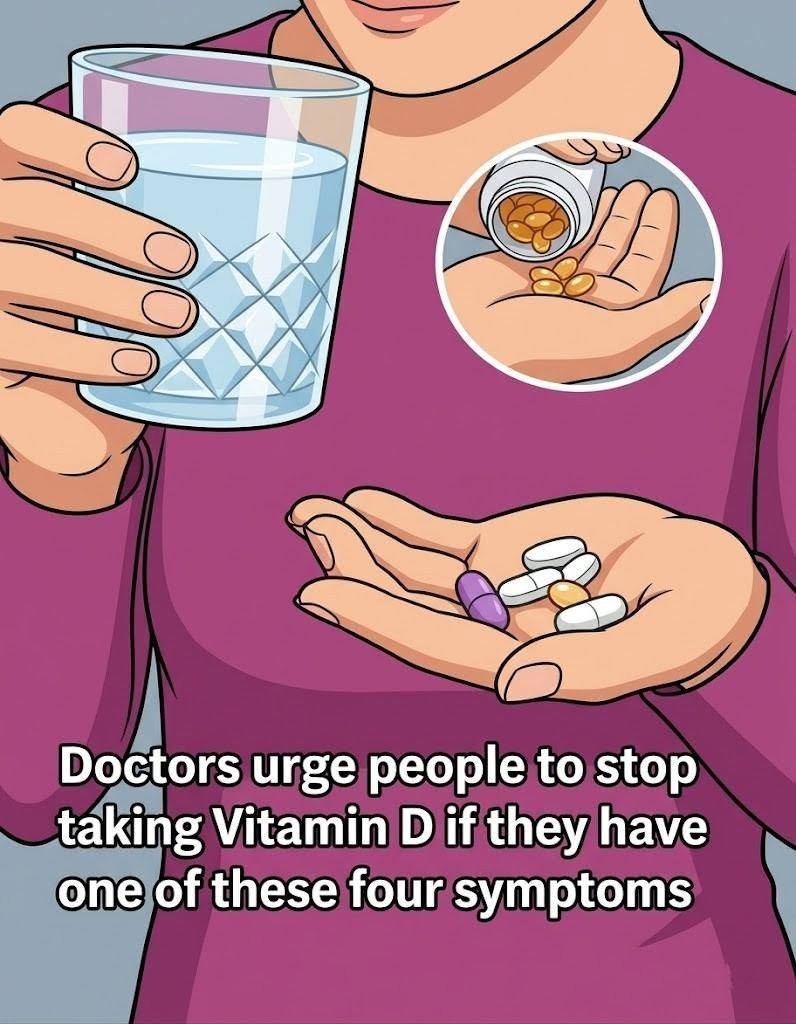
Vitamin D is an essential nutrient, but taking too much—especially high-dose supplements for a long time—can lead to vitamin D toxicity (hypervitaminosis D). The main problem is that excess vitamin D increases calcium levels in the blood (hypercalcemia), which can affect many organs.
The idea that you should “stop immediately if you have 4 symptoms” is a bit oversimplified, but there are important warning signs you should not ignore.
1) Persistent nausea, vomiting, or poor appetite
One of the earliest signs of too much vitamin D is digestive upset.
- Feeling nauseated for no clear reason
- Vomiting repeatedly
- Loss of appetite or feeling full very quickly
This happens because high calcium levels irritate the stomach and affect digestion.
2) Extreme thirst and frequent urination
Excess vitamin D can raise calcium in the blood, which forces your kidneys to work harder.
You may notice:
- Constant thirst even after drinking water
- Urinating much more than usual
- Waking up at night to urinate
If this continues, it can lead to dehydration.
3) Weakness, fatigue, or confusion
High calcium levels can directly affect the brain and muscles.
Symptoms may include:
- Unusual tiredness or low energy
- Muscle weakness
- Difficulty concentrating or “brain fog”
- In severe cases: confusion or irritability
These symptoms often develop gradually.
4) Bone pain, muscle pain, or kidney-related symptoms
Long-term excess vitamin D can affect calcium balance in bones and kidneys.
Possible signs:
- Deep bone aches or joint discomfort
- Muscle pain or cramps
- Flank pain (side/back pain near kidneys)
- In severe cases: kidney stones or kidney damage
Important context (very important)
You should not stop vitamin D blindly just because of mild symptoms. These symptoms can also come from many other conditions like dehydration, infection, or other metabolic issues.
Vitamin D toxicity usually happens when:
- Taking very high doses (e.g., 10,000+ IU daily for long periods)
- Taking multiple supplements containing vitamin D
- Not monitoring blood levels
What you should do if you suspect overdose
If you have several of the symptoms above and take high-dose Vitamin D:
- Stop or reduce supplements only after medical advice
- Get a blood test for:
- Vitamin D levels
- Calcium levels
- Kidney function
- Stay hydrated unless a doctor advises otherwise
When it becomes urgent
Seek medical care quickly if you have:
- Severe vomiting or dehydration
- Confusion or unusual drowsiness
- Severe abdominal or kidney pain
- Irregular heartbeat
If you want, tell me:
- your dose (IU per day)
- how long you’ve been taking it
I can help you judge whether your intake is actually risky or within a normal range.