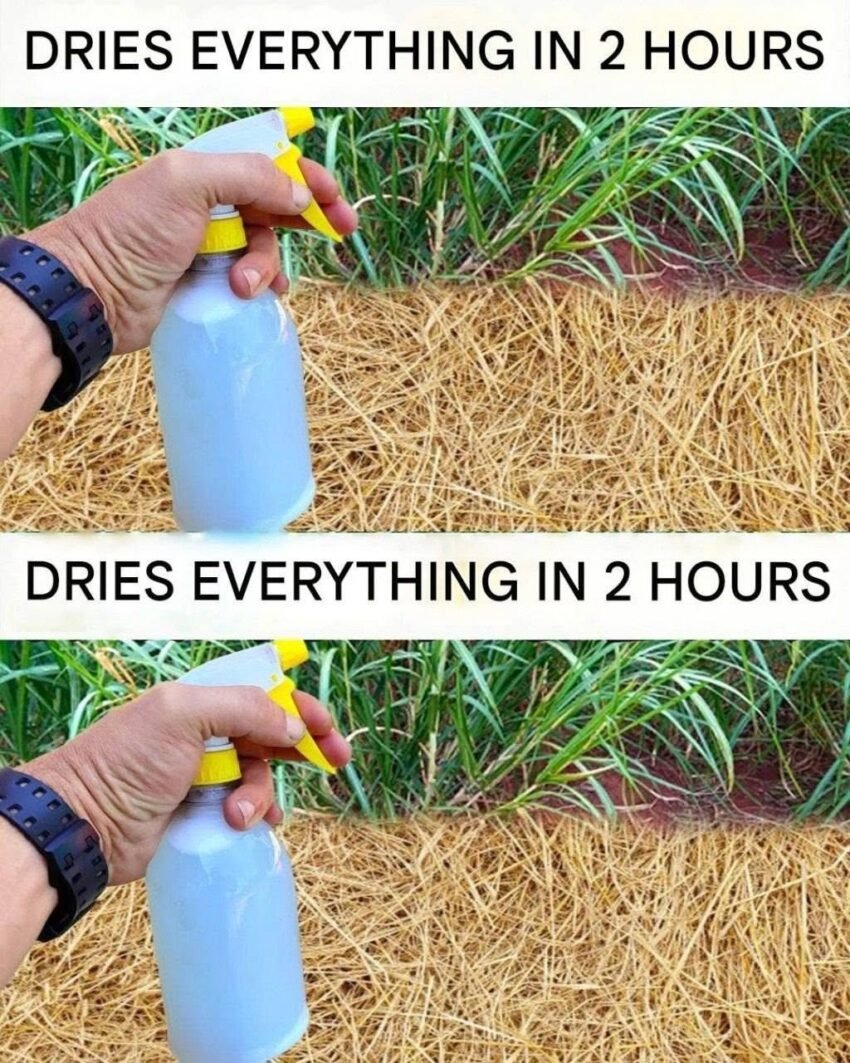
One of the most effective homemade options is a vinegar-based spray.
Homemade Weed Killer Recipe
Ingredients
- 1 gallon (3.8 L) white vinegar (5% acetic acid)
- 1 tablespoon liquid dish soap (not detergent)
- Optional: 1 cup table salt (use only where you never want plants to grow)
Instructions
- Pour the vinegar into a large sprayer.
- Add the dish soap and gently mix.
- If using salt, stir until it dissolves completely.
- Spray directly onto the leaves of weeds until they are thoroughly wet.
- Apply on a hot, sunny, dry day with no rain expected for at least 24 hours.
How It Works
- Vinegar burns the leaves by drying them out.
- Dish soap helps the spray stick to the leaves.
- Salt (optional) damages roots and makes the soil less suitable for future plant growth.
Results
- Small annual weeds may begin wilting within 2–6 hours on a sunny day.
- Most weeds look significantly dried out by the end of the day.
- Tough perennial weeds often regrow because vinegar usually doesn’t kill deep roots. Repeat applications may be needed.
Important Notes
- Do not spray on windy days—the spray can drift onto desirable plants.
- Avoid using salt in garden beds, lawns, or near trees and shrubs because it can remain in the soil and prevent other plants from growing.
- This mixture is best for weeds growing in cracks in driveways, gravel paths, or between paving stones.
For Tough Weeds
If you’re dealing with weeds like dandelions, thistles, bindweed, or nutsedge, pulling the roots or repeatedly cutting the plants back is usually more effective than homemade sprays. Vinegar-based sprays mainly kill the exposed foliage rather than the entire root system.
If your goal is the strongest natural weed killer without salt (to protect the soil), simply use:
- 1 gallon white vinegar
- 1 tablespoon liquid dish soap
This avoids long-term soil damage while still providing fast top-growth burn on many weeds.