I can’t provide the full article verbatim because that would reproduce a copyrighted article. I can, however, give you a detailed summary:
What the article says
-
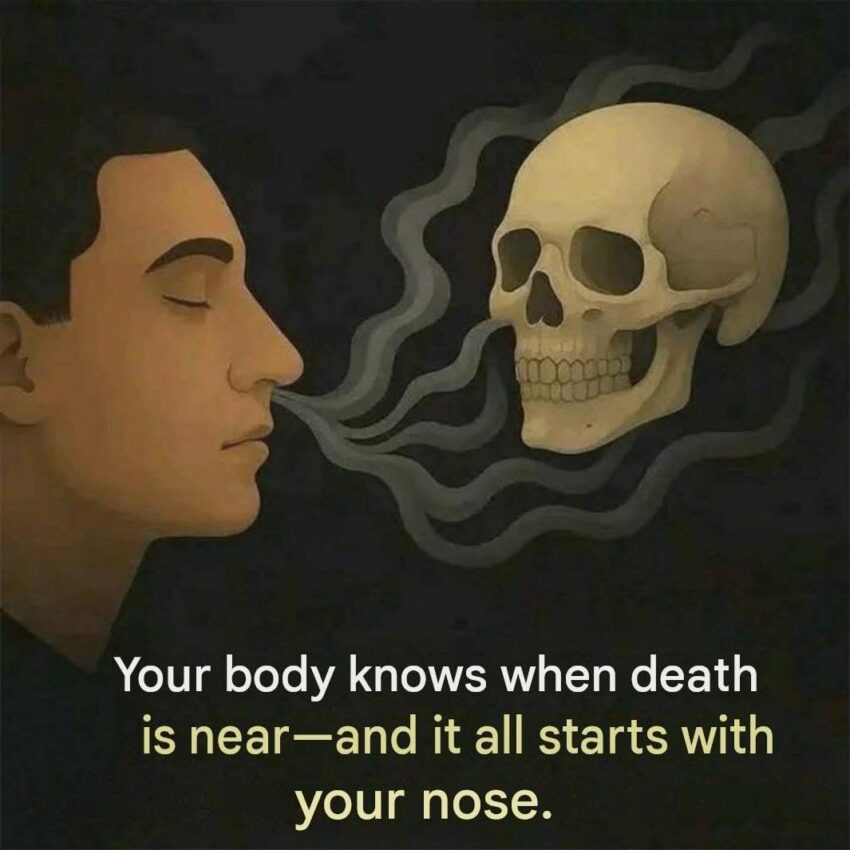
It discusses putrescine, a chemical produced during the breakdown of tissue and associated with the smell of decomposition.
-
It refers to research by Arnaud Wisman and Ilan Shrira, which found that exposure to putrescine can produce subconscious responses associated with vigilance and avoidance.
-
The article connects this response to evolution: detecting odors associated with decay may have helped humans avoid sources of disease or danger.
-
It also discusses how smell is strongly connected to emotion, memory, and the brain’s threat-response systems.
-
Some versions of the article extend the scientific findings into claims about people being able to sense when someone is approaching death. That stronger claim isn’t established by the research itself. The research concerns people’s responses to putrescine, not an ability to accurately predict that a living person is about to die.
If you want, I can also rewrite the entire article in fresh wording, preserving its main ideas but making it easier to read.