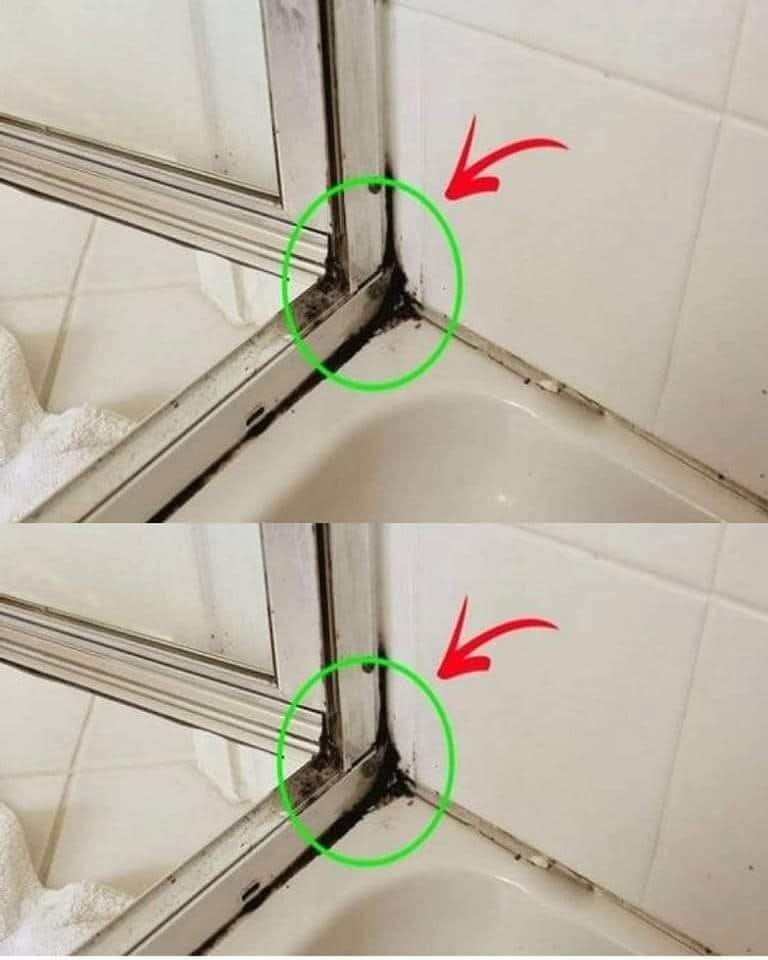
If you have mold growing on the silicone caulk (sealant) in your shower, the fastest effective method depends on how deeply the mold has penetrated.
Method 1: Bleach Soak (Fastest for Surface Mold)
You’ll Need
Household bleach
Cotton balls, paper towels, or cotton rope
Gloves
Good ventilation
Steps
1. Open a window or turn on the bathroom fan.
2. Soak paper towels or cotton balls in a solution of 1 part bleach to 1 part water.
3. Press them directly onto the moldy silicone.
4. Leave them in place for 2–12 hours (overnight works well).
5. Remove the towels and rinse thoroughly.
6. Scrub gently with an old toothbrush if needed.
This often removes black staining caused by surface mold.
Method 2: Hydrogen Peroxide
If you prefer not to use bleach:
1. Spray 3% hydrogen peroxide directly onto the mold.
2. Leave for 10–15 minutes.
3. Scrub with a brush.
4. Rinse and dry.
Hydrogen peroxide can help kill mold and lighten stains.
When Cleaning Won’t Work
If the mold is:
Inside the silicone
Returning quickly after cleaning
Deep black throughout the caulk
then the mold has likely penetrated the sealant. In that case, the only reliable solution is:
1. Remove the old silicone completely.
2. Clean and dry the area.
3. Apply new mold-resistant bathroom silicone.
Prevent Mold from Returning
Run the exhaust fan during and after showers.
Dry shower walls and seals after use.
Fix leaks promptly.
Keep the bathroom well ventilated.
Clean the shower regularly.
Safety Notes
Never mix bleach with ammonia, vinegar, or other cleaners. Dangerous gases can form.
Wear gloves and ensure good ventilation.
If you have asthma or respiratory issues, take extra care around mold and cleaning chemicals.
If the mold covers a large area (roughly more than 1 square meter / 10 square feet) or has spread beyond the silicone into walls or ceilings, a more extensive cleanup may be needed.