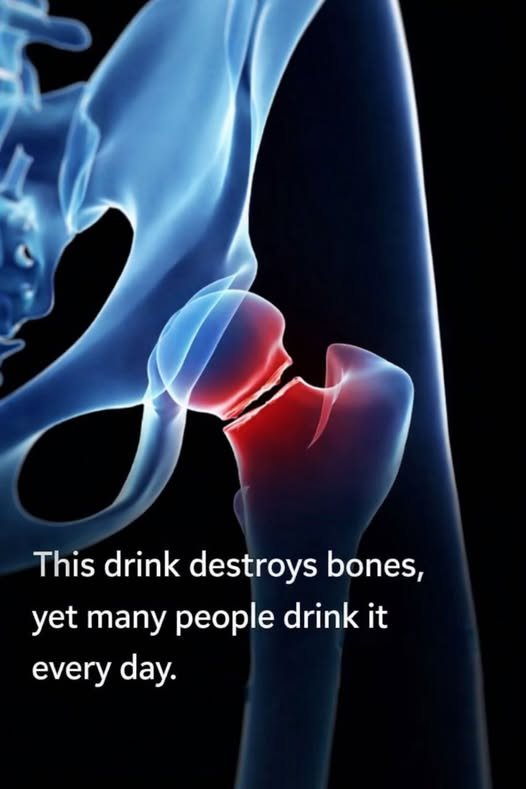
Here are 5 drinks most often linked with weaker bones, along with what actually happens in the body:
1. Cola and carbonated soft drinks (especially dark sodas)
These are among the most frequently flagged.
Why they’re harmful:
- Contain phosphoric acid, which may disrupt the calcium–phosphorus balance
- Often replace calcium-rich drinks like milk
- High sugar content increases inflammation, which can indirectly affect bone health
What studies suggest:
Regular cola intake has been associated with lower bone mineral density, especially in women.
2. Alcoholic beverages
Beer, wine, and spirits all fall into this category.
Why they’re harmful:
- Interferes with vitamin D metabolism, which is essential for calcium absorption
- Reduces activity of bone-building cells (osteoblasts)
- Heavy drinking increases risk of fractures due to poor balance and falls
Important point:
Moderate intake may have less impact, but chronic or heavy drinking is strongly linked to bone loss (osteoporosis risk).
3. Excessive caffeine drinks (coffee, strong tea, energy drinks)
Caffeine isn’t “bad” in moderation, but high intake matters.
Why they’re harmful:
- Increases calcium excretion through urine
- May slightly reduce calcium absorption
- Energy drinks often combine caffeine + sugar + acids, increasing the risk
Key detail:
The effect becomes more noticeable when calcium intake is already low.
4. Sugary fruit drinks and packaged juices
These include fruit “drinks” (not 100% juice) and sweetened beverages.
Why they’re harmful:
- High sugar levels increase inflammation, which can affect bone remodeling
- Displace healthier drinks like milk or fortified alternatives
- Often lack the fiber and nutrients found in whole fruits
Note:
100% natural juice in small amounts is less concerning than sugary “juice drinks.”
5. Energy drinks
These are especially concerning in younger people.
Why they’re harmful:
- High caffeine content + sugar + acidity
- May interfere with calcium balance
- Can replace milk or water in the diet
- Associated with poorer overall nutrition habits
Extra concern:
Frequent use during adolescence may interfere with peak bone mass development, which is crucial for lifelong bone strength.
Bottom line
Bone health depends heavily on:
- Calcium intake
- Vitamin D levels
- Physical activity (especially weight-bearing exercise)
Occasional consumption of these drinks is not usually dangerous, but regular, long-term intake—especially combined with low calcium diet—can increase osteoporosis risk.
If you want, I can also list:
- Best drinks for stronger bones
- Or a diet plan to improve bone density naturally