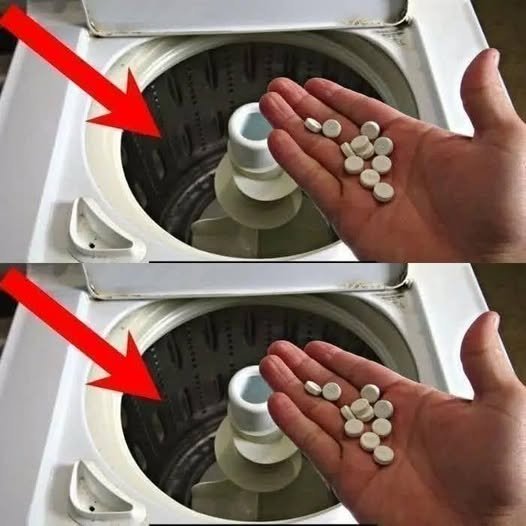
Here’s a detailed explanation of where the trick came from, how it works, and when it may or may not help.
The Origin of the Aspirin Laundry Hack
Before today’s advanced detergents and stain removers were widely available, people often relied on common household items to clean clothes. Aspirin became one of those remedies because it was inexpensive, easy to find, and thought to help restore dull fabrics.
People commonly used it to:
- Brighten white shirts
- Remove sweat stains
- Treat yellowing from age
- Refresh socks and undergarments
The hack has remained popular through word of mouth and social media.
What Is Aspirin Made Of?
The active ingredient in aspirin is:
- Acetylsalicylic acid
When aspirin dissolves in water, it slowly breaks down into:
- Salicylic acid
- Acetic acid (vinegar-like compound)
These are mild acids.
Why Some People Think It Works
1. Mild Acid Helps Remove Mineral Deposits
Over time, clothes collect:
- Hard water minerals
- Soap residue
- Body oils
A mild acidic solution may help loosen some of these deposits, making fabrics appear cleaner.
2. Can Reduce Yellowing
Yellow stains often come from:
- Sweat
- Body oils
- Deodorant residue
- Aging fabric
The acidic solution may slightly break down some of these residues, improving the appearance of whites.
3. Helps Dissolve Certain Residues
Some stains become trapped inside fibers.
Warm water mixed with dissolved aspirin can soften these residues enough for detergent to remove them more easily.
Does Aspirin Actually Bleach Clothes?
No.
Aspirin is not a bleach.
It contains:
- No chlorine
- No oxygen bleach
- No whitening chemicals
Instead, it may make clothes appear brighter by helping remove dulling residues.
What Types of Stains May Improve?
Sometimes aspirin may help with:
- Sweat stains
- Mild yellowing
- Light body oil stains
- Soap buildup
- Mineral deposits
What Aspirin Will Not Remove
It usually does not work well on:
- Grease
- Cooking oil
- Blood stains
- Ink
- Grass
- Wine
- Coffee
- Chocolate
- Paint
Specialized stain removers are much more effective for these.
How People Traditionally Used Aspirin
Method 1: Soaking Clothes
Ingredients:
- 5–6 regular (uncoated) aspirin tablets
- About 2 gallons (7–8 liters) of warm water
Steps:
- Crush the tablets.
- Dissolve them completely in warm water.
- Soak white clothing for several hours or overnight.
- Wash as usual with detergent.
Method 2: Adding to the Washing Machine
Some people:
- Crush 2–3 tablets
- Add them directly to the wash
However, this method is less effective because the tablets may not fully dissolve, especially in cold water.
Does It Work Better with Hot Water?
Warm water generally helps aspirin dissolve more completely.
Very hot water, however, may:
- Shrink delicate fabrics
- Set protein stains like blood
Warm water is usually the safer choice.
Why White Clothes Turn Yellow
Yellowing usually comes from:
Sweat
Proteins and salts build up in fibers.
Body Oils
Natural skin oils attract dirt.
Deodorant
Aluminum compounds can react with sweat.
Hard Water
Minerals leave deposits on fabric.
Detergent Residue
Too much detergent can remain in clothing.
Can Aspirin Damage Clothes?
Generally, occasional use is unlikely to harm sturdy cotton fabrics, but there are considerations:
- Avoid frequent use on delicate materials like silk or wool.
- Undissolved tablets may leave residue.
- Colored fabrics could potentially be affected by repeated acidic soaking, though this is uncommon.
Common Myths
Myth: Aspirin Makes Clothes Snow White
Reality:
It may remove some dulling but cannot restore heavily stained or worn fabric to like-new whiteness.
Myth: Aspirin Replaces Detergent
Reality:
Detergent is still needed to remove dirt, oils, and many stains.
Myth: Aspirin Is Better Than Bleach
Reality:
For whitening white cotton, oxygen bleach or chlorine bleach (used according to fabric care instructions) is generally more effective.
Myth: More Aspirin Works Better
Reality:
Using extra tablets does not necessarily improve results and may simply waste the product.
What Modern Science Says
There is limited scientific research specifically evaluating aspirin as a laundry aid. The mild acidity may help loosen certain residues, but there is no strong evidence that aspirin is a superior whitening or stain-removing agent compared with modern laundry products.
Better Alternatives for Whitening Clothes
If your goal is brighter whites, these options are generally more effective:
| Method | Effectiveness | Safe for Most Whites |
|---|---|---|
| Quality laundry detergent | Excellent | Yes |
| Oxygen bleach | Excellent | Yes |
| Baking soda (with detergent) | Good | Yes |
| White vinegar (rinse cycle) | Good for residue removal | Yes |
| Aspirin | Mild to Moderate | Sometimes |
Tips for Keeping Whites Bright
- Wash white clothes separately.
- Use the correct amount of detergent.
- Treat stains promptly.
- Avoid overloading the washing machine.
- Dry whites in sunlight when appropriate, as sunlight can naturally help brighten fabrics.
- Clean your washing machine regularly to reduce residue buildup.
The Bottom Line
The aspirin laundry trick isn’t entirely a myth, but it also isn’t a miracle solution. Its mild acidic properties may help remove some mineral deposits, soap residue, and light yellowing, making white clothes appear somewhat brighter. However, aspirin is not a bleach, stain remover, or replacement for detergent, and it performs far less effectively than modern oxygen bleach and enzyme-based laundry products for most cleaning tasks.
For occasional treatment of lightly yellowed white garments, the aspirin method may provide modest improvement. For stubborn stains or significant discoloration, products specifically formulated for laundry are usually the better choice.