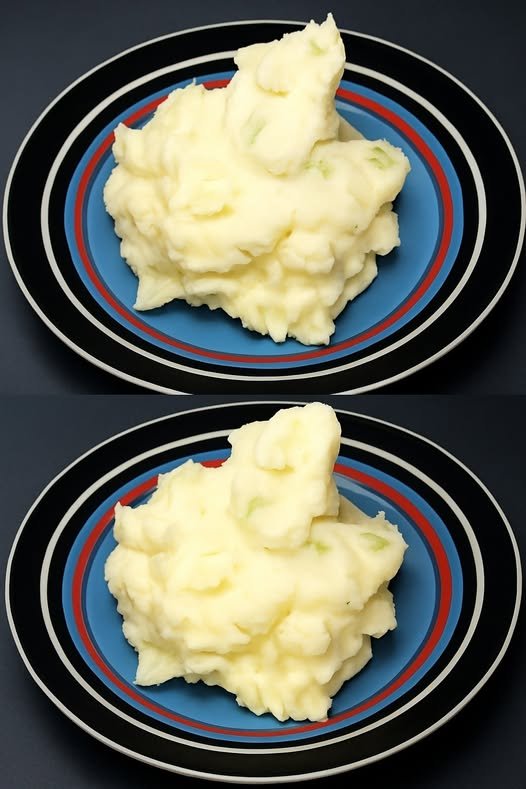
Absolutely — the biggest problem with boiling potatoes is water absorption. If you want mashed potatoes that are fluffy, creamy, and intensely potato-y rather than watery or gluey, the cooking method matters.
The secret: cook potatoes without soaking them
Boiling potatoes directly in water allows them to absorb a lot of moisture. That can make mashed potatoes taste diluted, and aggressive mashing can turn the excess starch into a gluey texture.
A better approach is to steam or bake the potatoes, then rice them while they’re hot and fold in warm butter and dairy.
Ultra-Creamy Mashed Potatoes — No Boiling
The Secret Revealed: Why Boiling Potatoes Can Ruin Mashed Potatoes—and What to Do Instead
If your mashed potatoes sometimes turn watery, bland, or strangely gluey, the culprit may be hiding in the cooking method.
Boiling potatoes isn’t necessarily wrong, but it exposes the potatoes to a large amount of water. The potatoes can absorb that water while cooking, diluting their flavor and making it harder to achieve that luxurious, creamy texture.
For exceptionally good mashed potatoes, try steaming or baking the potatoes instead. This keeps excess water away from the flesh and gives you much more control over the final texture.
Ingredients
Serves 4–6
- 2 pounds Yukon Gold potatoes, peeled
- 6 tablespoons unsalted butter, plus more for serving
- ½ cup heavy cream or whole milk
- 1½ teaspoons kosher salt, plus more to taste
- ¼ teaspoon freshly ground black pepper
- 1 small garlic clove, optional
- 1–2 tablespoons sour cream or crème fraîche, optional
- Chives or parsley, for garnish, optional
Step 1: Choose the Right Potatoes
For the creamiest mashed potatoes, Yukon Golds are an excellent choice because they’re naturally buttery and have a smooth, dense texture.
You can also use Russet potatoes if you prefer very light and fluffy mashed potatoes.
For the best of both worlds, use a combination of Yukon Gold and Russet potatoes.
Avoid waxy potatoes such as red potatoes if your goal is ultra-smooth mashed potatoes. They contain more starches that can produce a dense, sticky result when overworked.
Step 2: Peel and Cut
Peel the potatoes and cut them into evenly sized pieces, roughly 1½ to 2 inches each.
Keeping the pieces similar in size is important because they will cook at approximately the same rate.
Don’t cut them into tiny cubes. Smaller pieces expose more surface area and can lose flavor and texture during cooking.
Step 3: Steam Instead of Boiling
Place the potatoes in a steamer basket over simmering water.
Cover and steam for approximately 20–30 minutes, depending on the size of the pieces.
They’re ready when a fork or thin knife slides easily into the center without resistance.
Important: Don’t let the potatoes sit in the steam for much longer than necessary. Once they’re tender, remove them immediately.
Step 4: Warm the Butter and Cream
While the potatoes cook, place the butter and cream in a small saucepan.
Warm them gently over low heat until the butter has melted and the mixture is hot.
Do not bring the cream to a vigorous boil.
If you want garlic-flavored mashed potatoes, add the garlic clove to the cream mixture and let it gently infuse for several minutes. Remove the garlic before adding the cream to the potatoes.
Step 5: Dry the Potatoes Briefly
Transfer the cooked potatoes to a warm, dry pot.
Place the pot over very low heat for about 1–2 minutes, gently moving the potatoes around.
This allows excess surface moisture to evaporate.
Don’t brown or fry the potatoes. You’re simply drying them slightly.
This small step makes a surprisingly big difference.
Step 6: Rice the Potatoes
For the smoothest texture, pass the hot potatoes through a potato ricer or food mill.
Work in batches and rice the potatoes directly into a warm bowl or saucepan.
Avoid using a blender or food processor.
Those appliances break the potato cells apart too aggressively and release large amounts of starch, which is one of the fastest ways to turn mashed potatoes into something resembling paste.
If you don’t have a ricer, mash the potatoes gently with a traditional potato masher.
Step 7: Add the Butter First
This is another useful trick.
Add the melted butter to the hot potatoes and gently fold it through.
Butter coats the potato starch and helps create a rich, silky texture.
Don’t vigorously beat the potatoes.
Step 8: Add the Warm Cream
Gradually pour in the warm cream while gently folding the potatoes.
Start with about half of the cream and add more until the potatoes reach your preferred consistency.
You may not need all of it.
The final mashed potatoes should be creamy and soft but still able to hold their shape.
Step 9: Season Properly
Add the salt and freshly ground black pepper.
Taste.
Then taste again.
Potatoes need a surprising amount of seasoning because their mild flavor can easily overwhelm salt and butter.
If you want extra richness, fold in 1–2 tablespoons of sour cream or crème fraîche.
Step 10: Serve Immediately
Transfer the mashed potatoes to a warm serving bowl.
Make a shallow swirl in the center and add a small pat of butter.
Finish with chopped chives or parsley if desired.
Serve immediately while they’re hot and silky.
Why This Method Works
1. Less water means more potato flavor
Steaming exposes the potatoes to much less liquid than boiling.
That means the finished potatoes taste more concentrated and aren’t diluted by excess absorbed water.
2. Butter creates a silky texture
Adding butter while the potatoes are hot allows it to distribute evenly throughout the potato.
It also helps produce the rich mouthfeel people associate with restaurant-quality mashed potatoes.
3. Warm dairy prevents the potatoes from cooling down
Cold cream or milk can make the potatoes cool rapidly and can make the mixture feel heavier.
Warm dairy blends more easily into the hot potatoes.
4. Gentle handling prevents gluey potatoes
Potatoes contain starch.
The more aggressively you mash, beat, blend, or process them, the more starch you can release.
That’s why a ricer, food mill, or gentle hand masher is preferable to a food processor.
The 5 Biggest Mashed-Potato Mistakes
❌ Starting with cold dairy
Use warm butter and cream instead.
❌ Overworking the potatoes
Mash and fold gently.
❌ Using a food processor
It can turn perfectly cooked potatoes into a sticky paste.
❌ Adding all the liquid at once
Add dairy gradually so you can control the consistency.
❌ Letting the finished potatoes sit uncovered
Mashed potatoes lose moisture and develop a skin quickly. Keep them covered and serve as soon as possible.
A Restaurant-Style Upgrade
For an especially luxurious version, use:
- 2 pounds Yukon Gold potatoes
- 8 tablespoons unsalted butter
- ½–¾ cup heavy cream
- 1½–2 teaspoons kosher salt
- Freshly ground black pepper
- 1 tablespoon crème fraîche
The extra butter and cream create an exceptionally rich, silky result.
For a more traditional, lighter mashed potato, reduce the butter and use whole milk instead of heavy cream.
The Bottom Line
The real secret isn’t that boiled potatoes are always bad.
It’s that potatoes become harder to control when they’re cooked in a large amount of water.
Steam or bake → dry briefly → rice while hot → add butter → add warm dairy gradually → season → serve immediately.
That simple sequence gives you mashed potatoes that are creamy, fluffy, flavorful, and far less likely to become watery or gluey.