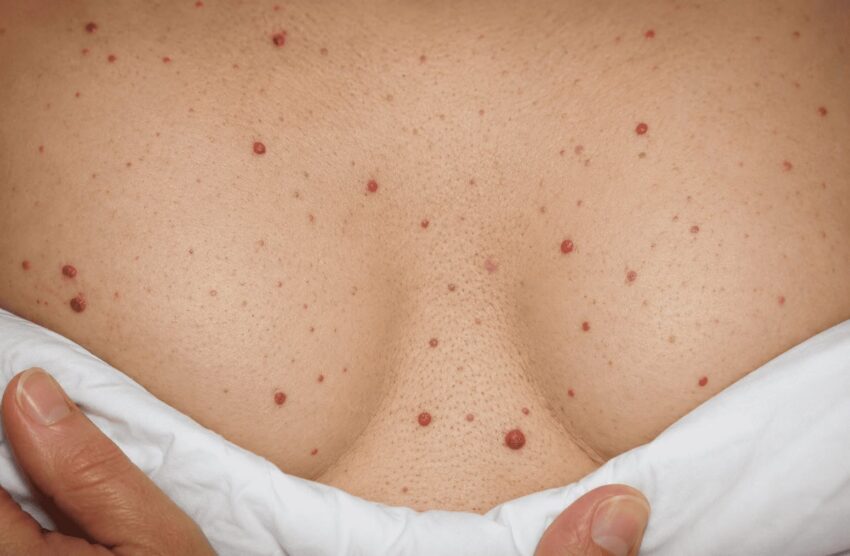
Here’s a clear breakdown of what those “mysterious red spots” often mean.
1. Tiny pinpoint red spots: Petechiae
Petechiae
These are very small (pinpoint-sized), flat red or purple dots that don’t fade when you press on them.
Common causes:
- Strong coughing or vomiting (pressure bursts tiny blood vessels)
- Certain infections
- Low platelets or blood clotting issues
- Some medications (like blood thinners)
Important note:
If petechiae appear suddenly and spread quickly—especially with fever or weakness—they should be checked urgently.
2. Bright red, raised dots: Cherry angiomas
Cherry angioma
These are smooth, round, bright red or purple bumps that often appear on the chest, arms, or back.
Key facts:
- Very common after age 30
- Harmless in most cases
- Tend to increase with age
- Usually don’t hurt or itch
You can think of them as “skin freckles made of blood vessels.”
3. Itchy red patches or bumps: Allergic reaction / hives
Urticaria
These often appear suddenly and can move around or change shape.
Triggers include:
- Food allergies
- Medications
- Heat, stress, or sweating
- Insect stings
Typical signs:
- Itching
- Raised welts
- Spreading or changing location quickly
4. Small red bumps with pus or irritation: Folliculitis
Folliculitis
This happens when hair follicles become inflamed or infected.
Common causes:
- Shaving irritation
- Sweat and friction
- Bacterial infection
Looks like small red pimples, sometimes with a white tip.
5. Insect bites or skin irritation
Often mistaken for “mysterious spots,” these usually:
- Appear in clusters or lines
- Itch intensely
- Show up after sleeping or outdoor exposure
When red spots could be serious
You should seek medical attention if red spots are accompanied by:
- Fever or chills
- Rapid spreading across the body
- Bruising easily
- Bleeding from gums or nose
- Severe fatigue or weakness
- Spots that do not fade when pressed
These can sometimes indicate blood, immune, or infection-related conditions that need evaluation.
When it’s usually harmless
Most red spots are not dangerous if:
- They are stable and not spreading
- You feel otherwise well
- They don’t change rapidly
- They’ve been present for a long time without symptoms
What you can do at home
- Avoid scratching or irritating the area
- Note when they appear and if they change
- Take photos for comparison over time
- Check for triggers (new food, medication, detergent, shaving)
Bottom line
“Mysterious red spots” are not one single condition—they’re a symptom with many possible explanations. Most are harmless (like cherry angiomas or mild irritation), but sudden or widespread spots—especially with other symptoms—deserve medical attention.
If you want, describe what your spots look like (size, color, itchy or not, where they appear), and I can help narrow it down more accurately.