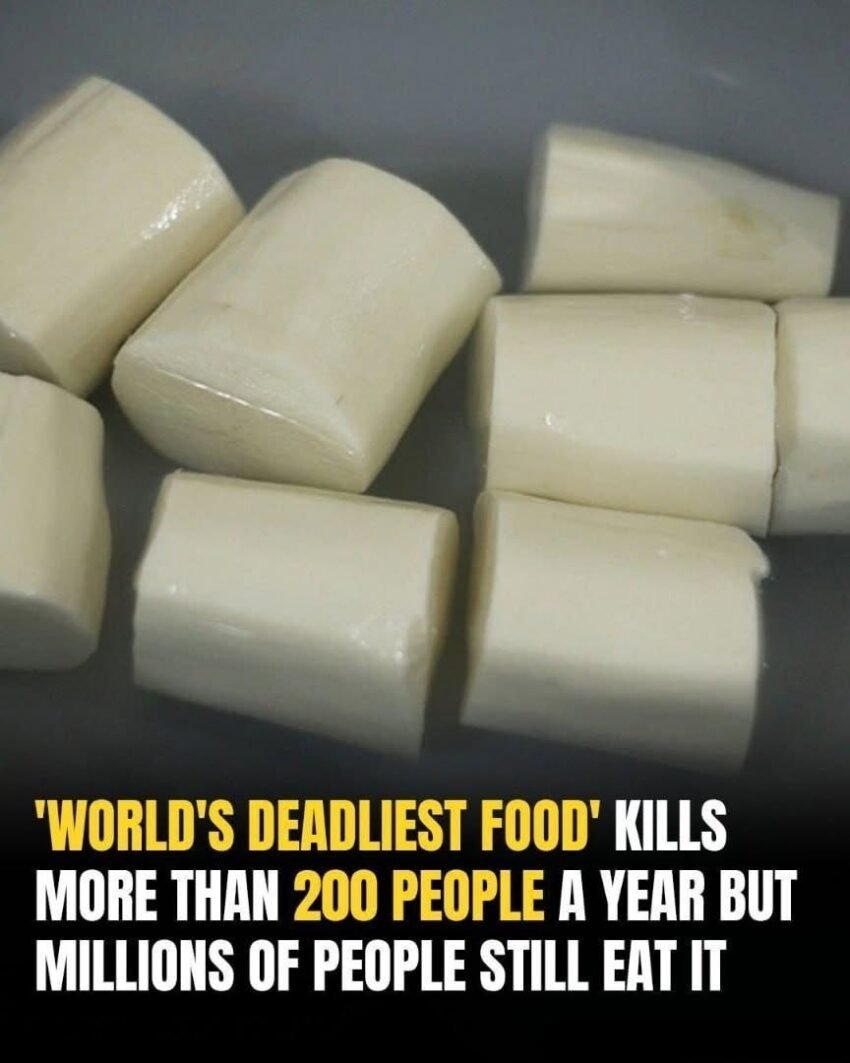
The food most often described as the “world’s deadliest food” is cassava, also known as manioc, yuca (in many Latin American countries), or tapioca (when processed into starch or pearls).
Despite its reputation, cassava is a staple food for around 500 million people (and some estimates are even higher) because it is inexpensive, drought-tolerant, and grows well in poor soils.
Why is cassava considered dangerous?
Cassava naturally contains cyanogenic glycosides (primarily linamarin and lotaustralin). When the root is cut, crushed, or chewed, these compounds can release hydrogen cyanide, a highly toxic chemical.
If cassava is:
- eaten raw,
- improperly prepared,
- or consumed during famine without adequate processing,
it can cause cyanide poisoning.
How many people die?
Health organizations estimate that more than 200 people die each year from acute cyanide poisoning linked to improperly processed cassava. In addition, chronic exposure affects many more people, especially in regions where cassava is a dietary staple.
Symptoms of cyanide poisoning
Mild poisoning may cause:
- Headache
- Dizziness
- Nausea and vomiting
- Stomach pain
Severe poisoning can lead to:
- Difficulty breathing
- Confusion
- Seizures
- Loss of consciousness
- Cardiac arrest
- Death
Long-term health effects
Regular consumption of poorly processed cassava can contribute to:
- Goiter and thyroid problems (especially with iodine deficiency)
- Nerve damage
- Paralysis, including a neurological disease called Konzo
- Developmental problems in children
Why do so many people still eat it?
Cassava remains essential because it:
- Produces high yields even during drought.
- Grows in poor-quality soils.
- Is relatively inexpensive.
- Can stay in the ground until needed, acting as a food reserve.
- Provides a major source of carbohydrates for millions of households.
Is cassava safe to eat?
Yes—when prepared properly.
Traditional processing methods remove most of the cyanide:
- Peel the root.
- Soak it in water.
- Ferment if appropriate.
- Dry or grate it.
- Cook it thoroughly by boiling, roasting, or baking.
Commercial cassava products such as tapioca pearls, cassava flour, and properly prepared frozen cassava are generally considered safe.
Nutritional value
Cassava is:
- Rich in carbohydrates (energy)
- Naturally gluten-free
- A source of vitamin C (fresh root)
- Low in protein, fat, and several essential micronutrients, so it is best eaten as part of a varied diet.
Interesting facts
- Cassava originated in South America and is now cultivated widely across Africa, Asia, and Latin America.
- It is one of the world’s most important food crops.
- Two main varieties exist:
- Sweet cassava, which contains lower levels of cyanogenic compounds.
- Bitter cassava, which contains much higher levels and requires more extensive processing.
Bottom line
Cassava is called the “world’s deadliest food” because its natural cyanide content can be fatal if it is not processed correctly. However, when peeled, soaked, fermented (where appropriate), and thoroughly cooked, it is a safe and vital staple food that nourishes hundreds of millions of people worldwide.