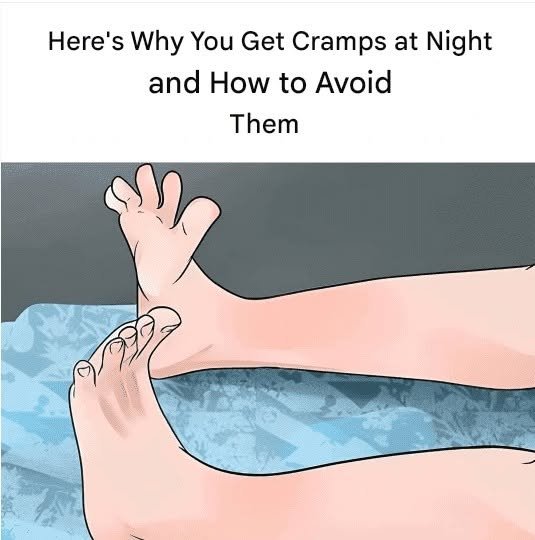
If you mean “Why do we get cramps at night?”, here is the detailed information:
Night cramps (often called nocturnal leg cramps) are sudden, painful tightening of muscles, usually in the calf, foot, or thigh, that happen during sleep or while resting.
Common causes of night cramps:
- Muscle fatigue or overuse
- Long periods of standing, walking, exercise, or heavy work can tire muscles and trigger cramps.
- Dehydration
- Not drinking enough water can affect muscle function and make cramps more likely.
- Low levels of minerals
- Imbalances of magnesium, potassium, calcium, or sodium may contribute to muscle spasms.
- Poor blood circulation
- Reduced blood flow to the legs can sometimes cause discomfort and cramping.
- Nerve compression or irritation
- Problems involving nerves in the lower back or legs can lead to cramps.
- Staying in one position for a long time
- Sleeping with the foot pointed downward or keeping muscles shortened may trigger cramps.
- Certain medicines or health conditions
- Some medications and conditions affecting nerves, muscles, kidneys, or hormones can increase the chance of cramps.
What you can do when a cramp happens:
- Stretch the affected muscle gently.
- Massage the cramped area.
- Walk around slowly if possible.
- Apply a warm compress or take a warm shower.
How to reduce night cramps:
- Drink enough fluids during the day.
- Stretch your calf and leg muscles before bedtime.
- Keep a regular exercise routine, but avoid sudden overexertion.
- Maintain a balanced diet with enough minerals.
- Wear comfortable footwear during the day.
See a doctor if:
- Cramps are very frequent or severe.
- They disturb your sleep regularly.
- There is swelling, weakness, numbness, or skin color changes.
- You started having cramps after beginning a new medication.
If you meant “cramps at night in detail” for a specific body part (legs, feet, hands, stomach), tell me which one and I can explain that specifically.