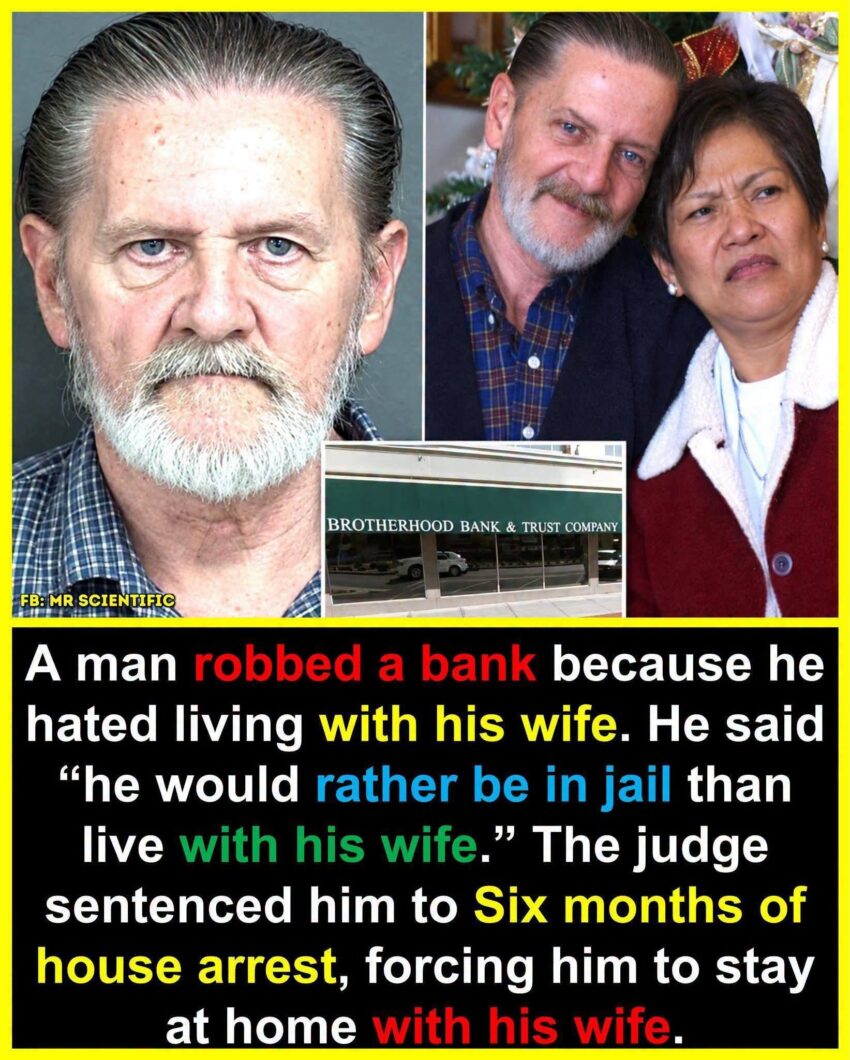
If you mean the Lawrence Ripple case, there’s an important date correction: it happened in Kansas City, Kansas, in September 2016, not 2011. Ripple was 70 at the time. He became known for robbing a bank because he wanted to be arrested and get away from his wife.
The full story of Lawrence Ripple
On September 2, 2016, Lawrence John Ripple, a 70-year-old Kansas man, walked into the Bank of Labor in Kansas City, Kansas. He handed a teller a note claiming that he had a gun and demanding money.
The teller gave him approximately $2,924. But instead of running away, Ripple did something extremely unusual: he sat down in the bank lobby and waited. When a security guard approached him, Ripple reportedly told the guard that he was the person they were looking for.
Police soon arrived and arrested him. During questioning, Ripple explained that he had argued with his wife earlier that day. According to the FBI affidavit, he had written the robbery note in front of his wife and told her that he would rather be in jail than remain at home.
Ripple subsequently pleaded guilty to federal bank robbery in January 2017. He faced a potential sentence of up to 20 years in prison.
The case became even more ironic at sentencing. Rather than sending him to prison, the judge gave Ripple six months of home confinement, three years of probation and 50 hours of community service. In other words, the man who had robbed a bank specifically because he wanted to escape his home ended up being ordered to serve his punishment at home.
Ripple’s attorney portrayed the robbery as a desperate cry for help, rather than an attempt to profit from the crime. Reports also described Ripple as suffering from depression and having significant health problems.
So the famous summary of the case is:
70-year-old Lawrence Ripple → argued with his wife → decided he would rather be in jail → robbed a bank → waited for police to arrest him → pleaded guilty → was sentenced to home confinement instead of prison.
If you were referring to a different Kansas case from 2011, tell me any other detail you remember and I can identify that case.