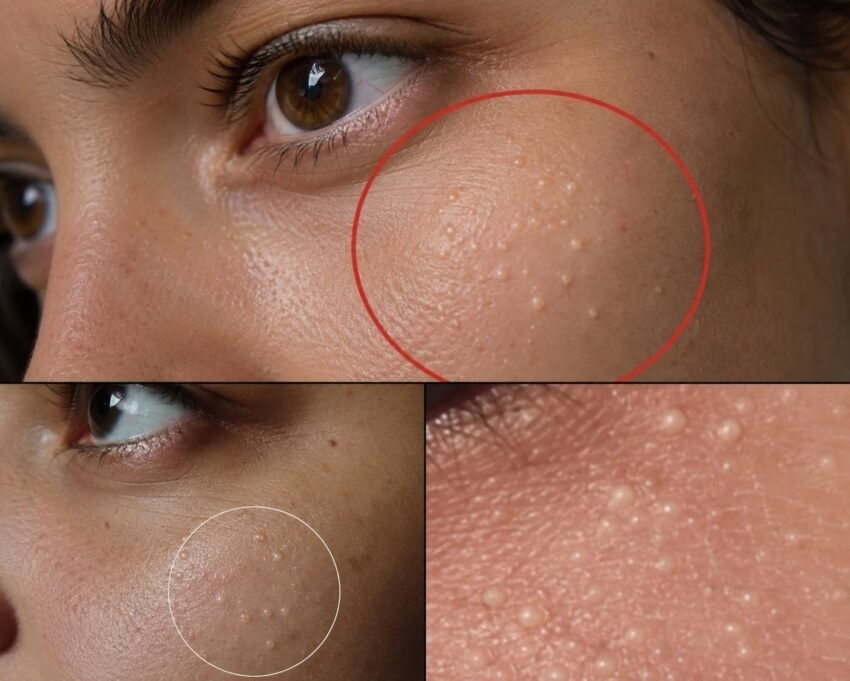
Tiny white bumps on the face are often milia—small, harmless cysts that form when keratin (a skin protein) becomes trapped just beneath the surface of the skin. They are common in both children and adults and are not the same as acne or whiteheads.
What Are Milia?
Milia are:
- Small, white or yellowish bumps, usually 1–2 mm in size.
- Firm to the touch and painless.
- Most commonly found around the:
- Eyes
- Cheeks
- Nose
- Forehead
- Chin
Unlike pimples, milia do not have an opening to the skin’s surface, so they cannot be safely squeezed out.
What Causes Milia?
Common causes include:
- Dead skin cells becoming trapped beneath the skin.
- Heavy or pore-clogging skincare products.
- Sun damage that thickens the skin.
- Skin injuries such as burns, rashes, or blisters.
- Long-term use of topical steroid creams (in some cases).
Natural and Safe Ways to Help Treat Milia at Home
Although milia often disappear on their own over several weeks or months, these gentle skincare practices may help:
1. Cleanse Gently
Wash your face twice daily with a mild, fragrance-free cleanser to remove dirt and excess oil without irritating the skin.
2. Gentle Exfoliation
Use a mild chemical exfoliant containing ingredients such as:
- Lactic acid
- Glycolic acid
- Salicylic acid (if suitable for your skin)
Limit exfoliation to 1–2 times per week to avoid irritation.
3. Steam the Face (Occasionally)
A warm facial steam for 5–10 minutes may soften the outer layer of skin, making natural shedding easier. Avoid very hot steam if you have sensitive skin.
4. Use Sunscreen Daily
Protect your skin with a broad-spectrum SPF 30 or higher. Sun damage can contribute to milia formation.
5. Choose Non-Comedogenic Products
Use lightweight moisturisers and cosmetics labelled “non-comedogenic” to reduce the chance of clogged pores.
6. Consider a Retinoid (Adults)
Over-the-counter retinol products may help prevent new milia by increasing skin cell turnover. Introduce them gradually, as they can cause irritation, and avoid retinoids during pregnancy unless advised by a healthcare professional.
What Not to Do
Avoid:
- Popping or squeezing milia.
- Using needles or sharp objects to remove them.
- Scrubbing the skin aggressively.
- Applying harsh home remedies such as lemon juice, baking soda, or toothpaste, which can irritate or damage the skin.
When to See a Dermatologist
Seek medical advice if:
- Milia persist for several months.
- They become numerous or spread rapidly.
- They are painful, inflamed, or bleeding.
- You’re unsure whether the bumps are actually milia.
A dermatologist can remove milia safely using sterile techniques such as a tiny incision or specialised extraction.
Can Milia Be Prevented?
You may reduce the risk by:
- Cleansing your skin regularly.
- Exfoliating gently.
- Wearing sunscreen every day.
- Avoiding heavy, oil-based skincare products if they’re contributing to clogged pores.
- Removing makeup before sleeping.
Key Takeaway
Milia are common, harmless keratin-filled cysts that usually don’t require treatment. Gentle skincare, light exfoliation, sun protection, and avoiding picking at the bumps are the safest home approaches. If they don’t resolve or you’re concerned about their appearance, a dermatologist can remove them quickly and safely