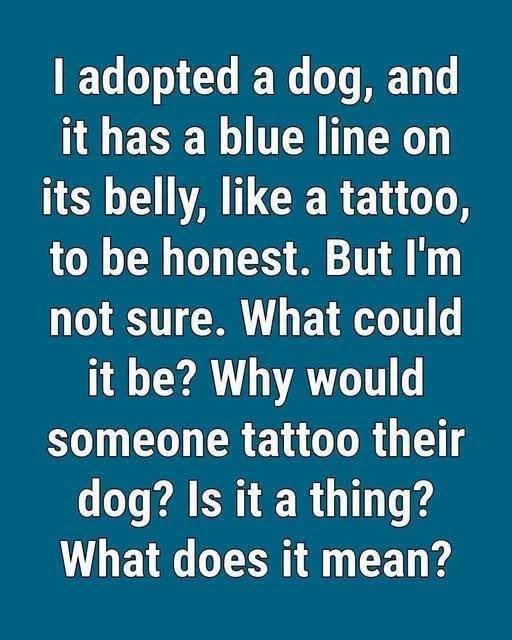
A blue line tattoo on a dog is usually a permanent identification mark placed by a veterinarian, breeder, animal shelter, or animal welfare organization. The exact meaning depends on the country, organization, and context. There is no single universal meaning, but there are several common uses.
1. Indicates the Dog Has Been Spayed or Neutered (Most Common Meaning)
The most common reason for a blue line tattoo is to show that the dog has been sterilized.
- Male dogs: The tattoo indicates the dog has been neutered (testicles removed).
- Female dogs: The tattoo indicates the dog has been spayed (ovaries and usually the uterus removed).
This helps veterinarians and shelters avoid performing unnecessary surgery if medical records are unavailable.
Where is it located?
- Female dogs: Usually a short blue or green line on the abdomen near the surgical incision.
- Male dogs: Sometimes near the scrotum or lower abdomen.
The tattoo is usually 1–3 cm (0.5–1 inch) long.
2. Used by Animal Shelters and Rescue Organizations
Many shelters tattoo dogs after sterilization.
Reasons include:
- Quickly identifying sterilized animals.
- Preventing repeat surgeries.
- Helping rescue groups and veterinarians identify dogs even if records are lost.
Some shelters use:
- Blue line
- Green line
- Small blue or green dot
The color depends on the tattoo ink available.
3. Identification Tattoo
In some countries, especially before microchips became common, dogs received identification tattoos.
These are usually:
- Inside the ear.
- Inside the thigh.
- A combination of numbers and letters.
A simple blue line is usually not an identification tattoo.
4. Medical Marker
Occasionally, a veterinarian may use a blue tattoo line to indicate:
- The dog has undergone a particular surgery.
- The dog is part of a population-control program.
- The dog has been sterilized during a trap-neuter-return or rescue program.
Why Use a Tattoo If the Dog Already Has a Scar?
Surgical scars can fade or become difficult to see.
A tattoo:
- Is permanent.
- Can be recognized years later.
- Helps prevent unnecessary exploratory surgery.
- Saves time and reduces risk during veterinary care.
Is the Tattoo Harmful?
No.
The tattoo is applied while the dog is already under anesthesia during surgery. The dog does not experience additional pain from the procedure, and after healing it usually causes no discomfort.
Can the Tattoo Fade?
Yes.
Over many years it may:
- Become lighter.
- Spread slightly.
- Become harder to see because of hair growth or skin pigmentation.
However, it is generally still visible.
Does Every Spayed or Neutered Dog Have One?
No.
Practices vary by veterinarian and region.
Some veterinarians:
- Always tattoo.
- Sometimes tattoo.
- Never tattoo.
Many clinics now rely on microchips and medical records instead.
Blue vs. Green Tattoo
There is usually no medical difference between a blue and a green tattoo.
The color simply depends on:
- The tattoo ink available.
- The veterinarian’s preference.
- The shelter or rescue organization’s protocol.
Both colors commonly indicate the dog has been sterilized.
When Should You Ask a Veterinarian?
If you find a blue line tattoo on a dog and don’t know its history, a veterinarian can:
- Confirm whether it indicates spaying or neutering.
- Check for a microchip.
- Examine the tattoo and determine whether it has another meaning.
Summary
In most cases, a blue line tattoo on a dog means the dog has been spayed or neutered. It serves as a permanent visual marker so veterinarians and shelters know the animal has already undergone sterilization, helping avoid unnecessary surgery. Less commonly, tattoos may also be used for identification or to indicate participation in a shelter or rescue program.