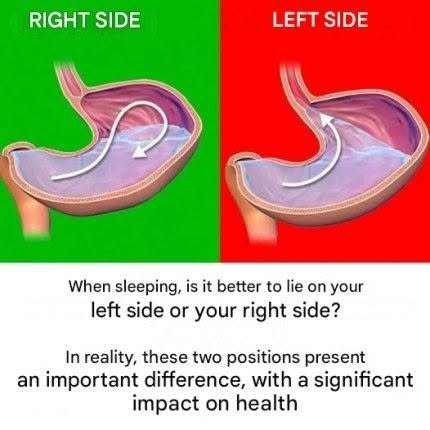
The “best” side to sleep on depends on your health, comfort, and any medical conditions. In general, sleeping on your left side is often considered the most beneficial, but the right side also has advantages. Here is a detailed comparison:
1. Sleeping on the Left Side (Often Recommended)
Benefits:
1. Better for heart health
- The heart is slightly toward the left side of the chest. Sleeping on the left may help some people with circulation because it can reduce pressure on major blood vessels and help blood return to the heart more easily.
- People with certain heart conditions should follow their doctor’s advice because preferences can vary.
2. Helps acid reflux and heartburn
- The stomach is positioned more toward the left side. Sleeping on the left can keep stomach acid lower and reduce acid flowing back into the esophagus.
- This is why left-side sleeping is often recommended for people with Gastroesophageal reflux disease (GERD).
3. Better during pregnancy
- Left-side sleeping is commonly advised during pregnancy because it may improve blood flow to the uterus and reduce pressure on major blood vessels.
- Pregnant people should follow their healthcare provider’s recommendations, especially in later pregnancy.
4. May support digestion
- Gravity can help movement of food through the digestive system when lying on the left side.
Possible disadvantages:
- Some people may feel more pressure on the left shoulder or arm.
- People with certain heart conditions may feel uncomfortable and should choose the position that feels best.
2. Sleeping on the Right Side
Benefits:
1. Comfortable for many people
- Many people naturally prefer the right side and sleep well in this position.
2. May feel easier for some heart patients
- Some people with heart problems find the right side more comfortable because it may reduce awareness of their heartbeat.
Possible disadvantages:
- It may worsen acid reflux in some people because stomach positioning can make acid movement upward easier.
3. Sleeping on Your Back
Benefits:
- Keeps the spine in a neutral position if your pillow and mattress provide good support.
- May reduce pressure on shoulders and hips.
- Can help prevent facial pressure and wrinkles caused by sleeping on one side.
Disadvantages:
- Can worsen snoring.
- May increase breathing problems in people with Obstructive sleep apnea because the tongue and soft tissues can fall backward and narrow the airway.
4. Sleeping on Your Stomach
Benefits:
- Some people find it comfortable.
- May reduce snoring for some individuals.
Disadvantages:
- Often causes neck strain because your head must turn to one side.
- Can increase pressure on the spine and lower back.
- May cause shoulder or neck pain.
Best Sleeping Side by Situation
| Situation | Often Recommended Position |
|---|---|
| Acid reflux/heartburn | Left side |
| Pregnancy | Left side (commonly recommended) |
| Snoring/sleep apnea | Side sleeping (left or right) |
| Back pain | Side with pillow support or back sleeping |
| Neck pain | Back sleeping or properly supported side sleeping |
| General healthy adult | The side that keeps your spine comfortable |
Tips for Better Side Sleeping
- Keep your head pillow high enough so your neck stays straight.
- Put a pillow between your knees to keep your hips aligned.
- Avoid curling into a very tight fetal position because it can restrict deep breathing and strain joints.
- Choose a mattress that supports your body shape.
Bottom line:
For many adults, sleeping on the left side is a good default choice, especially if you have acid reflux or are pregnant. However, the best sleeping position is the one that gives you comfortable, pain-free sleep and allows good breathing.